Nose, Glass, Finish
Tasting
Young, colorless Grappa trentina smells of fresh grape skins and a touch of herbs, feels clean on the palate, and carries a light warming spiciness that lingers after the sip. Depending on the grape variety, fruitiness joins in — darker berries from Marzemino, more hazelnut and almond from Nosiola.
Anyone wanting to compare will find plenty of houses in Trentino: Marzadro from Nogaredo with single-varietal Grappas, Bertagnolli from Mezzocorona, Pilzer from Faver in the Val di Cembra, and Pisoni, who maintain the bain-marie method. The comparison is most rewarding when single-varietal Grappas are tasted side by side, since that reveals what comes from the grape variety and what comes from the distiller's own style.
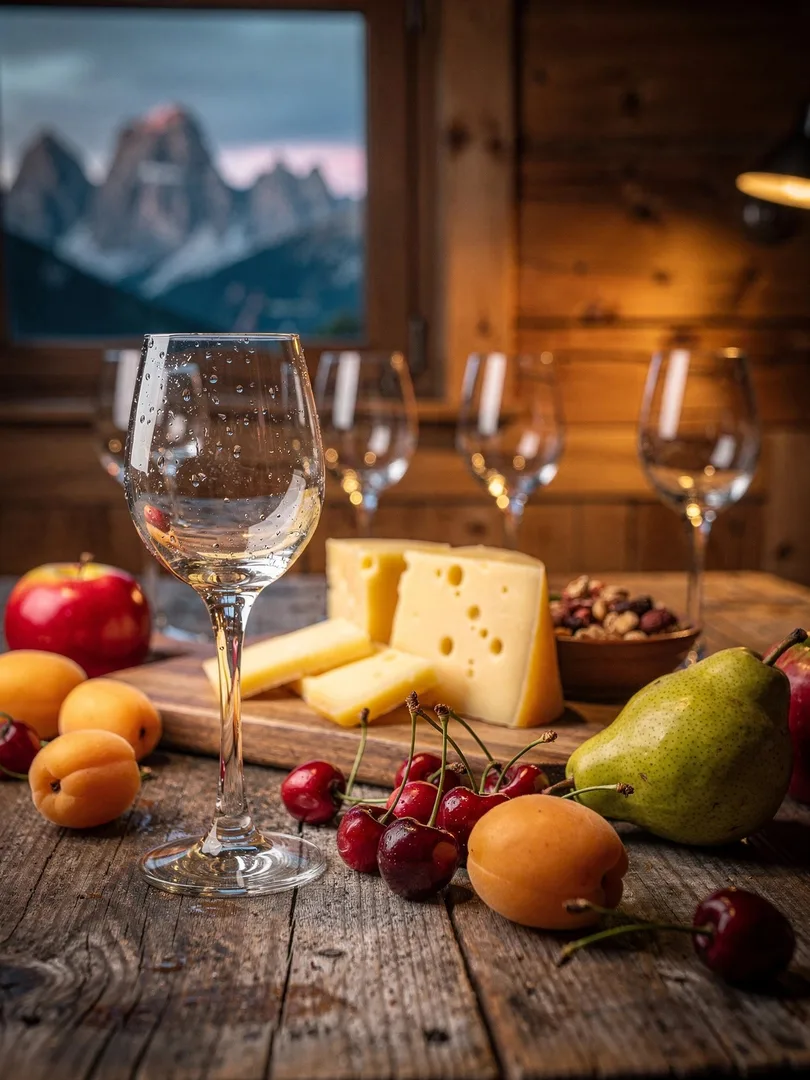
Use a nosing glass or a small tulip glass: the slender bowl, narrowing toward the top, concentrates the aromas instead of pushing the alcohol broadly into the nose. Fill it only a third full, hold it at a distance at first, and move in closer on the second breath.
Temperature plays a role too. Served too cold, the spirit closes up; at room temperature, the alcohol pushes to the forefront. Cool but not cold is therefore the sweet spot: young, colorless Grappas can take a bit more chill, aged ones a bit more warmth.
Genziana trentina calls for a different approach. It smells first of hay and juniper, the taste turns bitter, and the finish is dry. First-time tasters should start with a small sip.
With Kirsch Trentino and Aprikot trentino, pay attention first to the stone-fruit note: a subtle hint of bitter almond is intentional, but too much is considered a flaw. Williams trentino shows ripe pear, Sliwovitz trentino dark plum with a light spiciness, and Distillato di mele trentino recalls freshly cut apple.