Glass and Nose
Tasting
What does a Tyrolean fruit brandy taste like? Fresh and clean, with the aroma of ripe apples and pears, dry and warm on the palate. Pregler has a sweeter nose, while Obstler is more robust. What matters is that the fruit character stays recognizable. A pear brandy feels round and mild, an apple brandy fresher and a touch tarter, and a good brandy never masks either beneath the alcohol.
Rochelt from Fritzens serves as an example of the master distillers, working with 20 fruit varieties, from apple to wild rowanberry, according to the house. In the Zillertal, Wildauer, among others, distills fine brandies from the fruit of scattered orchard trees, and in East Tyrol, distillers along the Schnapps Route open their distilleries, where visitors can taste both Pregler and fruit brandies.
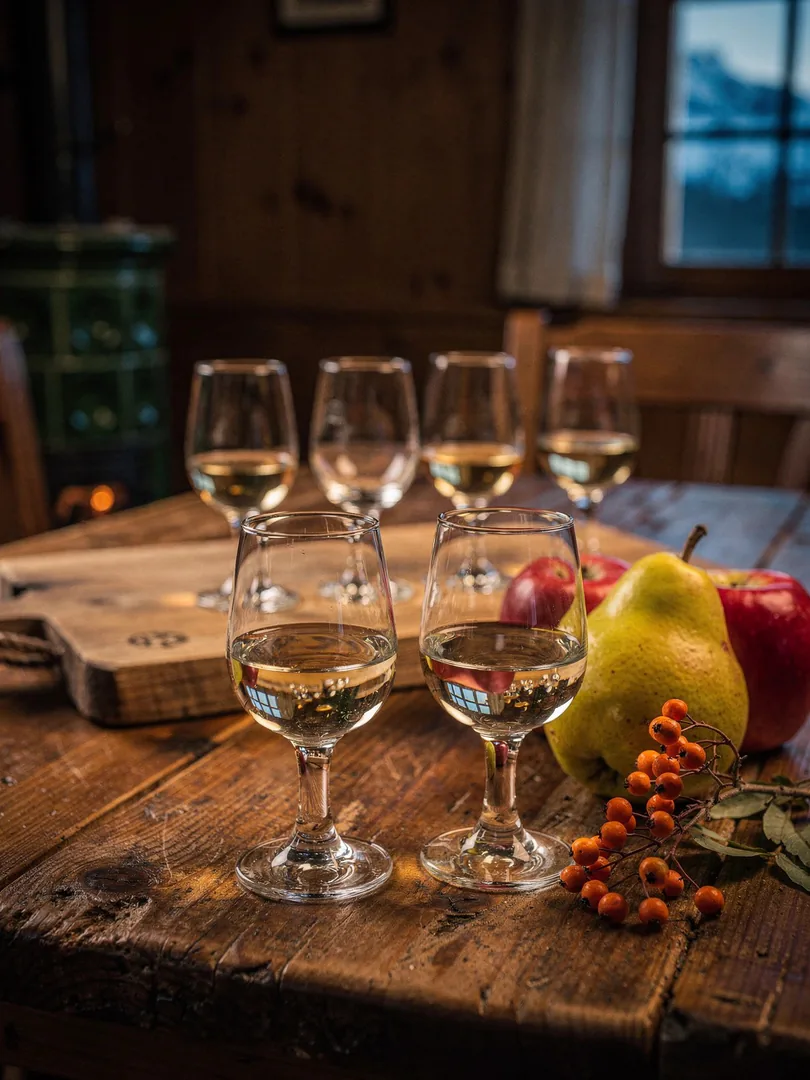
The right glass is a nosing glass or a small tulip glass. The narrow opening holds the aroma, and the stem keeps your hand from warming the glass. A Stamperl, the traditional schnapps glass found in mountain huts, tastes different: you smell less, but drink faster.
The ideal temperature sits just below room temperature—cool, but not cold. A brandy that's too cold shuts down its aroma, while one that's too warm lets the alcohol push to the front. First comes the aroma, then a small sip, held briefly in the mouth.
With Krautinger, it pays to check your expectations at the door. It smells neither of fruit nor of blossom, but of earth and turnip. Knowing this, don't look for fruit—instead, discover a brandy with no equivalent.