Dumplings and Blossom
Food & Tradition
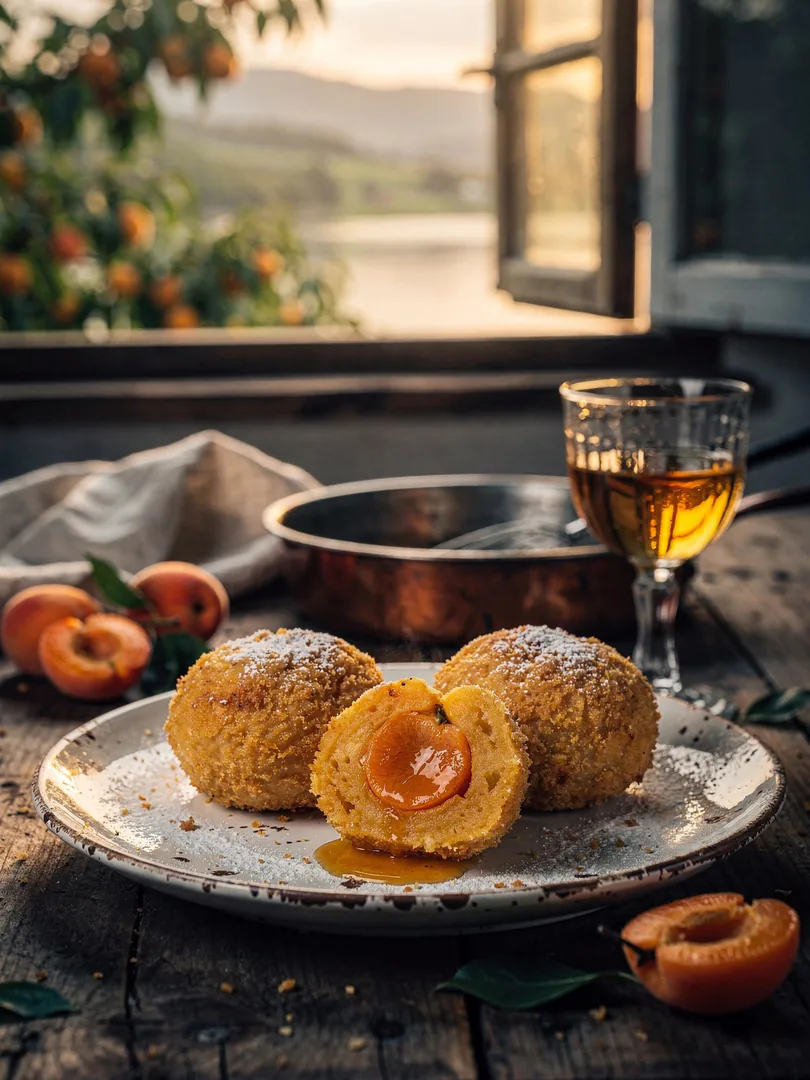
Marillenknödel are the dish of the Wachau: a whole apricot in dough made from quark, rolled in buttered breadcrumbs and dusted with powdered sugar. The first known recipe appeared in 1882 in the “Wiener Hausfrau,” and in 1890 it appeared in Katharina Prato's “Süddeutsche Küche”—and little has changed since.
The season begins with the main harvest in July. From then on, apricot dumplings belong to the Wachau summer the way apricot blossom belongs to spring—in Spitz, Weißenkirchen or Dürnstein, this is considered the season for the dish everyone has an opinion about. Fresh here truly means fresh: no canned fruit, just apricots straight from the tree.
A glass of apricot brandy pairs well, because butter, breadcrumbs and quark call for something clear. The dry brandy cuts through the sweetness and richness, bringing out the apricot aroma once more. Wachau apricot liqueur belongs more in the dessert itself, as a flavoring, rather than as a drink alongside it.
The brandy doesn't actually speed up digestion. In fact, measured data shows alcohol slows gastric emptying. After butter crumbs, quark and dumplings, the relief that apricot brandy brings is relaxation, not faster digestion, even if the dumplings sit heavy in the stomach.
In spring, the apricot blossom belongs to the valley's traditions. Towns like Weißenkirchen mark the occasion with their own festival program, and between Krems and Mautern the trees stand in full bloom. In the glass, a trace of this remains—a reminder that the brandy comes not from a shop, but from a valley.