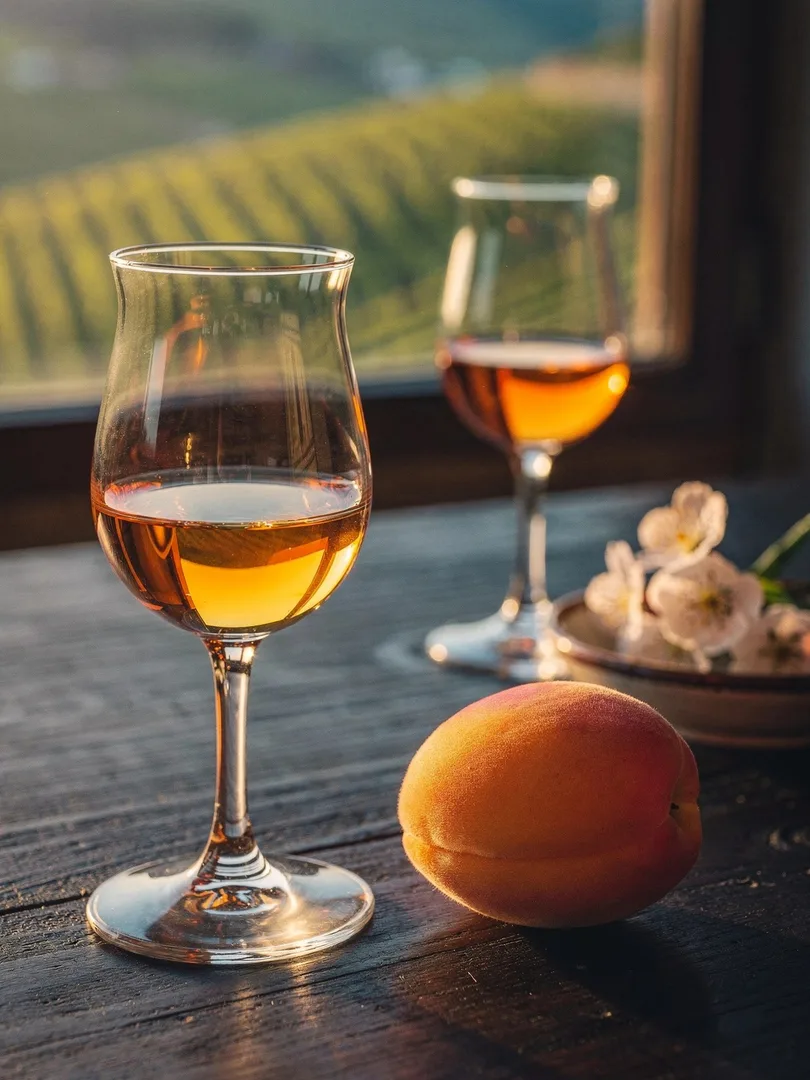
Brandy, Liqueur, Wine Brandy
Style
Marillenbrand, Marillenlikör and Marillenschnaps sound related, and only partly are. Schnaps is a colloquial term, not a legal one, so it can mean almost anything. In the glass, the differences are clearer: the brandy is dry and perfectly clear, the liqueur sweet and syrupy, the wine brandy amber-colored.
Wachau apricot brandy tastes soft and full-bodied, with spicy, layered apricot aroma and a long finish. The specification requires at least 38% ABV, somewhat more than the 37.5% ABV that's sufficient for fruit brandy under EU rules elsewhere. Sweetening, meanwhile, remains minimal: no more than 4 g of sugar per liter, and the dry extract may not exceed five grams per liter. Anyone comparing it to a sweet liqueur is holding two completely different drinks.
Wachau apricot liqueur is a liqueur, not a brandy. It's made either from alcohol of agricultural origin or from Wachau apricot brandy. With agricultural alcohol it comes across as more natural and fruity; with apricot brandy as its base, it's fuller and spicier.
Wachau brandy is made from wine, not fruit, and has nothing to do with apricots. It matures in oak and tastes of wood and wine rather than fruit, belonging to the category of brandies rather than fruit spirits.
A fourth designation is Pálinka. This is an EU designation shared jointly by Hungary and Austria, on the register since February 13, 2008, and Austrian apricot brandy from certain federal states may carry it under certain conditions. Wachau apricot brandy, alongside this, has its own narrower name with a fixed region and fixed limits.
Wachau Apricot BrandyFruit brandy · Klosterneuburg Apricot
- Alcohol
- 38–43 % vol
- Maturity
- 0–1 Years
Crystal clear, ripe apricot with a subtle kernel note, soft and full-bodied, long spicy finish.