Nose Before Sip
Tasting
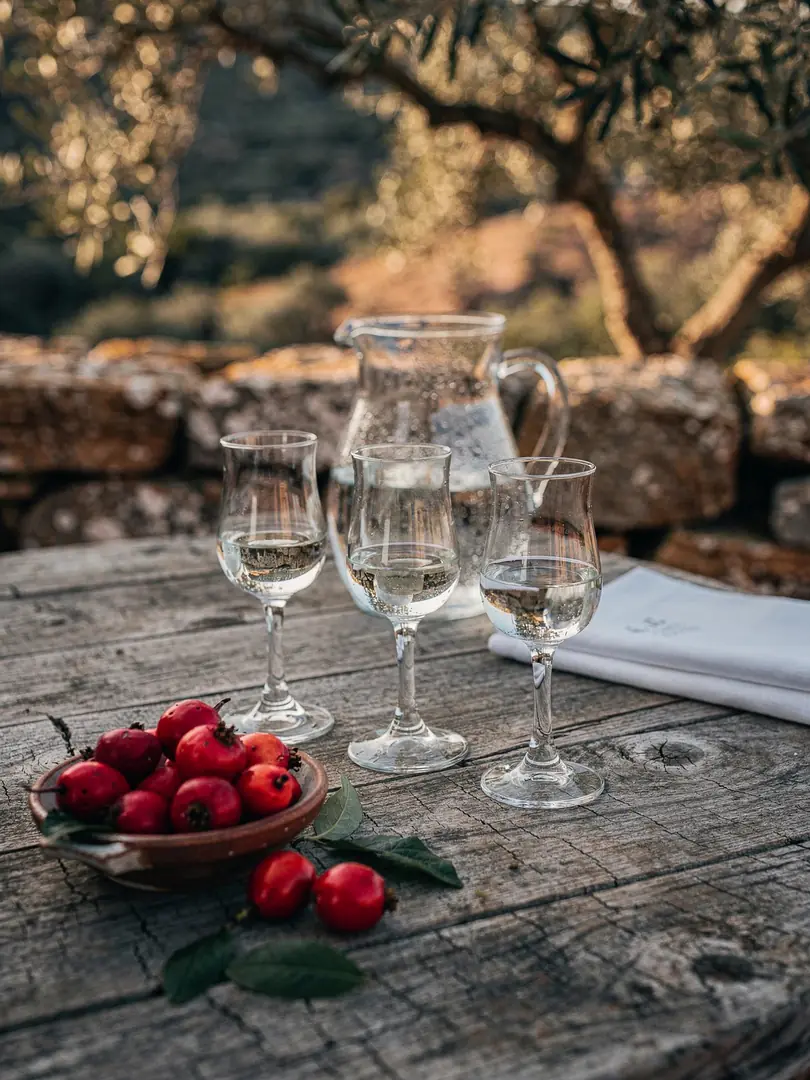
Medronho calls for a glass with a bulb that narrows toward the top, a nosing glass or a tulip-shaped glass. This way the aromas gather at the top, giving the nose what a tumbler would deny. The brandy should go into the glass at room temperature, not ice-cold, or the aroma will stay closed.
The nose comes first. Expect ripe fruit, and depending on the producer, a tart edge reminiscent of the berry's skin. With bottlings around 50% ABV, the alcohol pushes forward quickly, so it helps to hold the glass at a distance first and then move in closer. Good glasses should only be filled a third full, so the aroma can gather at the top.
Then follows a small sip, held briefly in the mouth. This lets you check whether the brandy seems clean, whether the fruit carries through, and whether the finish runs dry. A drop of water opens up the aromas but costs some warmth. The aftertaste reveals whether the brandy remains harmonious or turns bitter, and whether the warmth of the alcohol keeps pace with the fruit.
As a place to taste, the Casa do Medronho in Marmelete in the Serra de Monchique, which according to press reports showcases a typical communal distillery, offers tastings. Anyone looking for Medronho do Algarve should look for the protected designation of origin on the label, verified by the Algarve's wine commission.
Tasting means evaluating, not drinking. Small amounts, water on the side, and a piece of bread are enough to get to know a brandy properly. Those who note down aroma, taste and finish will find it easier to compare later.