Name by Agreement
Region & History
Grappa may only come from Italy within the EU, but there's an exception along the southern edge of the Alps. Under the agricultural agreement between the EU and Switzerland, the names Grappa del Ticino and Grappa ticinese are protected, along with the designation Grappa for brandies from Val Calanca, Val Bregaglia, Mesolcina (Misox), and Valle di Poschiavo (Puschlav). These are the four Italian-speaking valleys of Grisons that culturally face south.
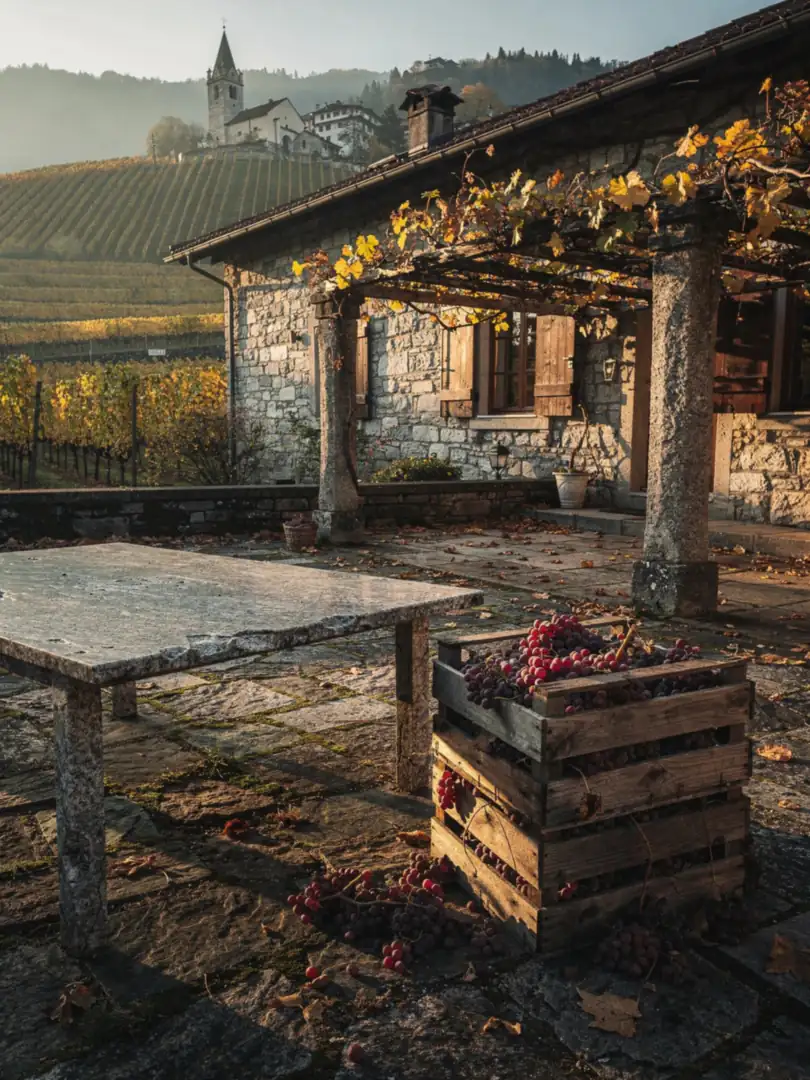
The story behind this is one of frugality. Wherever vines grow, pomace remains after pressing — skins, seeds, and stems — and in the villages nothing that could still be turned into alcohol was thrown away. Tradition holds that the clear spirit served both as a digestif and as a household remedy. After the harvest, mobile stills used to travel from cellar to cellar, until new regulations shifted distilling to fixed operations.
Merlot arrived in Ticino in 1906. It displaced older varieties and today covers well over three-quarters of the vineyard area, making its pomace the obvious raw material. It is supplied from the Mendrisiotto, from around Lugano and Locarno, and from the Bellinzona area.
One Ticino winery with its own grappa is Valsangiacomo. According to the house, its family history dates back to 1831, and today the sixth generation runs the business. Their range includes the Grappa Ticinese di Merlot under the name La Fenice. Alongside it, many small operations and home distillers distill for their own needs.
Distilling in Switzerland is overseen by the Federal Office for Customs and Border Security. Anyone who has vines but no still hands their pomace to a contract distiller. Under EU law, pomace brandy sold commercially must have at least 37.5 percent alcohol, though in practice most bottles are higher. In Germany, by contrast, distilling without official permission is prohibited.