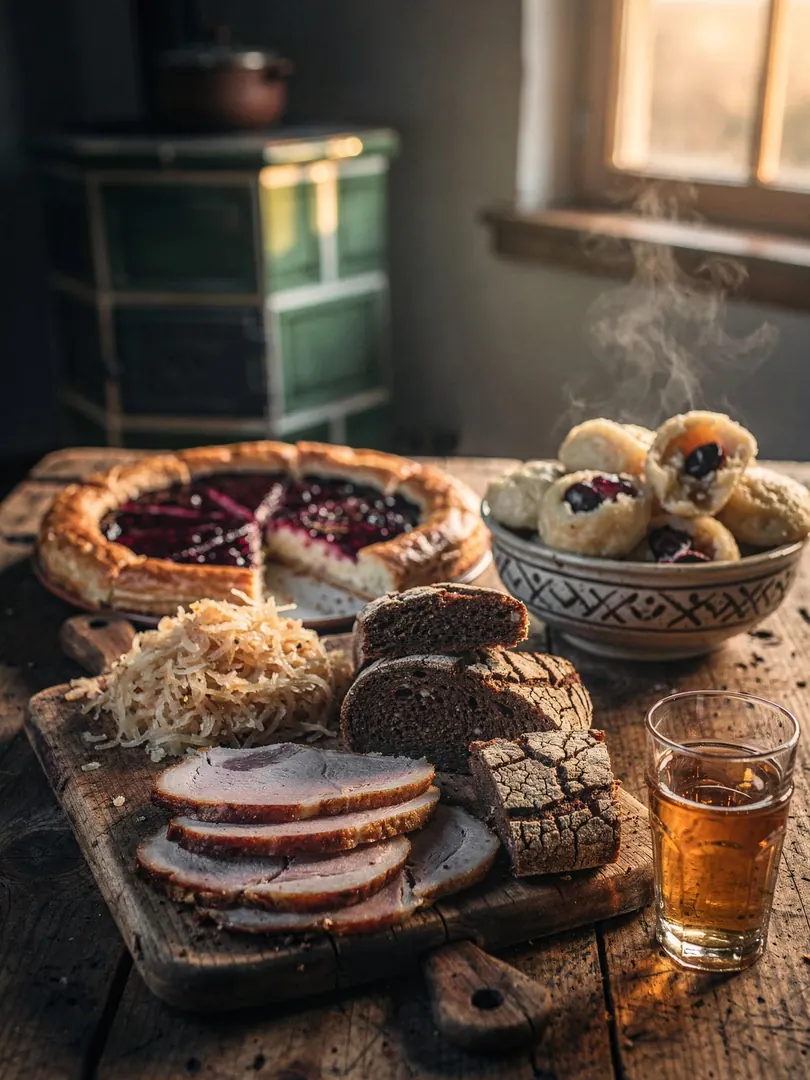
Pig Slaughter Feast and Frgál
Food & Tradition
What do people in Moravia eat with slivovice? In winter, neighbors and relatives gather for the zabijačka, the pig slaughter feast. The table features jitrnice, a liver sausage with groats, jelita, blood sausage with groats, ovar, boiled meat from the freshly slaughtered pig, and slaughter soup. A small glass of brandy makes the rounds between courses.
Why does this pairing work? The dishes are fatty, salty, and richly seasoned, while a clear brandy with fruit and pit character provides a dry counterpoint. Whether it actually aids digestion is unproven; what matters more is the warmth and the sense of community that comes with it.
Things turn sweet with the frgál, a large round cake from Wallachia topped with plum jam, curd cheese, and poppy seed. Alongside come švestkové knedlíky, dumplings filled with plums, and povidla, the thick cooked plum jam made in many kitchens each autumn. That the brandy comes from the same fruit is no coincidence: whatever doesn't go into the still gets cooked instead.
In Slovakia, bryndzové halušky, potato dumplings with sheep's cheese and fried bacon, represent the cuisine that slivovica from the pálenica can accompany. The fruit serves as a counterweight to the richness.
In Moravia and Slovakia, slivovice is part of family life: weddings, births, and visits are occasions when it comes to the table, and people speak of it as a ritual drink. In Vizovice, the Trnkobraní, a harvest festival centered on the plum, shows how deeply the brandy belongs to the region. Even today, most slivovice comes from family stills or custom distilleries rather than from the supermarket.