Fruit Pulp and Yeast
Mash & Fermentation
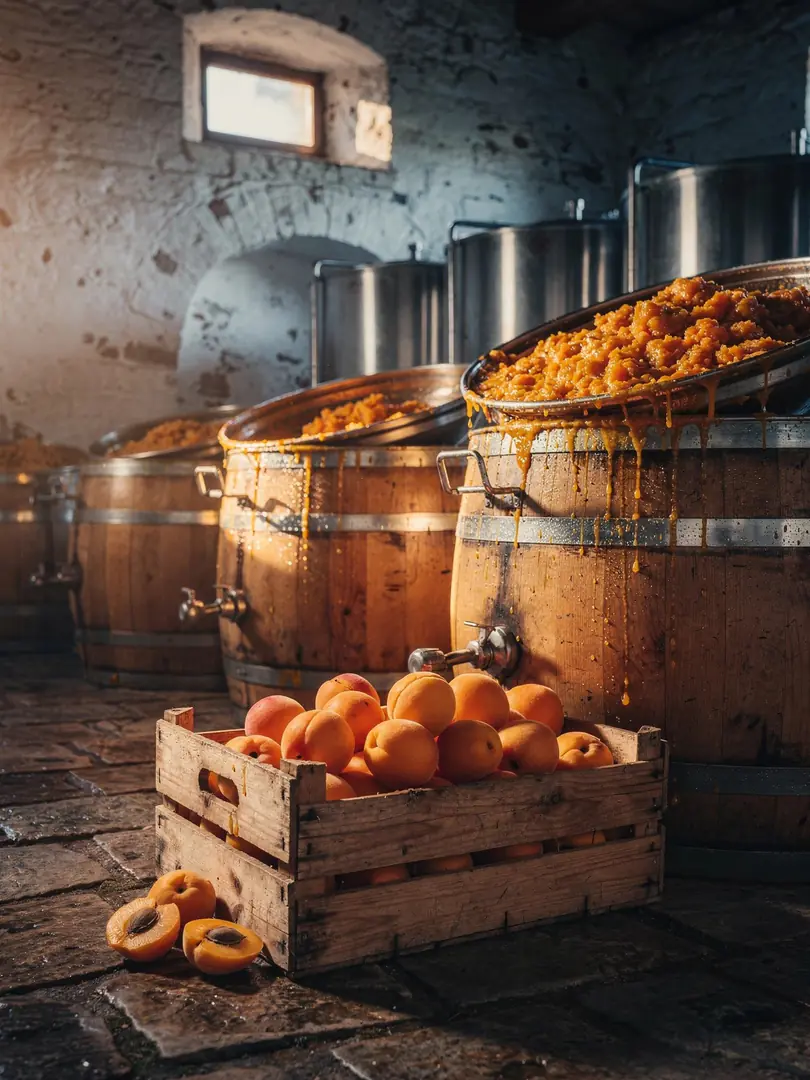
When the apricots arrive at the distillery, sorting begins. Rotten spots, leaves, and foreign matter have no place in the mash, as the specification for Kecskeméti Barackpálinka demands. The fruit is then crushed, producing a thick fruit pulp in which fermentation takes place.
The apricot is a stone fruit, and the pit raises a question. Many distillers remove the stones beforehand. If the stones stay in, a subtle almond note can develop. But crushed stones release hydrocyanic acid, which can turn into ethyl carbamate in light—a substance nobody wants in their fruit brandy. Too much of that stony note is therefore considered a flaw.
Yeast converts the fruit sugar into alcohol. The mash sits for this purpose for several weeks in tanks or barrels, kept cool and as airtight as possible, since oxygen can spoil it. Mold, a vinegary edge, and a smell of rot are all considered faults that the distiller can't later remove through distillation.
Methanol already forms in the mash, arising from the fruit's pectin. Every fruit brandy therefore contains some, and the EU sets maximum limits. Even when the distiller separates the heads, a portion still remains in the final spirit. This has nothing to do with poor distilling—and everything to do with the fruit itself.
With Törkölypálinka, the work begins in the vineyard and at the press. The marc consists of the skins, seeds, and stems left after pressing the grapes, and it's distilled after fermentation. Depending on the grape, fermentation may happen together with the wine or only after pressing. The marc should be processed quickly, since it develops off-flavors fast when exposed to air.