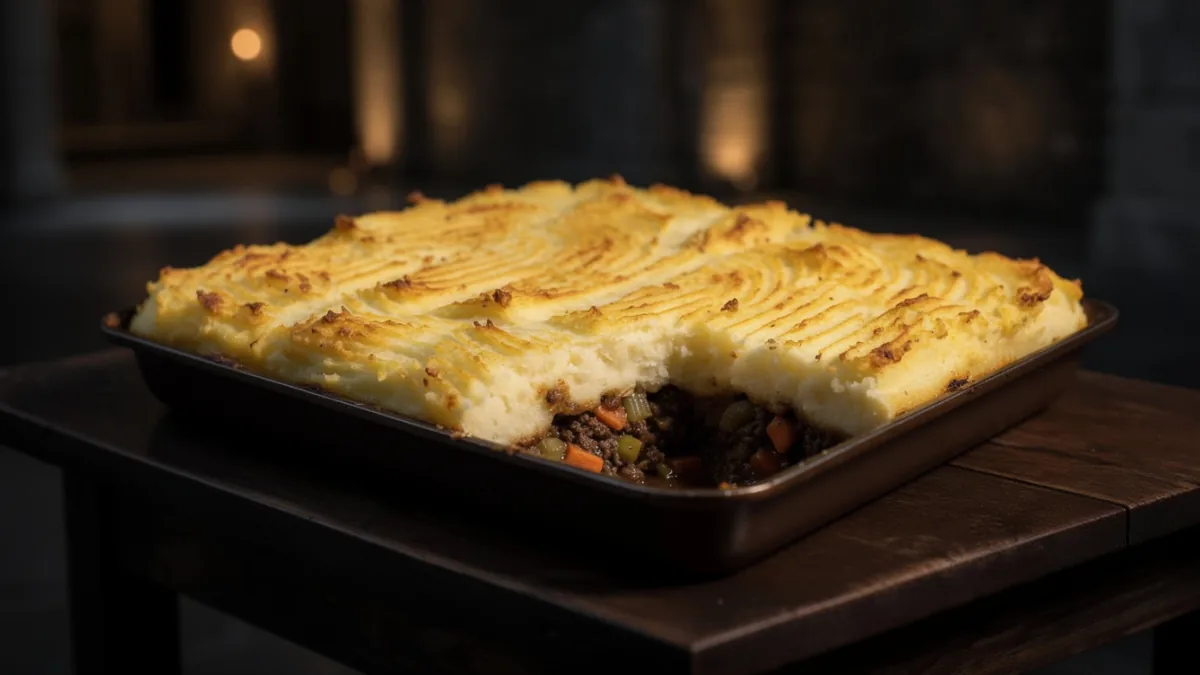
Preparation
- Heat 1 tbsp of the oil in a large pot and brown the mince thoroughly in batches. Set the browned batches aside.
- Add the remaining oil to the pot, add the onion, carrots and celery and cook over gentle heat for about 20 minutes until soft.
- Stir in the garlic, flour and tomato purée, turn up the heat and fry for a few minutes. Return the mince to the pot.
- If using red wine, let it reduce briefly. Then add the stock, Worcestershire sauce, thyme and bay leaves, bring to the boil and simmer uncovered for about 45 minutes, until the sauce clings thickly to the meat. If a lot of liquid remains after 30 minutes, turn up the heat a little. Season boldly and remove the bay leaves and thyme stalks.
- Meanwhile, put the potatoes in a pan of cold salted water, bring to the boil and cook until soft. Drain, leave to steam-dry for a few minutes and mash well with the milk, butter and three quarters of the cheese. Season with nutmeg, salt and pepper.
- Preheat the oven to 220 °C (top and bottom heat; 200 °C fan). Tip the mince mixture into a large baking dish, spread the mash on top, drag a fork across it to make ridges and sprinkle over the remaining cheese.
- Bake for 25 to 30 minutes, until the top is golden brown.
Drink with it
Red wine · excellent match
Merlot, Côtes du Rhône or Shiraz, medium-bodied
Soft tannins and dark fruit pick up the braised mince and tomato sauce, and the acidity cuts through the butter and Cheddar in the mash.
Which wine pairs with food? A simple approach to choosingDark beer · excellent match
English brown ale or porter
Malty roasted notes mirror the well-browned mince, and the light malt sweetness carries the Worcestershire spice.
Which beer goes with food? More than just pils with barbecueJunmai sake · good match
Junmai, warm (about 45 °C)
The full-bodied, rice-forward Junmai has plenty of umami itself and goes with the Worcestershire and roasted savouriness; more of a discovery than a classic.
Junmai, Ginjo, Daiginjo: What do these mean for sake?