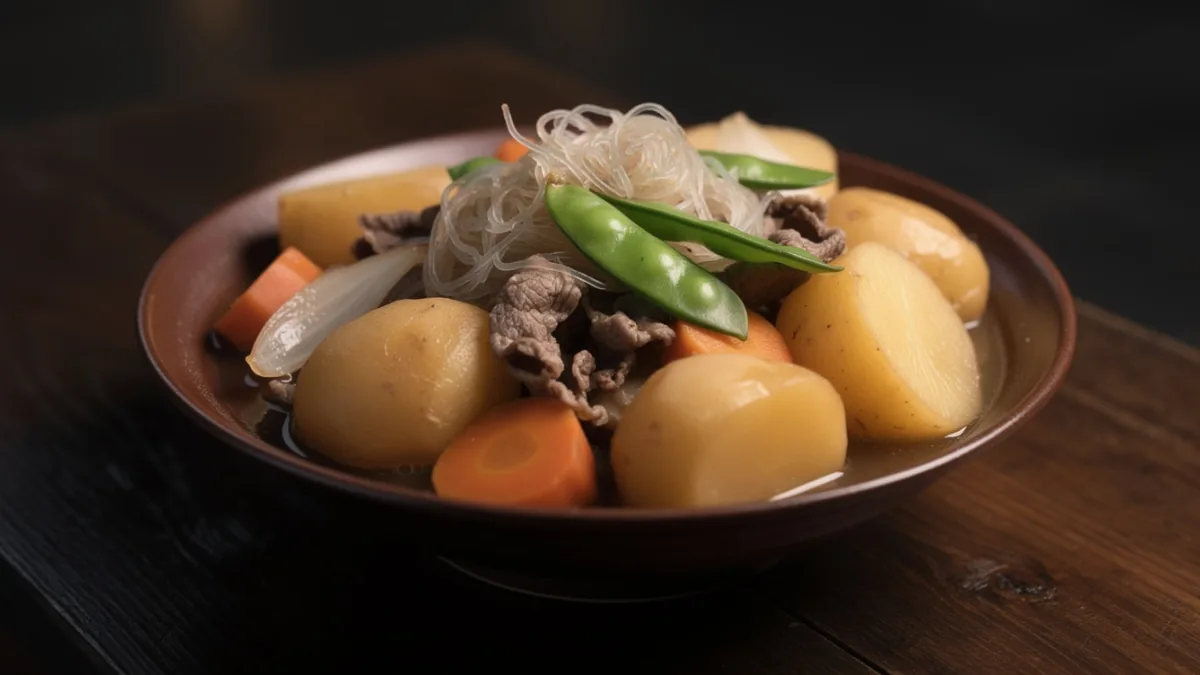
Preparation
- Quarter the potatoes, round off the sharp edges and put them in cold water so the starch comes out. Cut the onion and carrot and remove the strings from the mangetout.
- Bring water with a pinch of salt to the boil in a pot, blanch the mangetout for 1 minute and lift out. In the same water cook the drained, halved shirataki noodles for 1 minute and drain well.
- Halve or third the beef slices so the pieces are about 7 to 8 cm wide.
- Heat the oil in a large pot or casserole over a medium heat, sweat the onion wedges in it and add the meat until it is no longer pink.
- Fold in the potatoes, carrots and shirataki, pour in the dashi (the ingredients should be almost covered, otherwise add a little water) and bring to the boil with the lid on. Skim off the scum with a fine skimmer.
- Add the sugar, sake, soy sauce and mirin and stir. Lay a smaller lid or a cut-to-size piece of baking paper directly on the ingredients and simmer everything over a low heat for 12 to 14 minutes until a wooden skewer slides easily into a potato. Do not stir.
- Turn off the heat, remove the lid or paper and leave the stew, uncovered, for 30 minutes to 1 hour so the seasoning spreads through the vegetables.
- To serve, add the mangetout, reheat with the lid on, simmer gently for a few minutes and serve in bowls with a little of the broth.
Drink with it
Junmai sake · excellent match
Junmai, lukewarm (about 40 °C) or at room temperature
The rice fullness and the sake’s own umami join with dashi and soy, and the warmth makes the sweet-salty broth rounder.
Junmai, Ginjo, Daiginjo: What do these mean for sake?Ginjo sake · good match
Ginjo, lightly chilled
Fruity, delicate aromas set a fresh contrast to the sweet-salty broth and the soft meat.
Mellow whisky · good match
Mild Japanese blended whisky as a highball with lots of soda and ice
The soda keeps the palate fresh, and the light malt sweetness goes together with the mirin and sugar in the broth.
Whisky with food: cheese, chocolate, and savory dishesPale lager · good match
Japanese lager, cold
Slim bitterness and carbonation set a fresh counterweight to the sweet-salty soy broth.
Pils or Helles: What's the Difference?