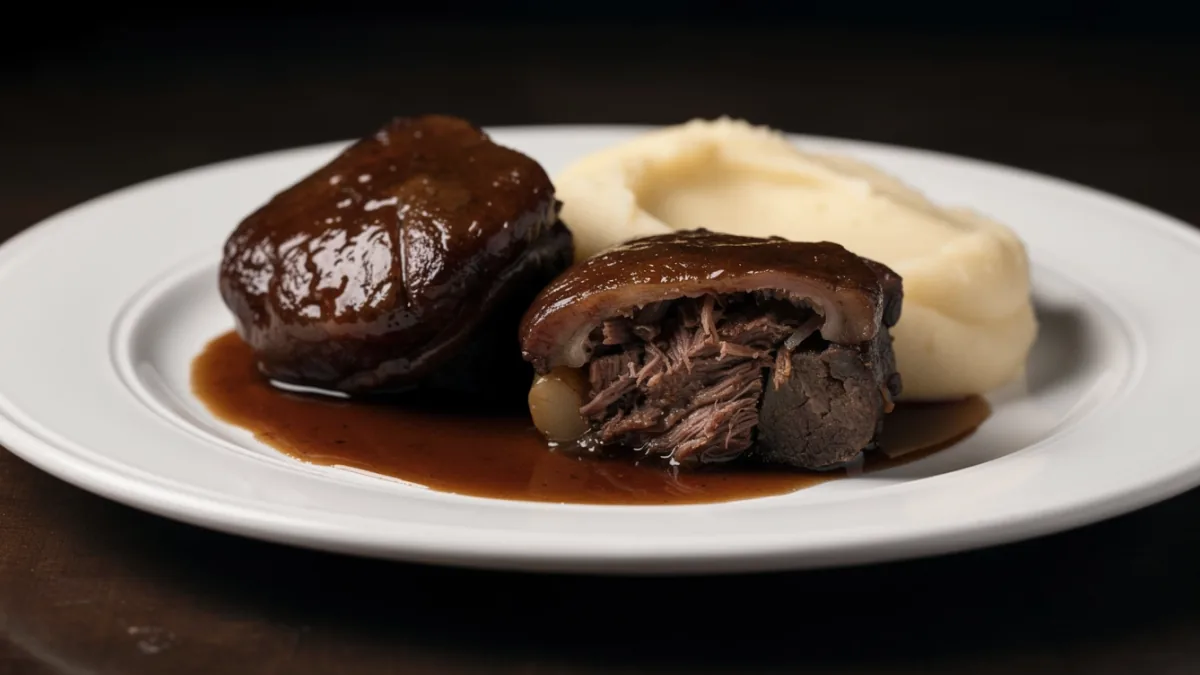
Preparation
- Preheat the oven to 160 °C (conventional, top and bottom heat). Season the cheeks all over with salt and pepper, roughly dice the onions, carrot and celeriac, and peel and crush the garlic.
- Heat the oil in a casserole and sear the meat hard in it, then remove. In the same casserole brown the vegetables and garlic, briefly toasting the tomato purée with them.
- Deglaze in turn with the balsamic, port and some of the red wine, reducing each a little without letting it catch. Repeat the whole thing once more with port and red wine.
- Return the meat to the casserole, top up with the remaining wine and the veal stock and bring briefly to the boil. Add the honey, rosemary, thyme, bay leaf, peppercorns and juniper.
- Braise covered in the oven for about 2.5 to 3 hours until the meat is tender. Take the meat out and keep it warm.
- Pour the sauce through a fine sieve and press down, then reduce to the consistency you want and season. Take off the heat, stir in the cold butter and serve the cheeks with the sauce; mash, potato gratin or polenta go well with it.
Drink with it
Red wine · excellent match
Spätburgunder (Pinot Noir) Grosses Gewächs or Rioja Reserva
Ripe fruit and soft tannins take up the roasted aromas and the dense wine reduction, and the gelatinous meat rounds off the tannins.
Which wine pairs with food? A simple approach to choosingDark beer · good match
Dark bock or dunkel, only lightly chilled
Malty roasted notes mirror the dark sauce, and the carbonation lifts the fat of the cheeks from the palate.
Which beer goes with food? More than just pils with barbecueSherry-cask whisky · good match
Speyside sherry-cask whisky, neat with a few drops of water
Dried-fruit and nut notes from the oloroso cask pick up the port and balsamic of the reduction; the water takes the edge off the alcohol so it does not drown out the sauce.
What Does the Cask Do to Whisky?
Why it pairs well
Whisky with a braise is unusual, but a sherry-cask whisky picks up the port and balsamic notes of the sauce.