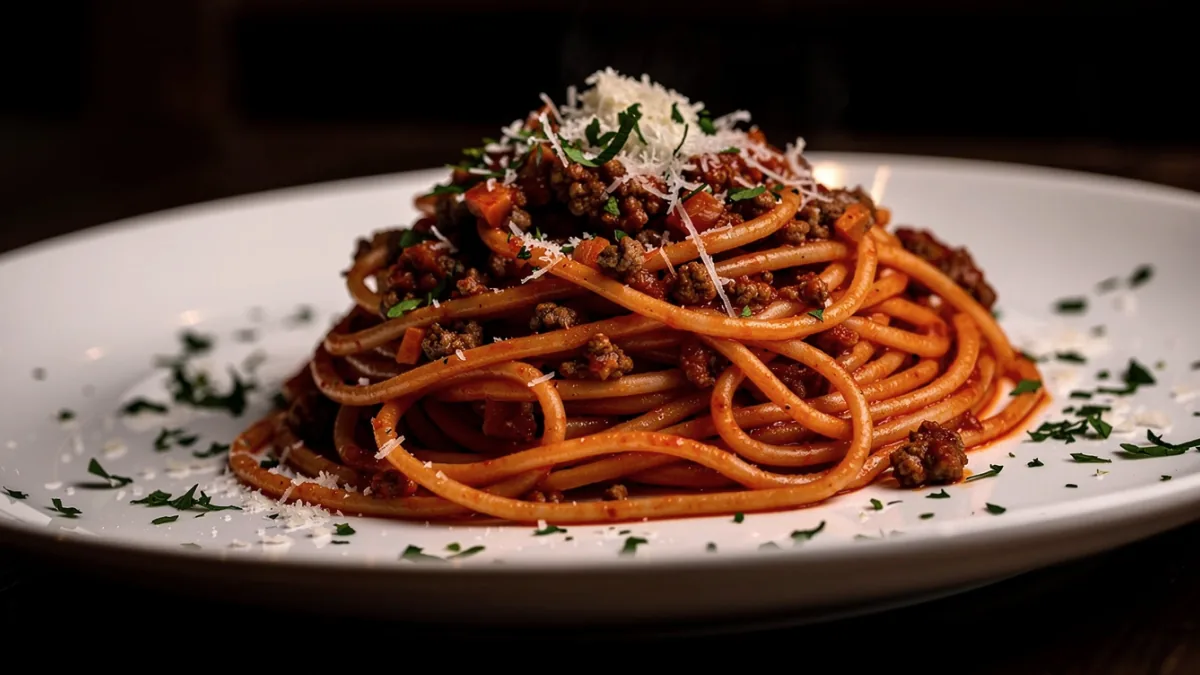
Preparation
- Heat the oil in a large pot or deep frying pan and sweat the onion, garlic, carrot and celery, if using, for 3 to 5 minutes until everything is soft.
- Turn up the heat, add the mince and brown it all over, breaking it up as it cooks.
- Deglaze with the red wine, simmer for 1 minute and scrape the browned bits from the bottom of the pan.
- Stir in the tomato purée, tomatoes, stock, oregano, bay leaves, Worcestershire sauce, salt, pepper and sugar if needed. Bring to the boil, then simmer gently without a lid over medium to low heat for about 40 minutes. If the sauce gets too thick, add a little water; the milk can be stirred in for a smoother, creamier sauce if wanted.
- Remove the bay leaves and taste the sauce. If you have time, add a splash of water, cover and leave it to simmer over very low heat for another 2 to 2.5 hours, then thicken it uncovered.
- Cook the spaghetti in plenty of salted water, draining it one minute before the time given on the packet, and keep a cup of pasta water.
- Add the pasta to the sauce with about 125 ml of pasta water and toss over medium heat for 1.5 to 2 minutes until the spaghetti is coloured red and the sauce clings. Serve with Parmesan and parsley.
Drink with it
Red wine · excellent match
Chianti Classico or Sangiovese di Romagna
Lively acidity and medium body balance the tomato and the fat in the mince, and the cherry fruit suits the sauce.
Which wine pairs with food? A simple approach to choosingRed wine · excellent match
Lambrusco secco (Grasparossa), chilled
In Emilia-Romagna this is the traditional companion to ragù: bubbles and acidity cut the fat of the mince, and the dark cherry fruit goes with the tomato.
Rosé · good match
Full-bodied dry rosato
Fresh acidity and red fruit accompany the tomato sauce without burdening it with tannins.
Pale lager · good match
Helles or Märzen
Light malt sweetness and carbonation cut through the fat in the sauce and let the tomato shine.
Pils or Helles: What's the Difference?