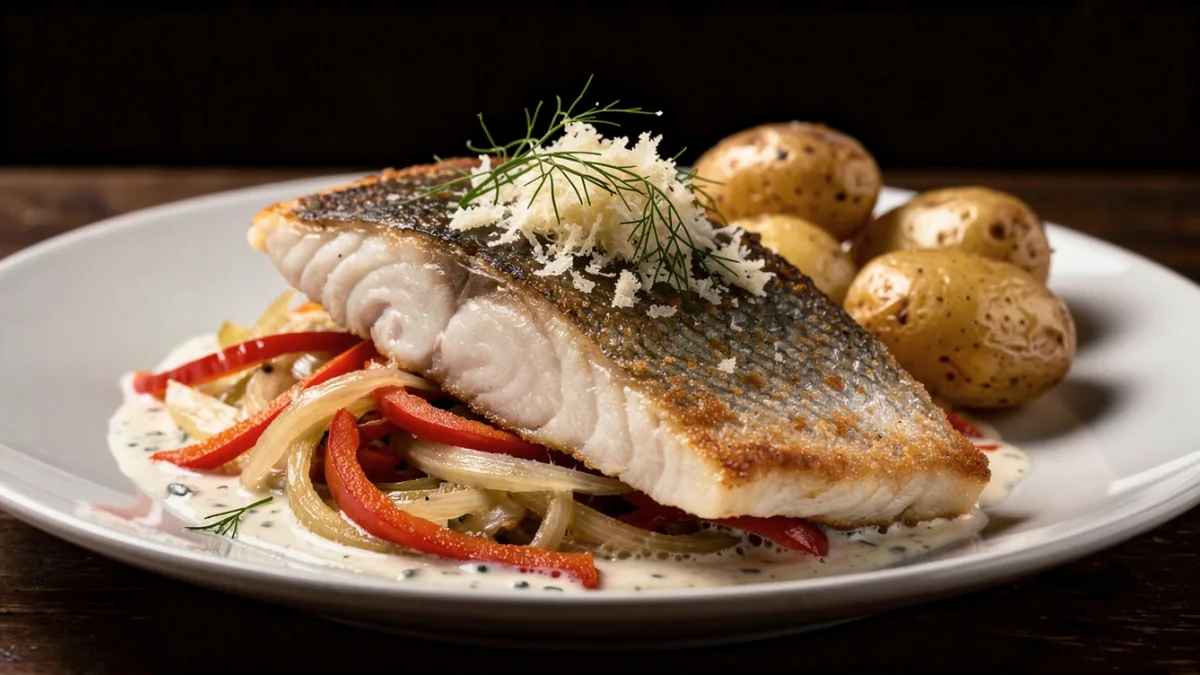
Preparation
- Wash the lemon in hot water, grate the zest and set aside, then squeeze the juice. Drizzle the pike-perch fillets with the juice and season lightly with salt and pepper on both sides.
- Halve the onion and cut into thin slices. Trim the peppers and fennel and cut into strips about 1 cm wide.
- Heat the olive oil in a pot and sweat the onion. Add the peppers and fennel and sweat for about 2 minutes, then pour in the stock and simmer over gentle heat for 10 minutes.
- Meanwhile, brush a non-stick pan thinly with oil, lay the fillets in it skin side down and fry over medium heat for about 3 minutes on each side.
- Stir the schmand and lemon zest into the vegetables and season with salt and pepper.
- Divide the vegetables among four plates, arrange the fish on top and sprinkle with chopped fennel fronds, with a little horseradish if you like. Boiled potatoes or rice go well with it.
Drink with it
White wine · excellent match
Dry Grüner Veltliner or Weissburgunder (Pinot Blanc)
Fresh acidity and fine spice keep fish and lemon light and meet the sweet pepper.
Which wine pairs with food? A simple approach to choosingGinjo sake · excellent match
Ginjo sake, well chilled
The fine, slightly sweet pike-perch flesh and the mild fennel anise take up the floral, fruity character of the Ginjo without the fish being covered.
Junmai, Ginjo, Daiginjo: What do these mean for sake?White wine · good match
Sauvignon Blanc from Styria
The green, slightly aniseed spice meets fennel and pepper, and the acidity suits the lemon juice on the fish.
Floral gin · good match
Floral gin with tonic and cucumber
Botanicals and cucumber mirror the fennel anise and herbs, and tonic and ice make the drink light.
Gin styles: London Dry, Old Tom, Navy Strength, and more
Why it pairs well
Freshwater fish with fennel and pepper is a white-wine classic; Ginjo is a surprise because with fruit and blossom it brings the same lightness, and the fennel anise lifts its aromas rather than disturbing them.