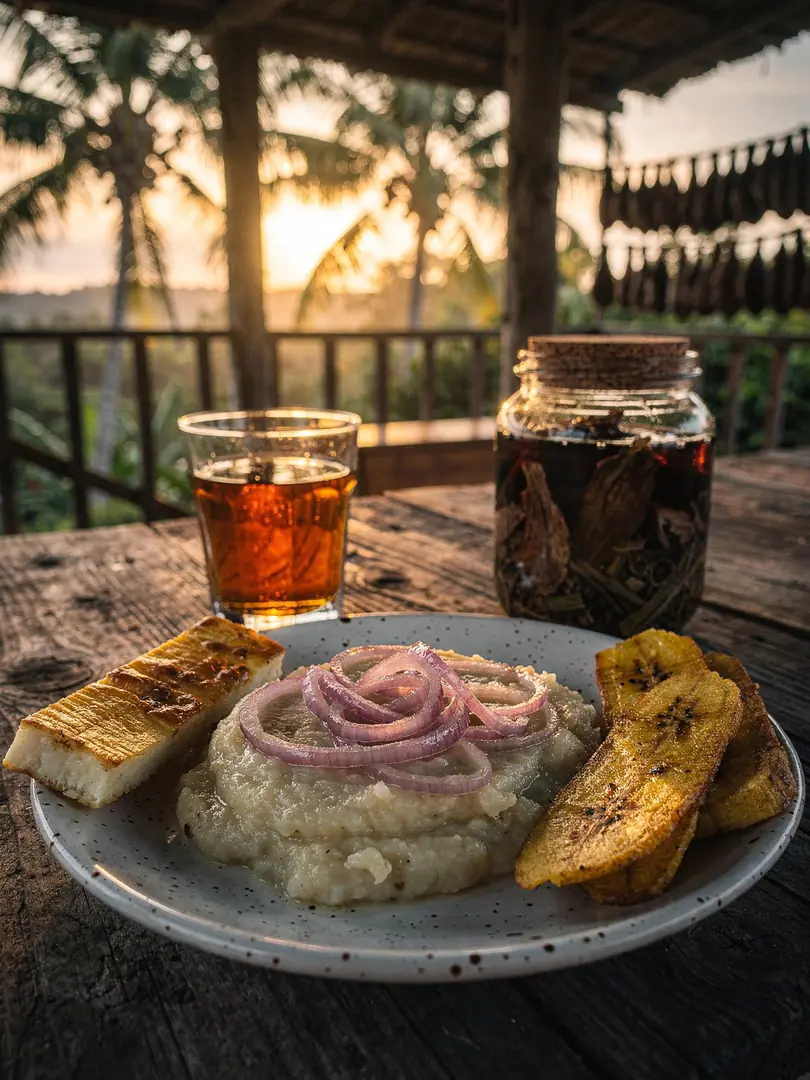
Cigar, Plate, Infusion
Food & Drinking Culture
Anyone drinking rum in Santiago is often sitting next to a cigar. In Tamboril, a town near Santiago, many cigar factories are found, and La Aurora in Santiago, founded in 1903, is considered the country's oldest tobacco company. In the Cibao, rum and tobacco are neighbors.
On the plate is what Dominicans eat every day. For breakfast there's mangú, a mash of boiled green plantains with onions, cheese, or egg. Sancocho, a stew with several kinds of meat, root vegetables, and plantain, is served on festive occasions. Rum answers fat and salt with sweetness and wood.
On the north coast near Puerto Plata, where the Pico Isabel de Torres rises above the city, people eat yaniqueque, a fried flatbread, along with tostones, crispy fried plantain slices, and chicharrón, fried pork skin. Against the saltiness, a rum with caramel sweetness holds up well.
The area's most famous drink is an infusion, the Mamajuana. A bottle contains barks, roots, and herbs, topped up with rum, red wine, and honey. The drink is regarded as folk medicine and said to trace back to the Taíno, a tradition that cannot be verified. It cannot legally be sold as rum.
In February, Santiago celebrates Carnival with colorful masks and parades. Rum and food belong together at such festivities, since the houses of the three B's are part of everyday life in the country, at family celebrations as much as in the bars.