Plate and Glass
Food & Drinking Culture
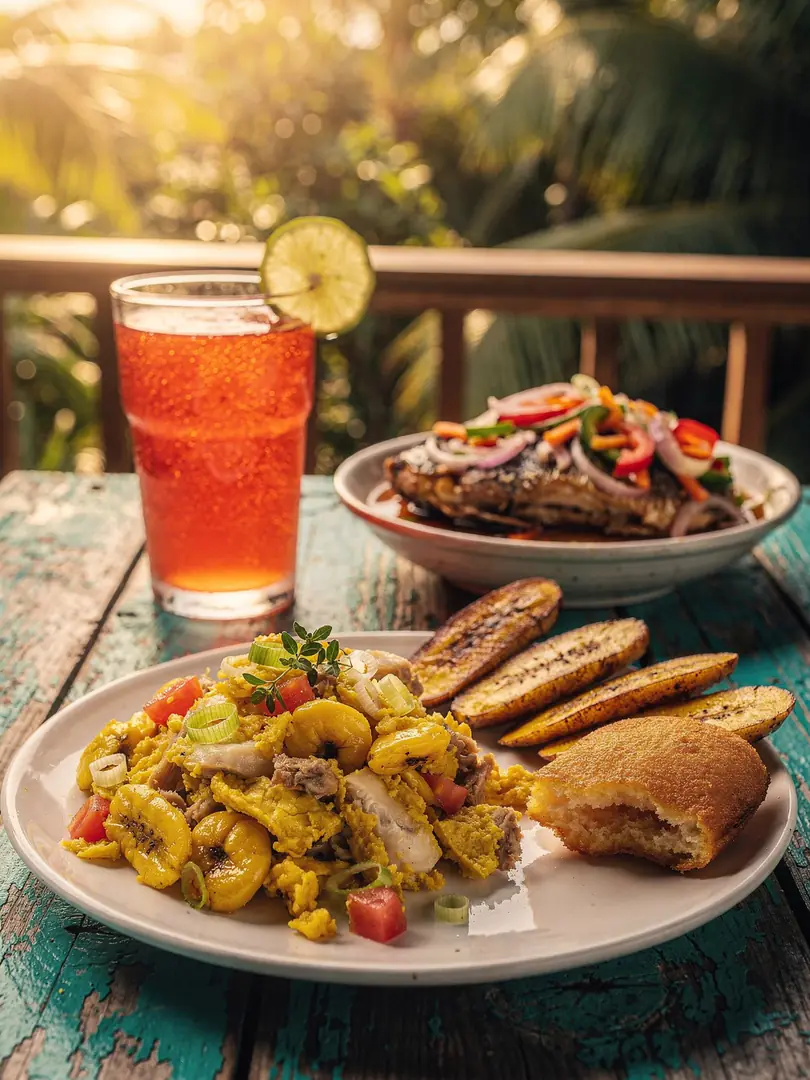
On Jamaican breakfast tables, Ackee and Saltfish is a classic: the fruit of the ackee tree is cooked until it resembles scrambled eggs, then fried with salted cod, onion, tomato and Scotch bonnet chilli. It's considered the national dish and tastes soft, salty and spicy.
Escovitch Fish is fried fish topped with a layer of vinegar, onions, carrots and chilli. The acidity cuts through the fish's richness, and the chilli's heat pairs well with the heat of overproof rum when it turns up in a punch at the table. Often served alongside are festival, a fried, lightly sweet cornmeal dough, and bammy made from cassava.
Wray & Nephew White Overproof is called, by its maker, the rum of the Jamaican people. According to the producer, it's deeply woven into culture, tradition and everyday life. Rum also plays a role in the kitchen: Jamaican Christmas black cake contains dried fruits soaked in rum for a long time.
As a drink, the overproof usually arrives mixed, rarely neat. A rum punch with fruit, lime and spice is considered classic, and the highball with ginger beer, sold by retailers as a Jamaica Mule, also tames the rum's power and lets the fruit shine through.
In Clarendon and Lluidas Vale, rum belongs to the operations that make it: the sugar factory, the start of the harvest, the valley. Anyone visiting the area sees cane, factory and distillery close together. How much access visitors get varies from estate to estate. In this region, rum remains what it has always been: a sugar byproduct that earned a name of its own.