Bar and Plate
Food & Drinking Culture
The Daiquirí belongs to Havana as much as the Malecón does. It consists of rum, lime juice, and sugar, nothing more, and only succeeds when the three stay in balance. Tradition has it that it originated around 1900 in the east of the island, becoming famous in the bars of the capital.
The bar El Floridita, on the corner of Obispo and Monserrate, traces its roots back to 1817, when it was known as La Piña de Plata. The house is regarded as the birthplace of the frozen Daiquirí made with crushed ice. The Papa Doble, a variation with more rum and no sugar, is linked to Ernest Hemingway.
La Bodeguita del Medio is its counterpart, a small spot in the Old Town that started out as a grocery store and became a bar after World War II. Its Mojito is often linked to Hemingway, though the line "My Mojito in La Bodeguita, my Daiquirí in El Floridita" cannot be found in his writings. The origin of the Mojito remains unclear. One tradition points to a medicinal remedy, another to the workers of the sugarcane fields.
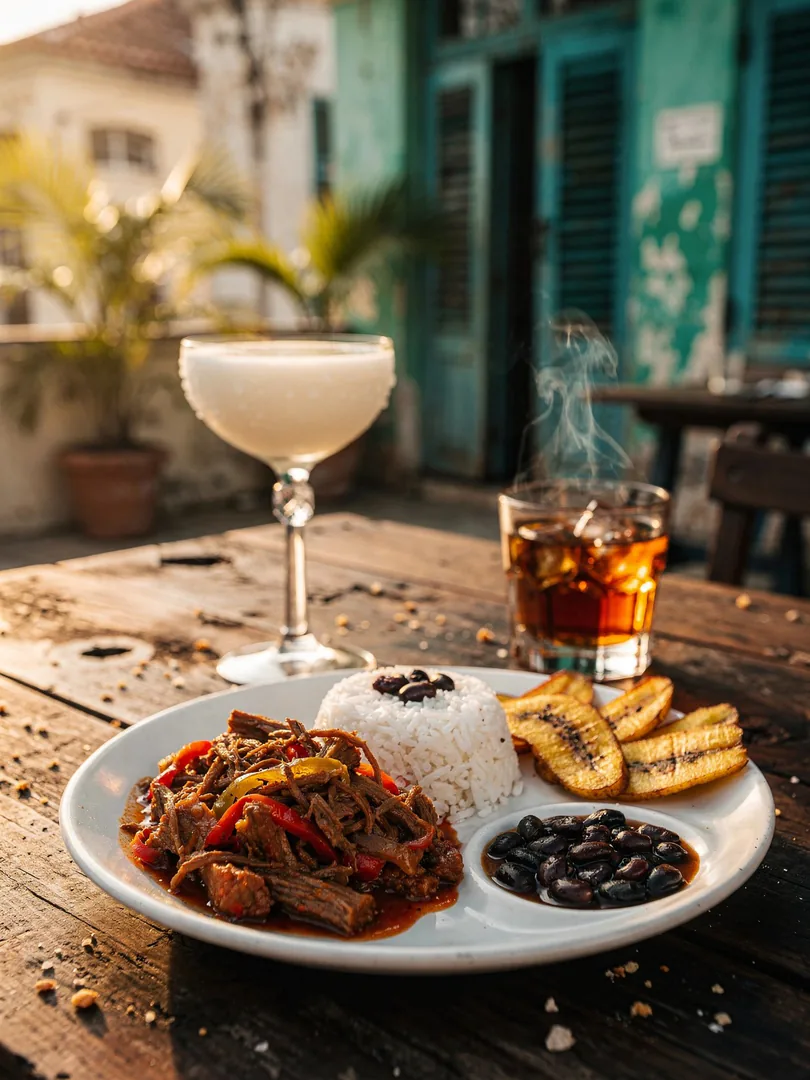
Among the dishes is ropa vieja, shredded beef in tomato sauce, whose name means "old clothes." Alongside it comes Moros y Cristianos, black beans with white rice, and fried plantains. The rice dish's name recalls the Moors and Christians of the Reconquista. The sweetness of the plantain, the acidity of the tomato, and the saltiness of the meat meet a rum that is itself dry and smooth.
The Cuba Libre is said to have combined rum with cola and lime since around 1900. Anyone wanting to see how the rum is made will find the Havana Club Rum Museum in Havana's Old Town.