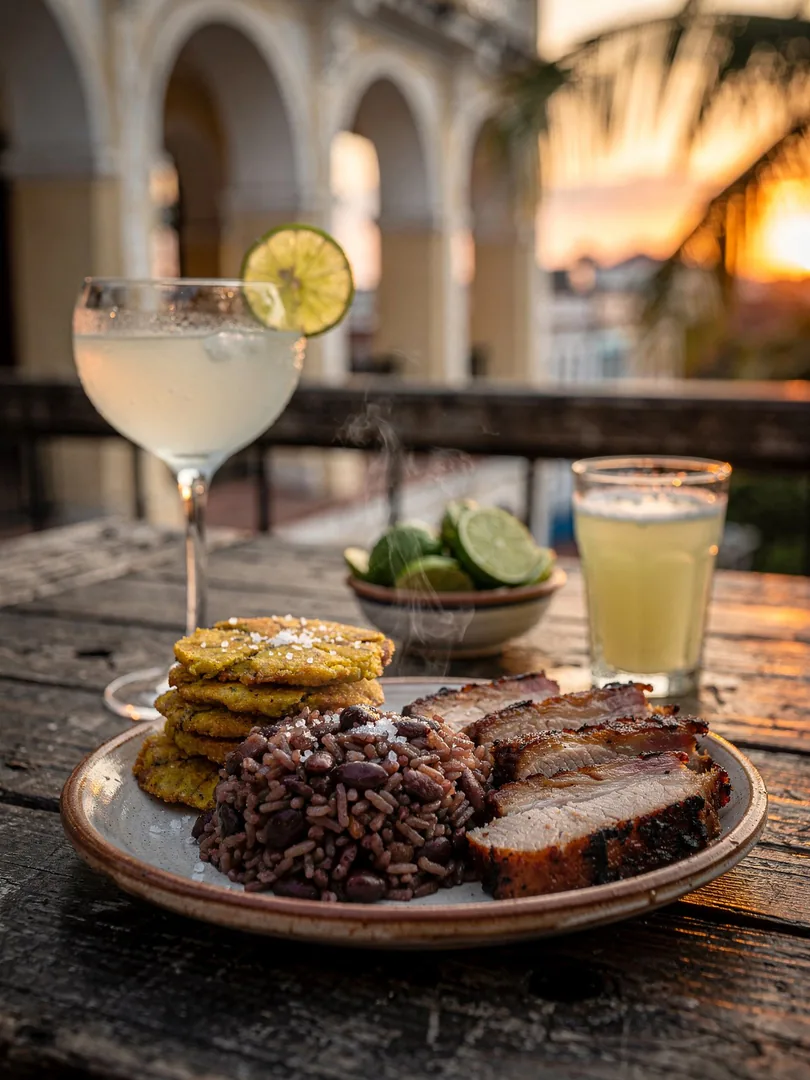
Congrí and Daiquirí
Food & Drinking Culture
On the plates of Santiago de Cuba, you'll find Congrí oriental, rice and red beans cooked together with pork, garlic, and cumin. The name comes from Haitian Creole. The dish is considered a specialty of the east, particularly around Santiago and Guantánamo.
A hearty dish like this pairs well with an Añejo, since the wood and caramel notes absorb the seasoning of the meat. Ajiaco, the stew considered the national dish, made with pork, chicken, dried beef, corn, pumpkin, and plantains, pairs better with a light rum.
When it comes to drinks, the path leads to the Daiquirí. The town of Daiquirí, a beach, iron mine, and village, lies about 14 miles east-southeast of Santiago. According to tradition, it was there that American mining engineer Jennings Cox mixed rum, lime juice, and sugar around 1898. Cox had been running the Spanish-American Iron Company since 1897.
A classic Daiquirí consists of rum, lime juice, and sugar syrup. How much sugar goes in is a matter of taste, and it all comes down to the balance of sweetness and acidity. The Daiquirí is considered the foundational recipe for sour cocktails: spirit, citrus, sweetener. This triangle of rum, acidity, and sweetness reappears in many other drinks. Where the drink truly originated first remains a matter of lore.
In July, Santiago celebrates its carnival, one of the country's best-known. Son, the music said to have originated in the east of the island, is part of every evening. Street stalls sell freshly pressed sugarcane juice, guarapo, entirely alcohol-free. Rum remains a part of the food culture, but not a requirement.