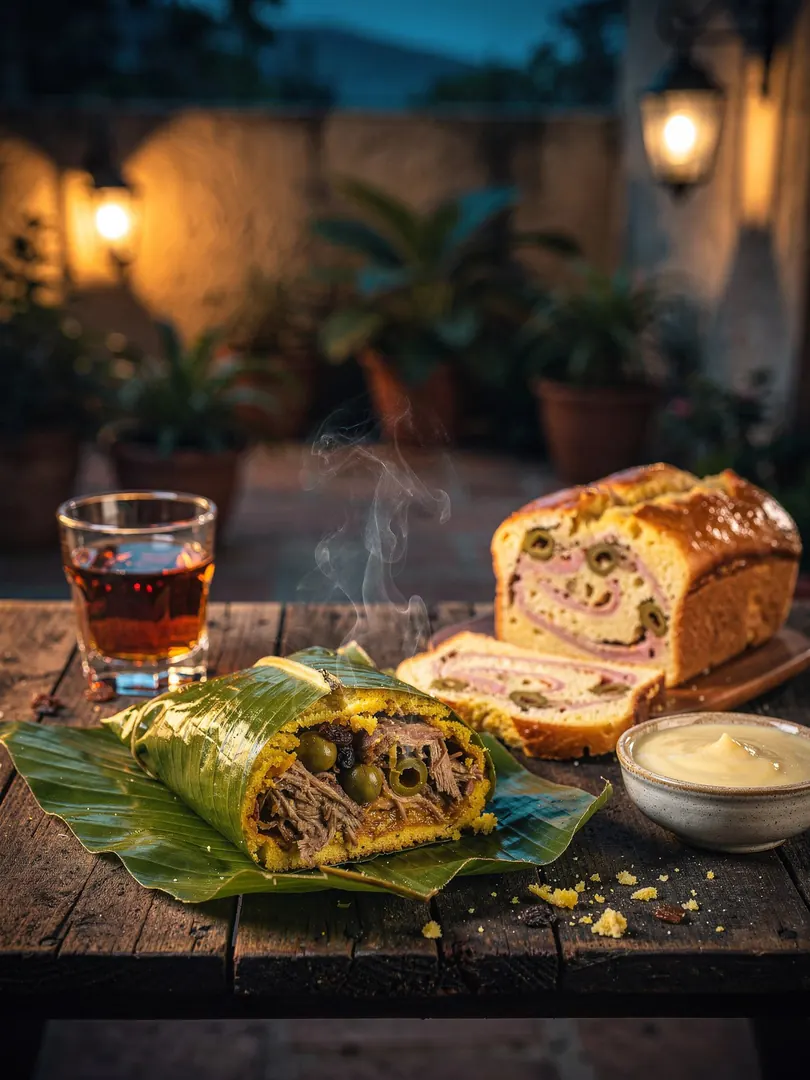
Hallaca and Ponche
Food & Drinking Culture
At Christmas in Venezuela, the hallaca takes center stage on the table: corn dough filled with meat, olives, capers, and raisins, wrapped in banana leaves and cooked. The mix of salty, sweet, and tangy pairs well with a soft, cask-driven rum, since its caramel and orange peel notes echo the raisins.
Alongside it comes pan de jamón, a white bread rolled up with ham, olives, and raisins. And there's the drink of the season: Ponche Crema, a creamy eggnog-style liqueur that many households mix with rum. It's sweet and thick, meant for spooning and sharing.
Those looking for sugarcane beyond the bottle will find it in everyday life. Papelón is the name for thickened, unrefined cane sugar sold in solid blocks. Dissolved in water and served with lime, it becomes papelón con limón, a cool refreshing drink. In asado negro, a braised beef dish, it lends the dark sauce both color and sweetness.
In the dry part of Lara, goat meat is part of the cuisine, and next door in the state of Falcón, cocuy is at home—a spirit distilled from agave, built on a completely different raw material than rum. The fact that the La Miel distillery can produce it shows just how broad the region's tradition really is.
On January 14th, the procession of the Divina Pastora winds through the streets of Barquisimeto, the state capital. It's one of Venezuela's great religious festivals, and the whole city joins in with food, music, and sweets. Rum plays a supporting role here, on the sidelines—not as the centerpiece.
Those wanting to cook at home can start with corn, banana, and braised meat. A Cuba Libre needs nothing more than rum, cola, and lime. A light rum like Planas disappears into the mix, while a dark rum brings caramel and spice to the table. The same rule applies to both: the dishes of the region are bold and sweet, so the rum should be too.