At Least Twelve Months
Lees Aging & Dosage
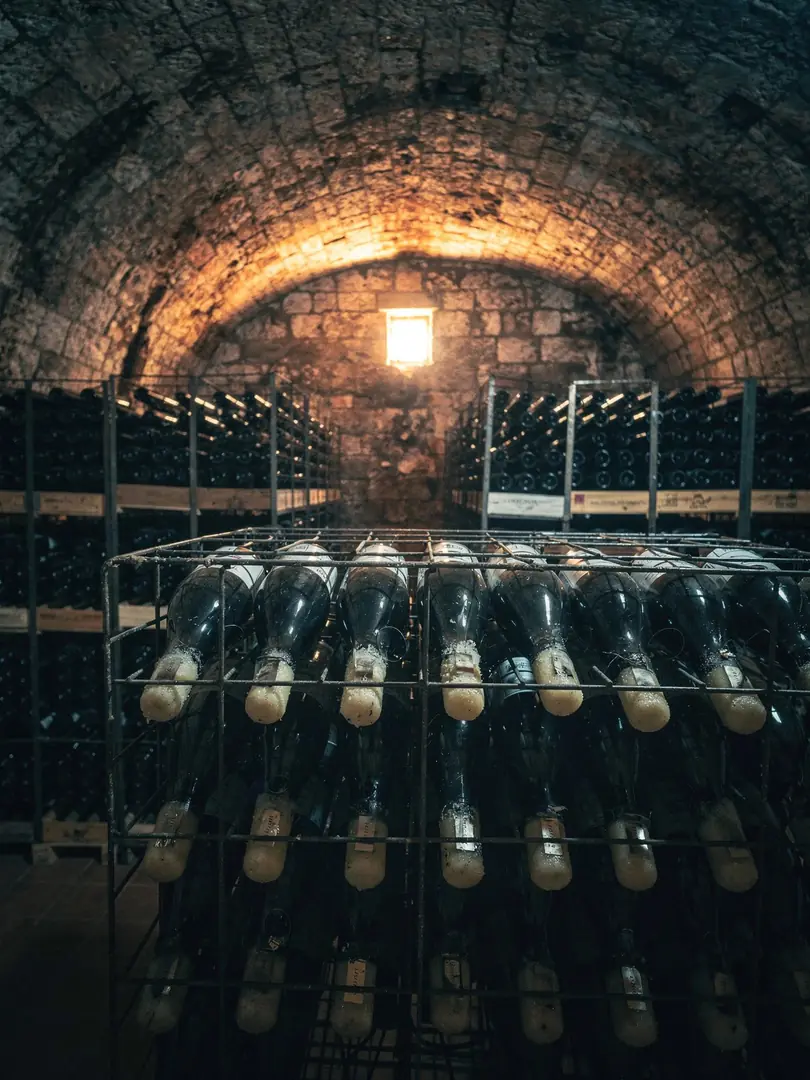
After this, the wine continues resting on its lees. For Altos de Pinto Bandeira, the appellation rules require a minimum of twelve months. During this time, dead yeast cells break down and lend the wine notes of bread, pastry and nuts — experts call this autolysis.
How much additional time a house takes is its own decision. Casa Valduga in the Vale dos Vinhedos cites 36 months on the lees for its Brut Blanc de Noir, and twelve months in an underground cellar for its Arte Tradicional Brut line. The DO Vale dos Vinhedos permits the Nature, Extra Brut and Brut levels for sparkling wine — only the dry to very dry styles. This too is part of the appellation's purpose: to protect not sweet, but taut, dry sparkling wines.
For the wine to become clear, the yeast must be removed from the bottle. The bottle is gradually turned upside down and rotated regularly, a process called riddling. It's done by hand on riddling racks or mechanically in gyropalettes. Then comes disgorgement: the bottle is briefly opened, and the pressure shoots the yeast sediment out of the neck.
Next comes the dosage, a small addition of wine with dissolved sugar that tops the bottle back up. For Nature, no sugar is added at all; for Extra Brut, only a very small amount; for Brut, a bit more. A Brut is therefore dry, but not bone dry. How the levels from Brut Nature to Doux relate to one another is covered in the article on Brut and Extra Dry.
The sweet Espumante Moscatel receives no dosage. Its sweetness comes from the grape's own sugar, which remains in the wine after fermentation is halted. It also requires no lees aging and is bottled fresh and cold to preserve its aroma.