Bottle, Tank, Muscat
The Second Fermentation
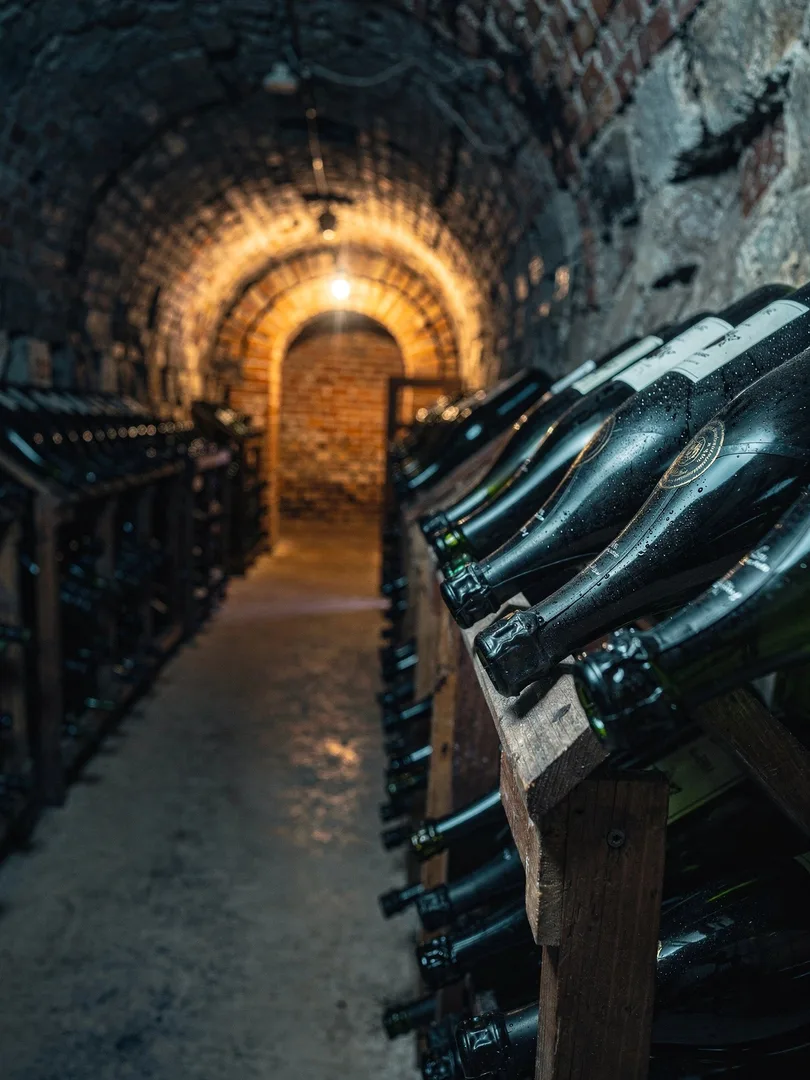
Espumante in Brazil covers two very different paths. The first is classic bottle fermentation, called "método tradicional" in Brazil: the base wine receives sugar and yeast, is sealed in the bottle, and ferments a second time inside it. This produces the carbon dioxide that later creates the bubbles, and the bottle must withstand more pressure than a car tire.
This method is mandatory for Altos de Pinto Bandeira, as well as for sparkling wines under the DO Vale dos Vinhedos. The bottles then rest on the lees until the cellar master disgorges them — more on this in the next section. The pressure inside the bottle comes from the sugar that yeast converts into alcohol and carbon dioxide. The more sugar added, the higher the pressure rises, which is why cellar masters calculate the quantity precisely before sealing the bottles.
The second path is tank fermentation, usually called Charmat in Brazil. The second fermentation takes place in a large stainless steel pressure tank, and bottling happens under counter-pressure. This method is faster, cheaper, and preserves fresh fruit character. It also defines the Espumantes of Chandon do Brasil in Garibaldi, and it explains why so much Espumante tastes young and fruity.
The Espumante Moscatel holds a special place. It follows the Asti method: the Muscat must stays cold, begins fermenting in tank, and fermentation is halted while sugar remains in the wine. There is thus no second fermentation, but a single, interrupted one. The result is sweet, light and low in alcohol.
Anyone reading a label can often spot the method from a note like "método tradicional" or from the stated appellation. If neither appears, chances are high that what's in the glass is a tank-fermented wine — not a judgment, just a different style.
Altos de Pinto BandeiraBottle fermentation · Chardonnay, Pinot Noir, Riesling Itálico
- Time on lees
- 12–36 Months
- Sugar
- 0–12 g/l
- Alcohol
- 12–12.5 % vol
Taut acidity, citrus and apple, fine bubbles, a toasty note after a year of aging.