Blanc de Noirs
Base Wine & Cuvée
A good sparkling wine begins with a wine you'd barely want to drink on its own: pale, thin, and sharply acidic. This base wine is the raw material that only becomes refined through second fermentation and time on the lees. As a cuvée, it must have a minimum total alcohol content of 9% vol.
The sugar used for the second fermentation, the liqueur de tirage, raises the alcohol by no more than 1.5% vol. That's why producers on the Kaiserstuhl and along the Upper Rhine harvest early. If the grapes ripen to full sweetness, the finished sparkling wine becomes too heavy and loses the freshness that good sparkling wine needs.
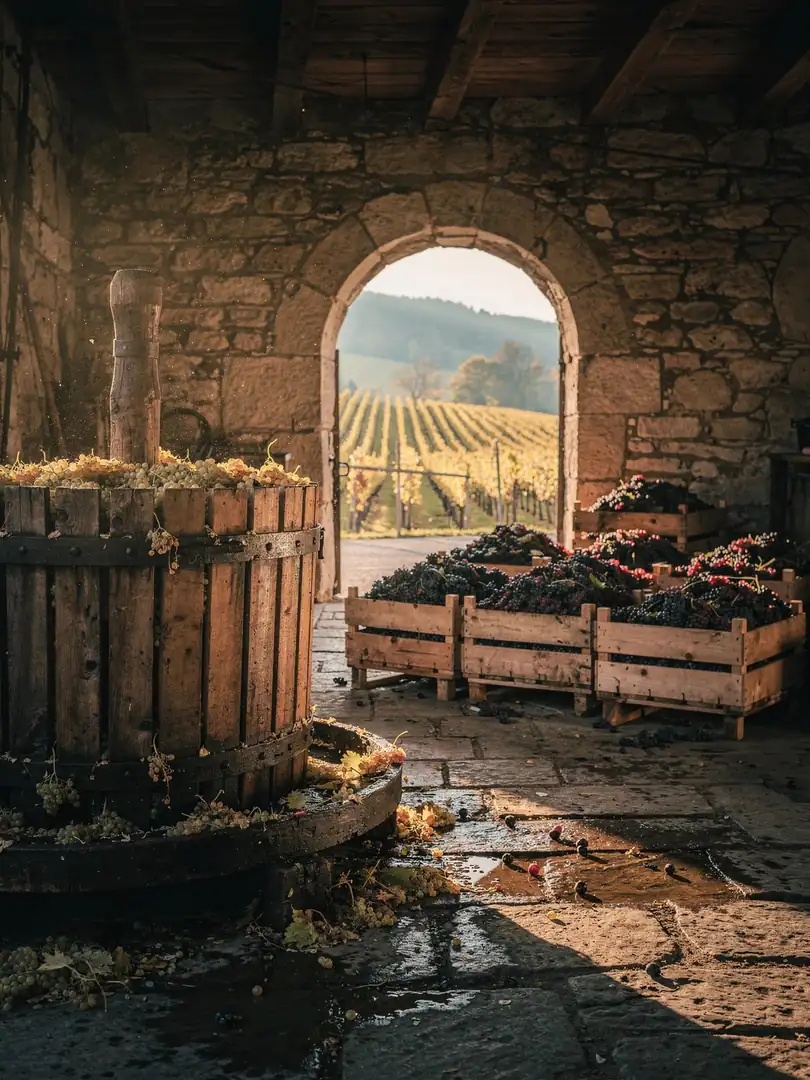
For Blanc de Noirs — white wine made from dark-skinned grapes — the Spätburgunder is pressed gently immediately after harvest. The juice runs off clear before the skins can impart any color. If a hint of pink remains, it shows up in the glass as a delicate salmon hue.
For Crémant, the law requires hand harvesting and limits pressing to a maximum of 100 liters of must from 150 kilograms of grapes. When whole grape clusters, stems and all, are pressed, the juice runs off clean and low in tannin.
Next comes blending, the assemblage. The cellar master tastes many base wines from different varieties, vineyard sites, and barrels, and balances them into a cuvée. For non-vintage sparkling wine, reserve wines from previous years help keep the house style consistent. Winzersekt, by contrast, carries the grape variety and vintage on the label, so blending across many years isn't possible there.