Bottle, Not Tank
The Second Fermentation
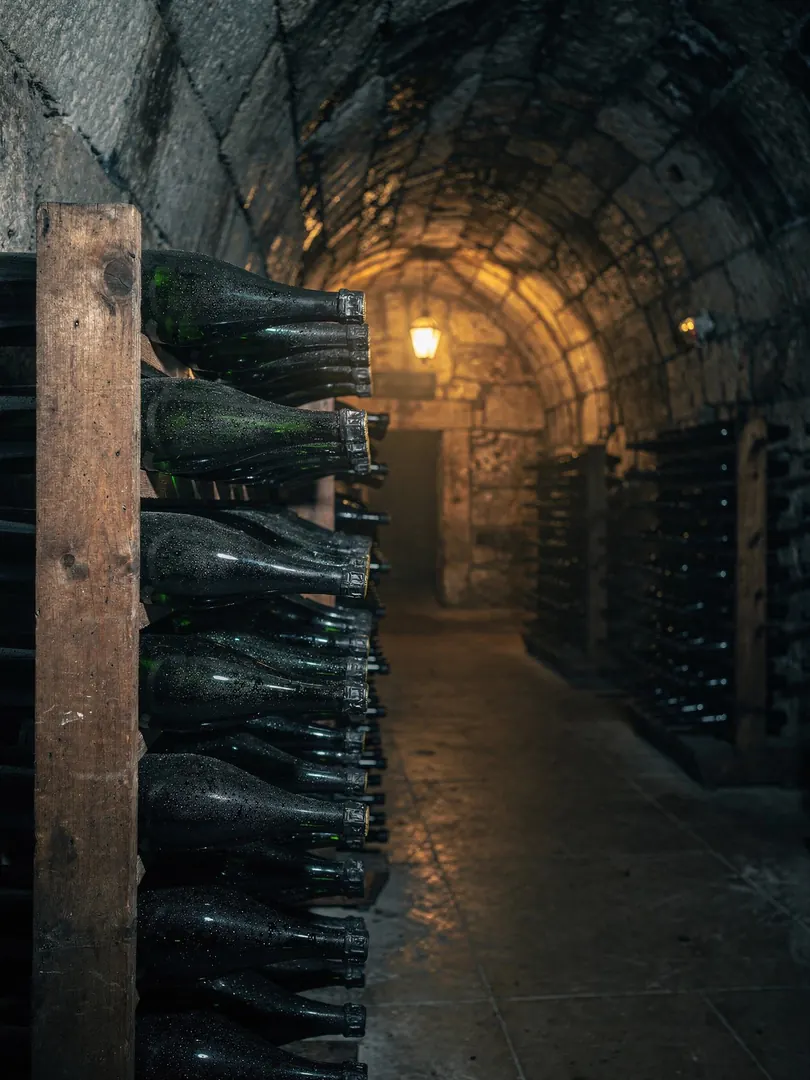
Geldermann in Breisach bottles its sparkling wine using the traditional method: the second fermentation takes place in the very bottle in which it will later be sold. That's why the label reads traditionelle Flaschengärung (traditional bottle fermentation). The term "Champagne method" may not be used outside of Champagne, even though the model originated in Aÿ.
It all begins with the tirage, the bottling of the cuvée. The cellar master adds sugar and yeast, the liqueur de tirage, then seals the bottles. They now rest horizontally in the cellar. The yeast converts the sugar into alcohol and carbon dioxide, which has nowhere to escape and dissolves into the wine instead. The result is a pressure of at least 3.5 bar — more than in a car tire.
The law recognizes two terms that are easily confused. "Flaschengärung" (bottle fermentation) allows the yeast to be separated from the wine by transferring it into a tank, known as the transfer method. "Traditionelle Flaschengärung" (traditional bottle fermentation), on the other hand, requires at least nine months of uninterrupted aging on the lees at the same producer, with disgorgement from that same bottle.
The counterpart is tank fermentation. Here, the wine ferments under pressure in a large stainless steel tank and is only bottled afterward. This method is faster, cheaper, and well-suited to fruity, fresh sparkling wines. For quality sparkling wine, six months of production time suffice, including 90 days on the lees — or just 30 days if a stirring device is used. Many branded sparkling wines are made this way.
You can tell which method a sparkling wine took by reading the label. As everywhere in Germany, on the Upper Rhine, if the label simply says "Sekt," either method is possible. At Geldermann, according to the tourism office, the bottles rest on riddling racks in the old vaulted cellars; at the Badischer Winzerkeller and among the region's winegrowers, it depends on the particular sparkling wine.
Pinot Sparkling Brut from BadenBottle fermentation · Spätburgunder, Weißburgunder, Chardonnay
- Time on lees
- 9–24 Months
- Sugar
- 6–11 g/l
- Alcohol
- 11–12.5 % vol
Apple and pear, bread crust, medium acidity, fine bubbles.