Waiting, Riddling, Dosing
Lees Aging & Dosage
Sparkling wine with traditional bottle fermentation must rest on the lees for at least nine months by law, counting from the cuvée. Many houses leave it far longer. The VDP association requires a minimum of 15 months for its VDP.Sekt, 24 for a vintage wine, and even 36 months for VDP.Sekt Prestige.
During this time, the yeast slowly breaks down and releases compounds into the wine. Experts call this autolysis. It produces aromas reminiscent of brioche, nuts, and toasted bread, and makes the bubbles creamier. The longer the yeast works, the less the sparkling wine tastes of pure fruit.
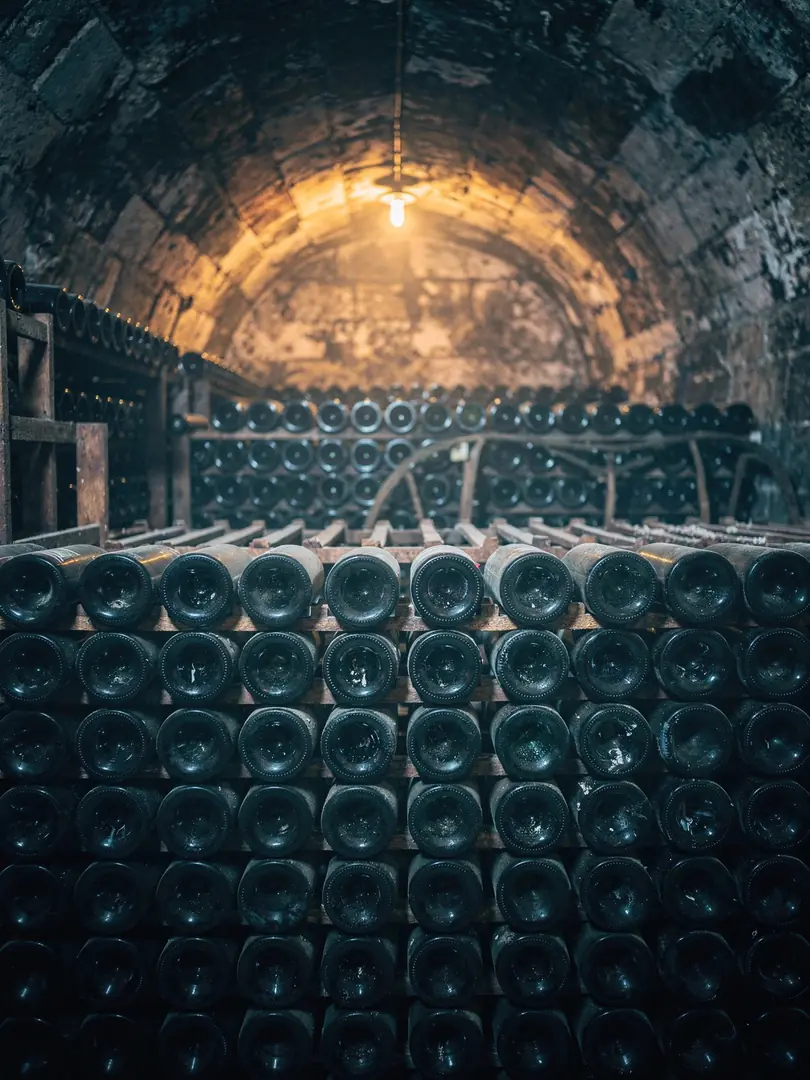
For the sparkling wine to turn clear in the end, the yeast must be removed from the bottle. For this, the bottles are placed in riddling racks — at Geldermann, according to the tourism office, in wooden riddling boards within the vaulted cellars. Every few days, each bottle is turned slightly and tilted more steeply, until it stands upside down with the yeast collected in the neck.
During disgorgement, the neck is briefly chilled, and the plug of frozen yeast sediment shoots out of the bottle under pressure. What remains is clear sparkling wine. Next comes the dosage: the cellar master tops up the lost volume and, if desired, adds dissolved sugar. This may raise the alcohol content by no more than 0.5% vol.
How sweet a sparkling wine is can be read on the label. Brut Nature stays under 3 grams of sugar per liter, Extra Brut between 0 and 6, Brut under 12. Extra Dry ranges from 12 to 17 and is therefore sweeter than Brut, Trocken (Dry) 17 to 32, Halbtrocken (Off-Dry) 32 to 50, and Mild (Sweet) over 50. Some Pinot sparkling wines from Baden skip dosage entirely, such as the Burgunder-Sekt Brut Nature from Weingut Wasenhaus.