Glass and Temperature
Tasting
Pinot sparkling wine from Baden has aromas of ripe apple, pear, and freshly baked bread. With Spätburgunder, red berries often join in; with Weißburgunder, it's more pale, green fruits. After extended lees aging, nut and brioche notes take center stage, the bubbles grow finer, and the wine feels creamier.
Three producers are well suited for comparison. The Brut from Geldermann shows how sparkling wine made in the Champagne style tastes in Breisach. The Sekt Schloss Munzingen from Badischer Winzerkeller represents cooperative sparkling wine from Baden. Weingut Wasenhaus demonstrates with its Burgunder-Sekt Brut Nature what Baden sparkling wine tastes like with no dosage at all.
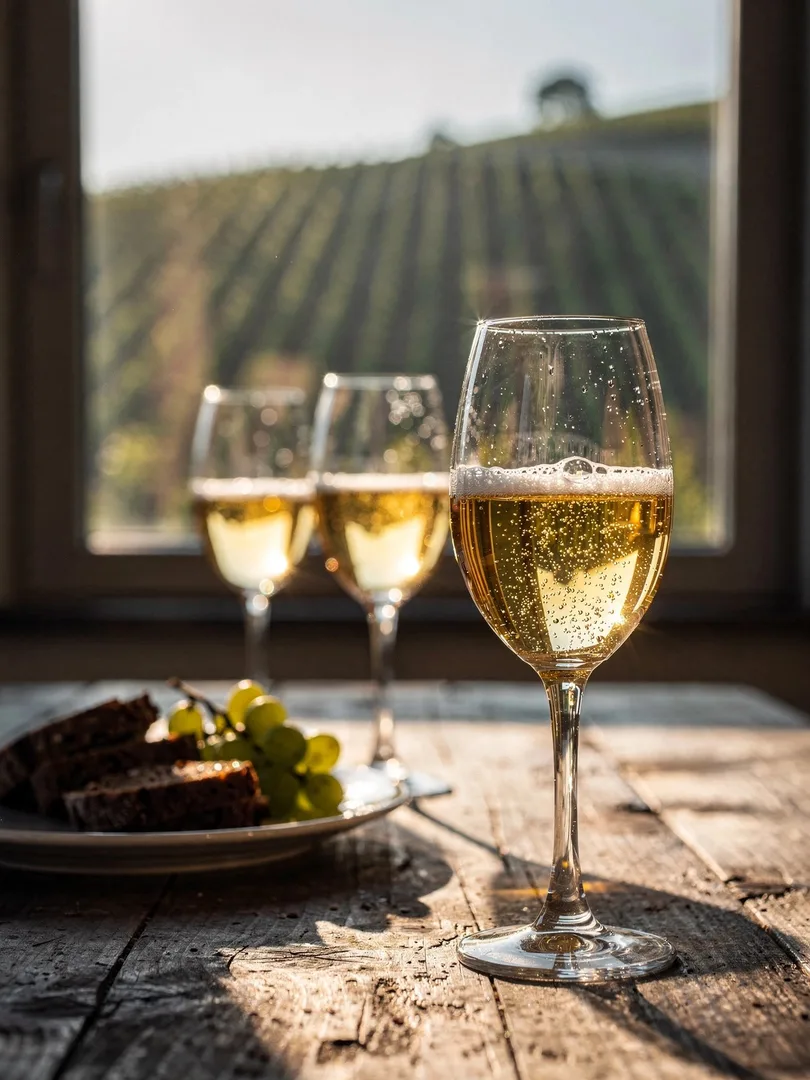
The flat coupe glass, a relic of earlier times, lets both bubbles and aromas escape quickly. A tulip glass or a slender white wine glass is better. It concentrates the aroma and gives the bubbles room to rise. Filling the glass only about a third full allows the aroma to be properly appreciated.
Sparkling wine made through bottle fermentation tastes best at 8 to 10 degrees Celsius; simple tank-fermented sparkling wine can be served a bit colder. Too cold, and the delicate aromas stay muted; too warm, and the wine feels flabby while the carbonation fizzes away quickly. A quarter hour in an ice bucket or the fridge is usually enough.
When opening the bottle: remove the foil, loosen the wire cage but don't take it off, and keep one hand firmly on the cork. Then slowly turn the bottle, not the cork. It should hiss softly, not pop loudly. That way the carbonation stays in the wine, not on the floor.