Kessler since 1826
Region & History
Germany's oldest still-operating sparkling wine house stands in Esslingen am Neckar. Kessler was founded on 1 July 1826. There were earlier attempts, such as one in Naumburg around 1824, but Kessler is today recognized as the oldest surviving sparkling wine house.
Its founder was Georg Christian Kessler, an employee who from 1807 worked at the Champagne house Veuve Clicquot in Reims, rising there to management level. He knew the second fermentation in the bottle from everyday practice at a great house, not from books. Together with H. A. Georgii, he built up the method in Esslingen, using wine from the surrounding area instead of Champagne.
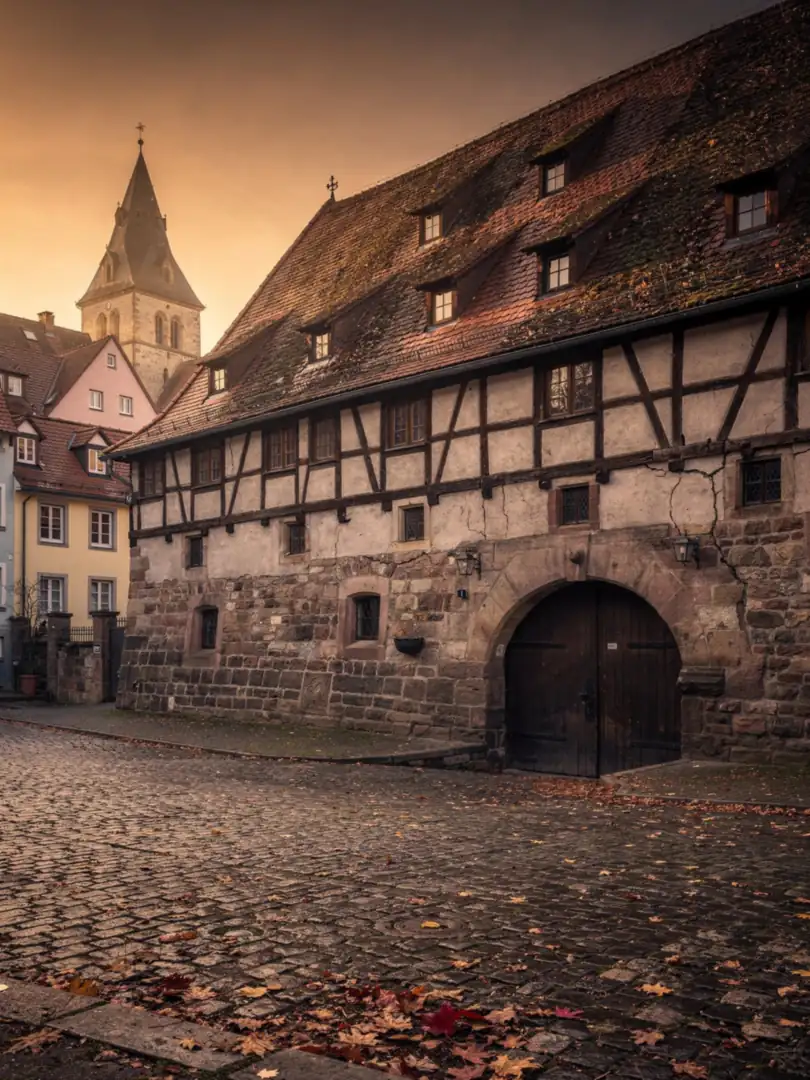
Since 1832, the cellars have been located in the Speyrer Pfleghof. A Pfleghof was an administrative and trading estate, in this case belonging to the Speyer Cathedral Chapter, which used it to manage the wine from its Esslingen monasteries and vineyards. The vaults therefore served for a long time as wine cellars before bottles came to rest there on the lees.
Sparkling wine from Esslingen found buyers at the very top: for a time, Kessler supplied the Württemberg royal court. In 1892, the house was among the founding members of the Association of German Sparkling Wine Producers, which today represents about 95 percent of domestic production.
In December 2004, Kessler filed for insolvency due to falling sales. Four months later, private investors stepped in, and in 2005 Christopher Baur took over the house together with new partners. Today, Kessler fills around two million bottles a year.
The Württemberg wine region covers roughly 11,800 hectares and is Germany's fourth-largest. Alongside the sparkling wine houses, 41 independent winegrowers' cooperatives and one central cooperative supply the wine. Sparkling wine made from Württemberg grapes is labeled "Sekt b.A." and carries an official quality control number.