Rotkäppchen and Naumburg
Region & History
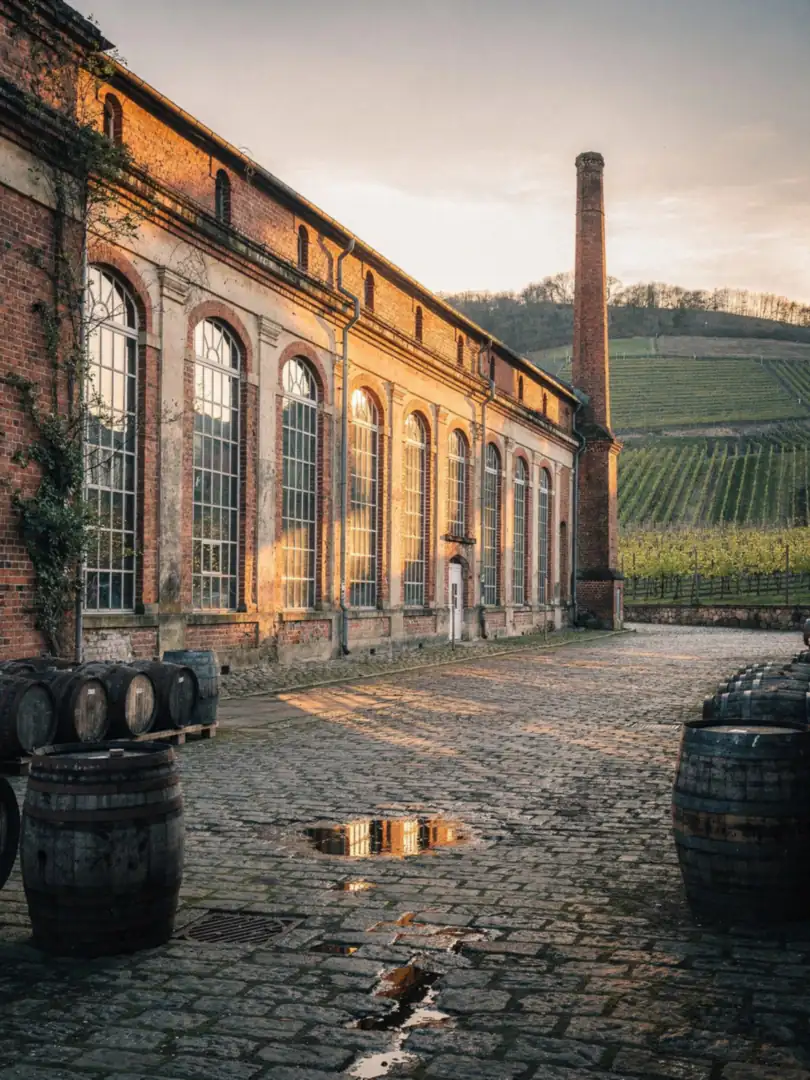
Anyone wondering where Rotkäppchen Sekt comes from ends up in Freyburg an der Unstrut, a small town below Neuenburg Castle. The Saale-Unstrut wine region is tiny: just under 800 hectares of vines spread across Saxony-Anhalt, Thuringia, and a small part of Brandenburg.
An early attempt at sparkling wine wasn't made in Freyburg, but in the cathedral town of Naumburg. There, in 1824, Wilhelm Friedrich Bürger and his son founded a sparkling wine factory. Kessler in Esslingen, Germany's oldest still-existing Sekt house, followed only in 1826. According to the town of Naumburg, phylloxera ruined the Bürger business in 1906.
The Freyburg winery only got its famous name much later. The trademark protection law of May 12, 1894 put competitors under pressure, and according to the German Patent and Trademark Office, a French Champagne house had won a dispute over its “Monopol” brand. In response, the Freyburg winery made the red cap on its bottles the namesake—a nod to the “Red Top” of the House of Heidsieck. Rotkäppchen has been registered as a word mark since February 1895.
During the GDR era, the winery belonged to the state. Rotkäppchen remained a well-known brand, but according to newspaper reports it was hard to come by. In June 1990 the business passed to the Treuhandanstalt, and after reunification sales collapsed: in 1990 only 7.1 million bottles were sold, half as many as the year before.
In 1993, four senior employees, including Gunter Heise, bought the business from the Treuhand together with the Eckes-Chantré entrepreneurial family. In January 2002, Rotkäppchen acquired the West German brands Mumm, Jules Mumm, and MM, followed by Geldermann in 2003. Since then, the company has operated as Rotkäppchen-Mumm and, according to the company, is the market leader among German Sekt producers.
In Saale-Unstrut, protected designation of origin means that only a Sekt b.A. from this growing region carries that designation along with an official quality control number. The name Rotkäppchen alone doesn't guarantee this, since “Sekt” by itself says nothing about the origin of the base wines. The region's largest wine producer is the Freyburg-Unstrut Winzervereinigung, founded in 1934, with nearly 360 members according to its own figures.