Lees and Dosage
Lees Aging & Dosage
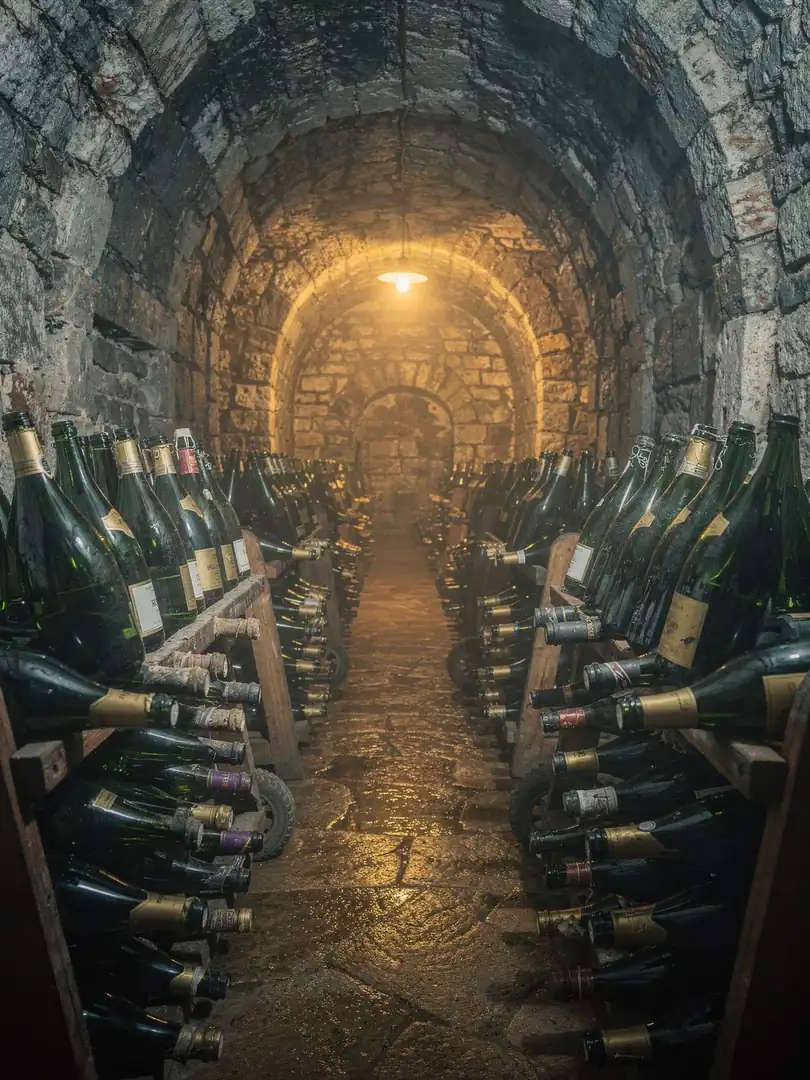
After fermentation, the yeast remains in the bottle. There it dies and breaks down, a process called autolysis. In doing so, it releases compounds that give the Sekt aromas of bread, brioche, and nuts, along with a soft mouthfeel. The longer the wine rests on the lees, the more pronounced these notes become.
The law sets a minimum: traditional bottle fermentation requires at least nine months. Quality-focused houses go far beyond that. The VDP requires at least 15 months for its non-vintage Sekt, 24 months for vintage Sekt, and 36 months for its prestige tier. Sekthaus Raumland, by its own account, lets its Sekts rest on the lees for at least 36 months, and sometimes more than ten years.
To keep the yeast from clouding the final wine, it must be removed from the bottle. The bottles are placed on riddling racks or in riddling machines and, over several weeks, gradually tilted ever steeper while being lightly turned, until the yeast settles in the neck. During disgorgement, the neck is frozen, the crown cap is removed, and the pressure shoots out the frozen yeast plug.
Now comes the dosage—a small amount of sugar dissolved in wine. It balances the acidity and determines the sweetness level. Under the regulations, Sekt with under 3 grams per liter is called Brut Nature, up to 6 grams Extra Brut, and under 12 grams Brut. Between 12 and 17 grams it's called Extra Dry, between 17 and 32 grams Trocken, between 32 and 50 grams Halbtrocken, and above that Mild.
This surprises many people: Trocken in Sekt isn't especially dry at all—it's noticeably sweeter than Brut. And there's no such thing as 'lieblich' (sweet) for sparkling wine; the sweetest category is called Mild. There's often a clear difference in sweetness between Kupferberg Gold and a Winzersekt from Rheinhessen—one the label states plainly.