Bottle or Tank
The Second Fermentation
In Rheinhessen, both major methods exist side by side. Branded Sekt, like that from the Mainz cellars, is usually made in pressurized tanks. Winzersekt, however, must by law undergo traditional fermentation in the bottle. The regulations use terms like traditional bottle fermentation or classic bottle fermentation, and these words may appear on the label.
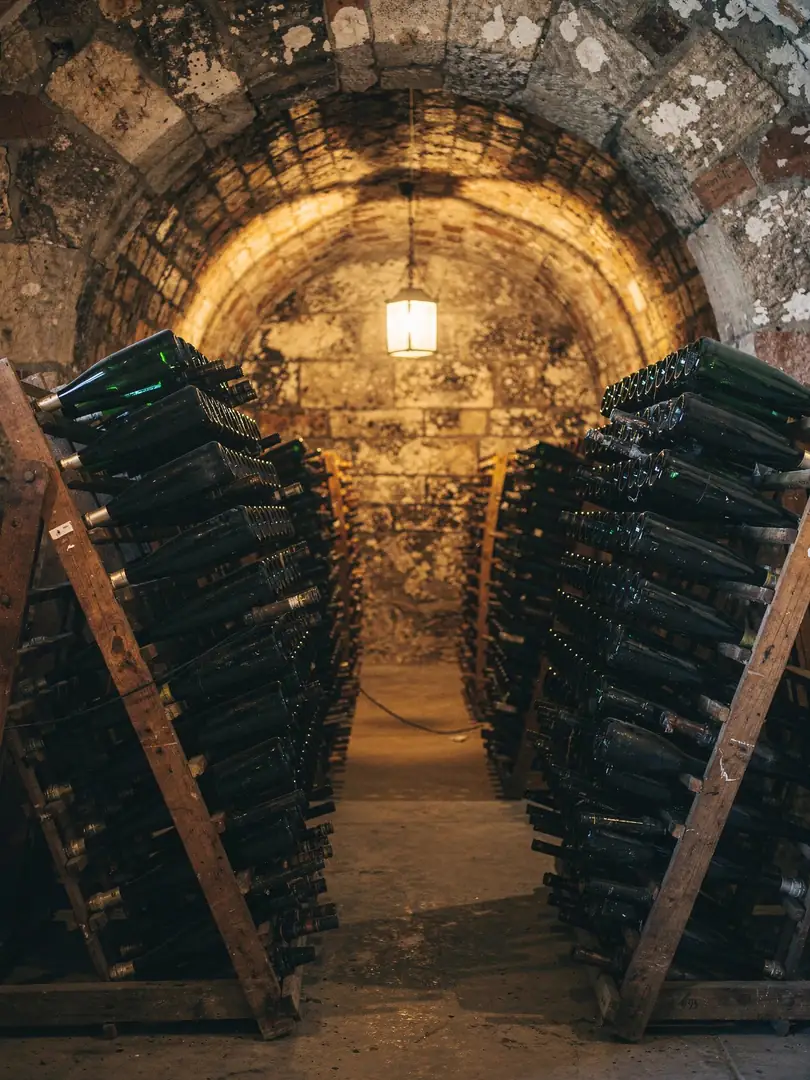
How does bottle fermentation work? The cellar master fills the finished base wine, along with a small amount of sugar and yeast (the liqueur de tirage), into the bottle and seals it with a crown cap. The yeast converts the sugar into alcohol and carbon dioxide. With nowhere to escape, the gas dissolves into the wine until pressure reaches at least 3.5 bar.
The word 'traditional' is precisely defined by law. The Sekt must rest on the lees without interruption for at least nine months at the same producer, and must be separated from the lees by disgorgement—within that same bottle. If the wine is instead transferred under pressure into a tank and filtered, it may be called bottle-fermented, but not traditionally bottle-fermented.
In tank fermentation, the same chemistry takes place in a large stainless steel vessel. The base wine receives sugar and yeast, and the gas stays trapped in the sealed tank. The wine is then filtered and bottled under counter-pressure. For quality sparkling wine, this requires a minimum production time of six months and at least 90 days of contact with the lees—30 days in tanks fitted with agitators.
You can taste the difference. Tank-fermented Sekt tends to be fresher, fruitier, and smoother, while bottle-fermented Sekt is creamier, deeper, and shows more yeasty character. Sekthaus Raumland relies exclusively on traditional bottle fermentation. Both methods have their place: one suits many occasions and tastes consistent year after year, the other appeals to guests who appreciate a wine with real character. The label reveals which one you're holding.
Winzersekt Rheinhessen BrutBottle fermentation · Chardonnay, Weissburgunder, Spätburgunder
- Time on lees
- 9–36 Months
- Sugar
- 3–10 g/l
- Alcohol
- 11.5–12.5 % vol
Apple, nut, and brioche, firm acidity; grape variety and vintage appear on the label.