Deinhard and Faber
Region & History
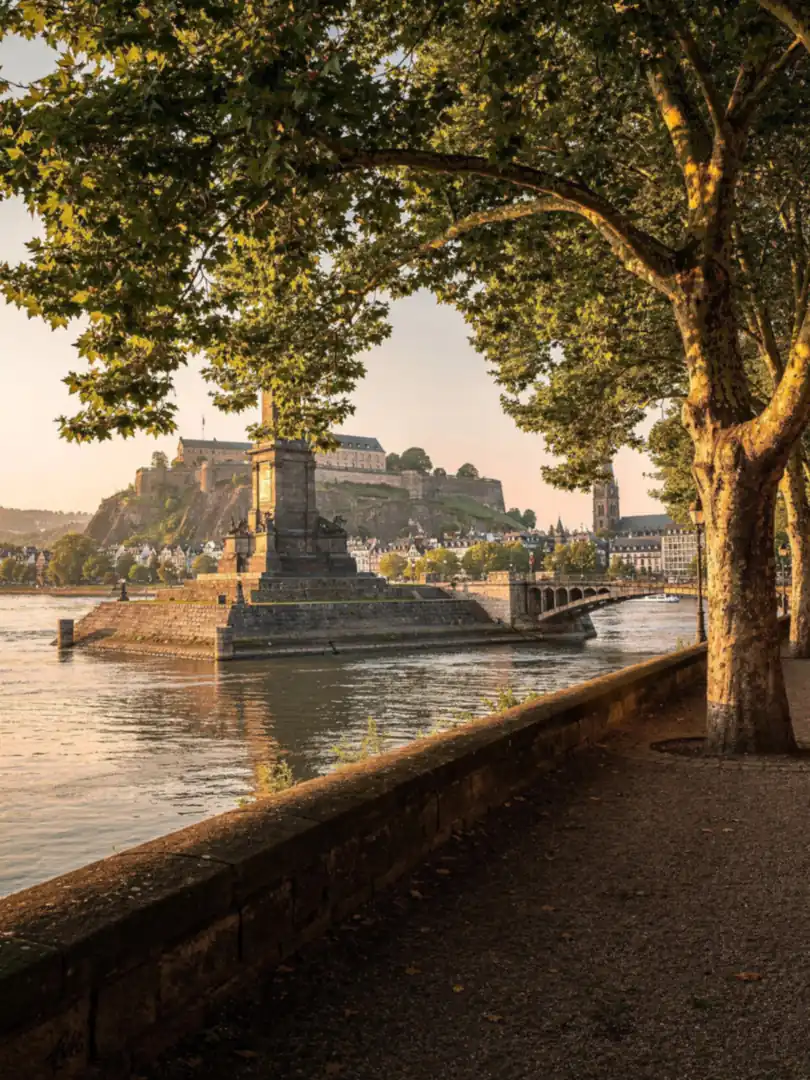
Where the Mosel flows into the Rhine at Koblenz, this region's sparkling wine story began. On May 1, 1794, Johann Friedrich Deinhard founded a wine merchant business there. From 1843 the house also bottled its own sparkling wine, made from Mosel wine, building the Deinhard name into a byword for sparkling wine.
Later the brand belonged to Henkell. On September 1, 2020, it passed to Peter Mertes in Bernkastel-Kues, along with the sparkling and still wine bottling operation in Koblenz. The new owner has relaunched the sparkling wine range with Deinhard Lila and Deinhard Cabinet.
The second major address is in Trier. The Faber sparkling wine house was founded in 1950 and merged with Schloss Wachenheim AG retroactively as of July 1, 1996. The group's name comes from the Pfalz, but its headquarters are in Trier. Production takes place there as well as in Wachenheim, Morscheid and Wismar.
What a Sekt label is worth depends on where the grapes come from. If the label simply says Sekt, the base wine may come from other EU countries. Only Sekt b.A. requires grapes from a German wine-growing region—in this case the Mosel—along with an official quality control number issued on application.
Alongside these, smaller producers do their own work. For Winzersekt, both the grapes and the winemaking must come from the producer's own estate, the sparkling wine must undergo traditional bottle fermentation, and the label must state grape variety and vintage. Bischöfliche Weingüter Trier bottles a Scharzhofberger Riesling Sekt, made from grapes grown in a famous Saar vineyard site. Across the Mosel, there are roughly 2,850 wine estates in total.