Mainz, then Biebrich
Region & History
Henkell Sekt comes from Wiesbaden-Biebrich, but the house's history begins in Mainz. There, Adam Henkell founded a wine trading house in 1832 and began producing sparkling wine from 1856. Over the course of the century, this trading business grew into one of Germany's great Sekt houses.
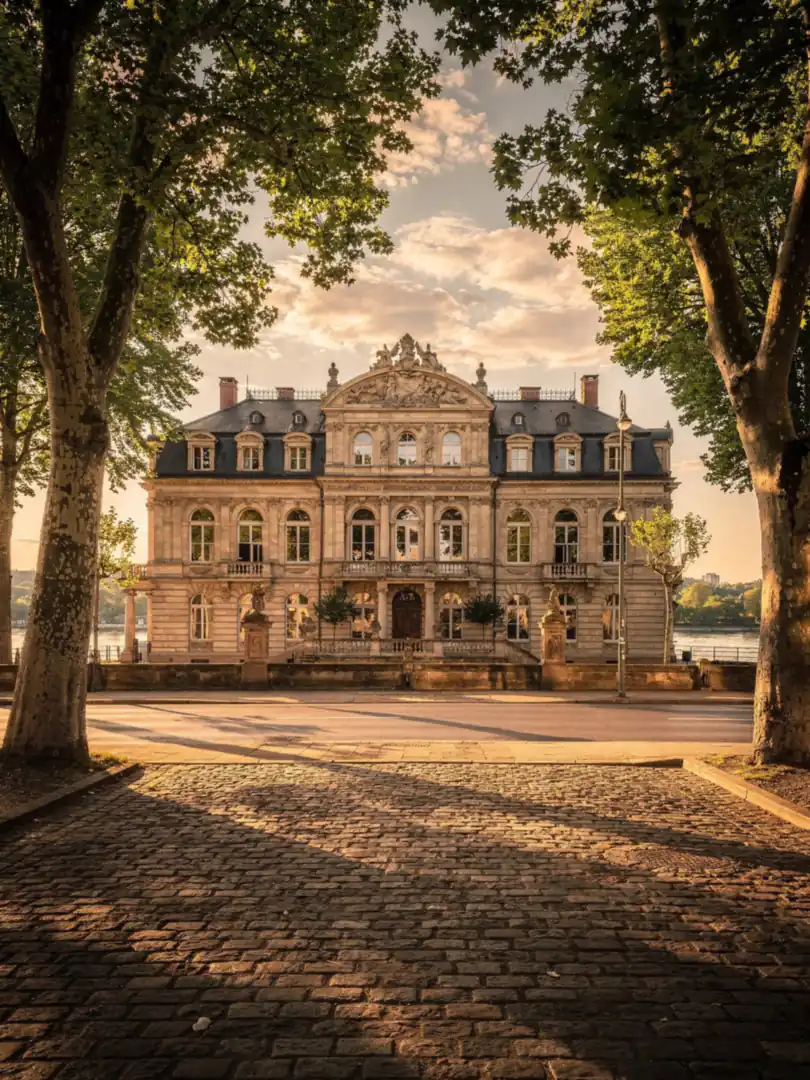
The Henkell Trocken brand was created in 1894 and, by 1898, was among the first legally protected brands in Germany. On November 27, 1909, Otto Heinrich Adolf Henkell inaugurated his new building on Biebricher Allee in what was then still the independent town of Biebrich. Architect Paul Bonatz designed it with three wings, echoing baroque palace architecture. The house was considered one of the most modern Sekt cellars in Europe.
A few kilometers away, in Schierstein, tobacco manufacturer Johann Jacob Söhnlein founded the Rheingauer Schaumweinfabrik with partners in July 1864. His Rheingold brand was made from Riesling sourced from Schloss Johannisberg. In 1877 came a contract with the Prince of Metternich for base wines from the castle, which gave rise to the Fürst von Metternich brand.
The two houses came together in 1987, when Henkell merged with Söhnlein Rheingold AG of Schierstein. Henkell had belonged to Dr. Oetker since 1958, and to Oetker Collection since November 2021. In 2018, the house acquired 50.67 percent of the Spanish Cava producer Freixenet, and on March 2, 2026, the remaining shares passed to Henkell Freixenet, the group headquartered in Wiesbaden.
The fact that "Wiesbaden" appears on the label says little about the grapes themselves. In Germany, Sekt is the term for quality sparkling wine, and the base wines may come from other EU countries. Only "Deutscher Sekt" requires base wines from Germany, and "Sekt b.A." requires a specific designated growing region along with an official approval number.