Waiting, Riddling, Dosing
Lees Aging & Dosage
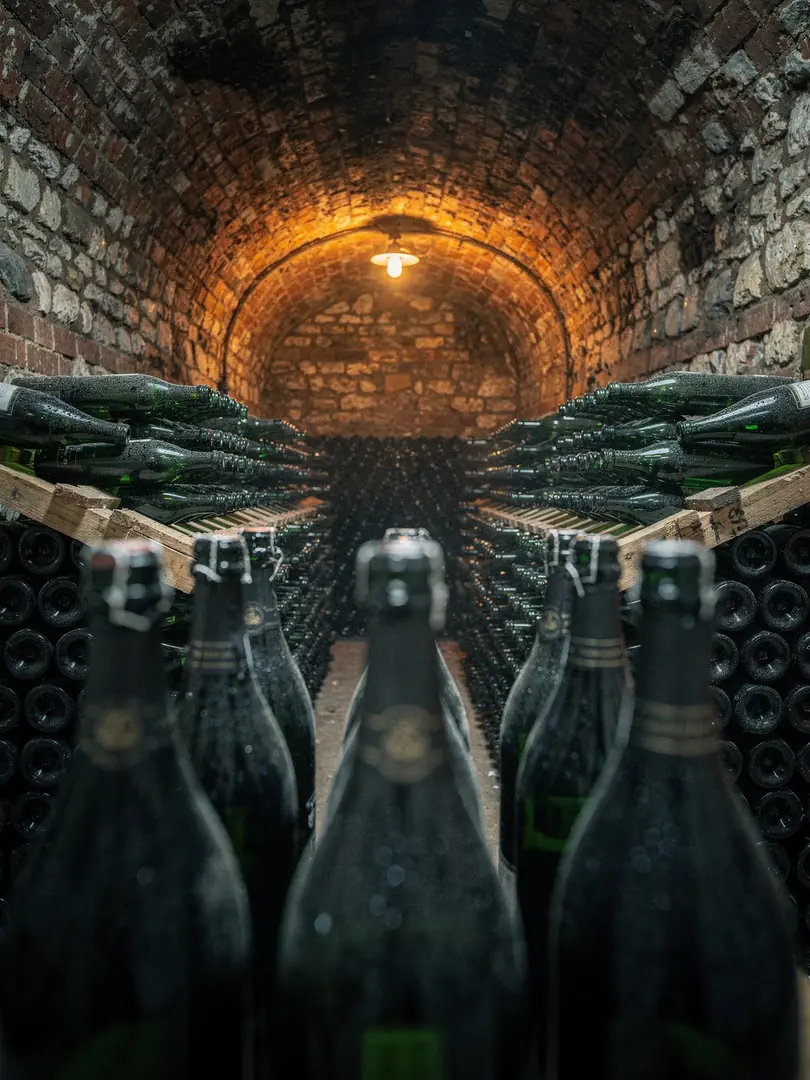
How long must English sparkling wine rest on the lees? For wine made by the traditional method under EU rules, a minimum of nine months applies, as set out in labeling regulations. Champagne, by comparison, requires at least 15 months from bottling, 12 of them on the lees. Most houses in Kent and Hampshire don't stop at the minimum, they let the wine rest considerably longer.
During this time, the spent yeast cells break down, a process experts call autolysis. This releases compounds into the wine that smell of brioche, nuts and fresh bread, and the mousse becomes creamier. The English southeast delivers plenty of acidity, which is exactly what allows the wine to age this long without turning flat.
Then comes riddling. The bottles are gently rotated and gradually tilted steeper over weeks, either on a riddling rack or in a gyropalette, until the yeast settles in the neck. During disgorgement, the neck is frozen in a brine solution at around minus 20 degrees Celsius, the crown cap is removed, and the yeast plug shoots out.
The bottle is then topped up with the dosage, a small amount of wine mixed with sugar. This determines the sweetness level. Under 12 grams of sugar per liter means Brut, up to 6 means Extra Brut, under 3 means Brut Nature. Extra Dry falls between 12 and 17 grams and is actually sweeter than Brut, despite what the name suggests.
High acidity can carry more sugar without tasting sweet, which is why much of what comes from England falls in the Brut range. Finally come the cork, wire cage and foil. Since Domaine Evremond in Chilham only released its first bottles in 2025, this house has no archive of aged vintages yet, unlike Reims.