Bottle, Not Tank
The Second Fermentation
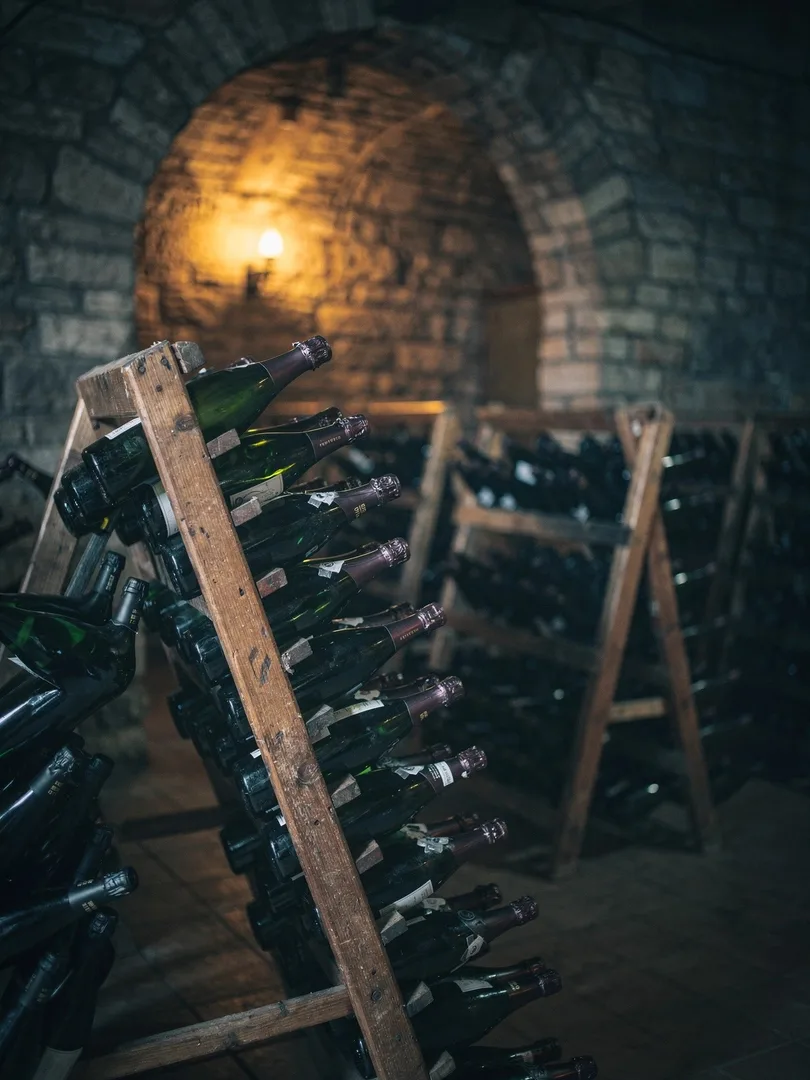
How is English sparkling wine made in the Champagne style? At the Champagne houses on English soil, the second fermentation takes place in the bottle. A mixture of sugar and yeast, the liqueur de tirage, is added to the finished base wine, then the bottle is sealed with a crown cap. The yeast consumes the sugar, carbon dioxide is produced, and since it can't escape, it dissolves into the wine.
About 24 grams of sugar per liter is typical, producing a pressure of roughly 6 bar. That's more than double the pressure in a car tire. The bottles lie horizontally in the cellar during this time, at around 13 degrees Celsius.
The label may not say méthode champenoise, as this term is restricted to Champagne itself. What's permitted is traditional method or bottle-fermented. This requires at least nine months on the lees at the same producer and disgorgement from the same bottle. This distinguishes it from the transfer method, in which the wine is moved to a tank for clarification.
In England, many estates don't make their own sparkling wine but have it produced by a contract winemaker. Hattingley Valley in Hampshire provided its winery for this purpose, including for Pommery. According to trade press reports, the first vintage of Louis Pommery was meant to be made at its own winery on the Pinglestone site near Alresford, where permitting delays occurred.
Domaine Evremond built its own winery in Chilham and opened it in 2024. This makes it the first Champagne house in Kent to handle the entire journey from vine to bottle at a single site.
Domaine Evremond Classic Cuvée Edition IBottle fermentation · Pinot Noir, Chardonnay, Pinot Meunier
- Time on lees
- 9–36 Months
- Sugar
- 6–12 g/l
- Alcohol
- 11.5–12.5 % vol
Pinot Noir-driven, red fruit, apple and brioche, taut acidity.