Oysters and Cassoulet
Food & Occasion
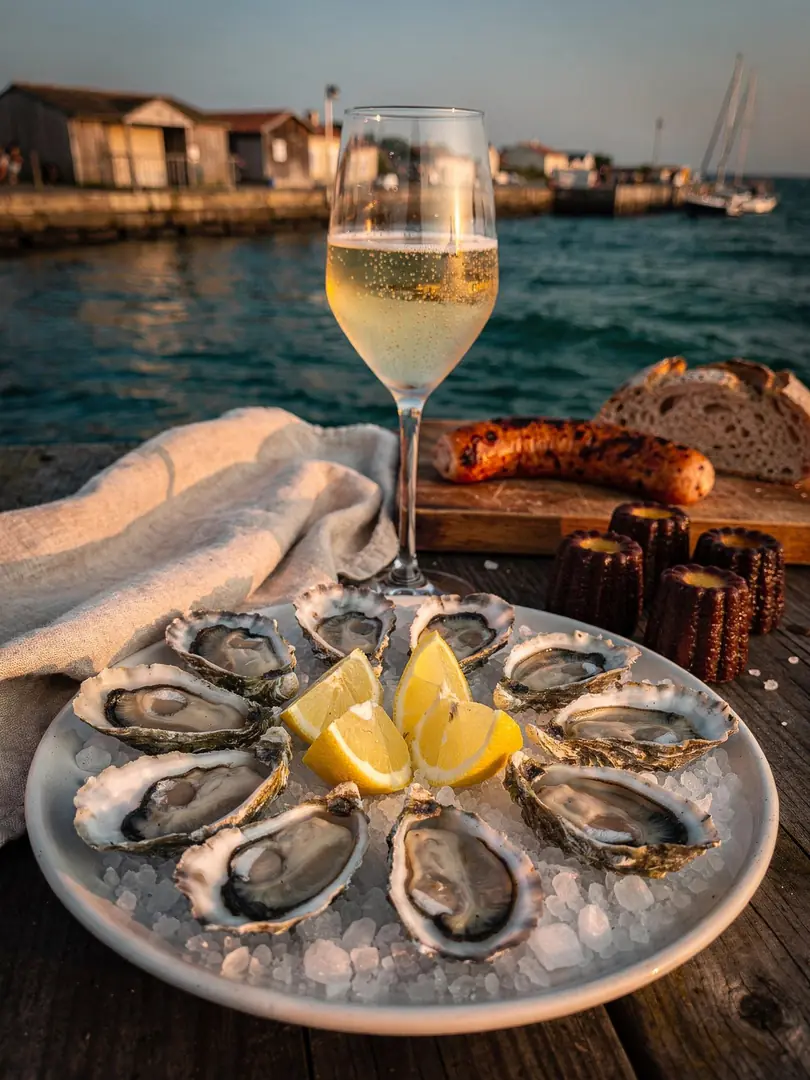
The Bordeaux ritual begins by the Atlantic: oysters from the Arcachon basin, paired with crépinette, a flat, peppery pork sausage wrapped in caul fat. This is considered the classic starter. A Crémant de Bordeaux Brut pairs well here, since its acidity complements the salty freshness of the oysters while the carbon dioxide cuts through the fat of the sausage.
For dessert or alongside coffee comes the canelé, a small pastry with a dark caramelized crust and a soft center flavored with vanilla and rum. The pastry originates in Bordeaux and is traditionally baked in small copper molds. A rosé Crémant with berry aromas suits it well, since it doesn't overpower the sweetness but answers it with fruit.
Around Gaillac, people eat cassoulet, duck confit and foie gras — a cuisine that's rich and fatty. A Mauzac with fine acidity and a touch of lees makes a great match here, since the apple notes and fizz cut through the richness. Cassoulet, the stew of white beans, duck and sausages, is traditionally cooked around Toulouse and the surrounding area.
As an aperitif, Crémant de Bordeaux is often opened in the early evening, before sitting down to eat. It also pairs well with fish, light poultry and mild cheese, since its acidity and bubbles keep the palate fresh.
Easy to remember: salt, acidity and freshness go hand in hand with Crémant, while fat and spice pair well with Mauzac. If you want to recreate this at home, no special ingredients are needed: oysters from the fishmonger, a few pan-fried sausages and some bread are enough for an evening in Bordeaux style.
Dishes with a lot of heat or a lot of sweetness are trickier. A barely sweet Brut loses out against chili and against cake with lots of sugar; here, Mauzac with a touch of residual sugar has the advantage.