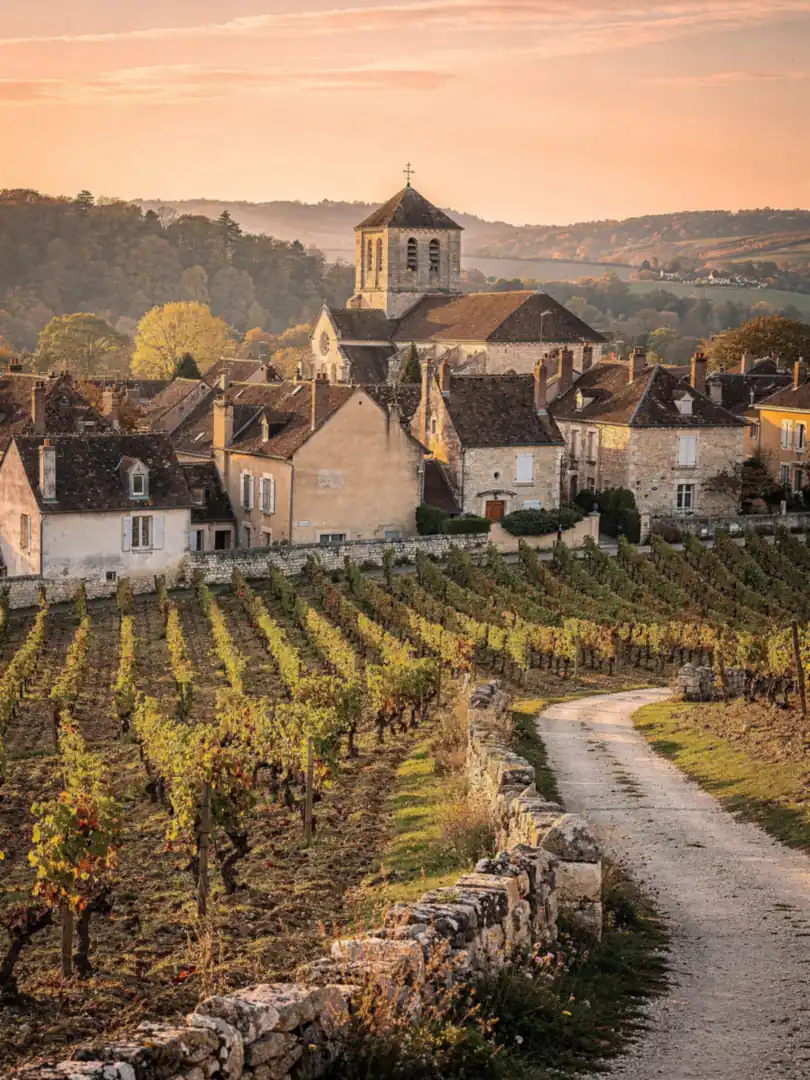
Rully until 1975
Region & History
Burgundy was making sparkling wine long before the word Crémant ever appeared on a label. According to the appellation's specifications, winemakers in Rully, a village in the Côte Chalonnaise in the Saône-et-Loire department, were already experimenting with Champagne-style sparkling wine as early as 1820. Nuits-Saint-Georges followed suit, and Chablis joined in by 1840.
The new wine found buyers, especially in England and the United States, and the method spread quickly. Sparkling wine was even produced in vineyards as famous as Clos de Vougeot and Chambertin, something hardly anyone would suspect today. In 1939 the producers formed an association, and in 1943 the state recognized "Bourgogne mousseux" as a designation of origin.
Starting in the 1960s, some producers wanted to set their most carefully made sparkling wines apart from the rest. They introduced strict rules for harvesting and ageing, and a 1975 decree turned this into the Crémant de Bourgogne appellation, reserved exclusively for white and rosé wine. Since then, the word Crémant may only appear on a bottle together with the name of its origin.
The vineyards are spread across four departments: Yonne, Côte-d'Or, Saône-et-Loire and Rhône, stretching from Auxerre in the north to Beaujolais in the south. The specifications cite just under 2,000 hectares and about 15 million bottles a year for 2011. Industry figures for 2021 put the number at roughly 24 million bottles from about 2,800 hectares.
Crémant de Bourgogne therefore has no single center. Rully in the south, Saint-Bris-le-Vineux on the Yonne, and the Châtillonnais on the border with Champagne each write their own chapter. According to the trade association, around 140 wineries process grapes from about 1,700 growers, with small estates, cooperatives and négociant houses sharing the market.