Apple, brioche, limestone
Tasting
A Crémant de Bourgogne Brut smells of green apple, citrus peel and freshly baked bread, often with a hint of almond. The taste is dry, the acidity lean and lively, and the bubbles are fine and persistent rather than coarse. Anyone familiar with Champagne will recognize a similar structure here, just with a little less depth and a bit more fruit.
Chardonnay shapes the white wines with citrus and white blossom, while Pinot noir brings red fruit and richness. Blanc de Blancs therefore comes across as leaner and more refined, while rosé made from Pinot noir tastes of cherry and raspberry. Wines with a high proportion of Aligoté are a touch sharper and more tart.
Two houses serve as good examples. The cooperative Caves de Bailly-Lapierre in Saint-Bris-le-Vineux ages its bottles, according to the house, in the quarries since 1972. Its Brut is a classic regional blend. Veuve Ambal in Rully was founded, according to the house, in 1898 by Anne-Marie Ambal and represents the southern, slightly rounder style.
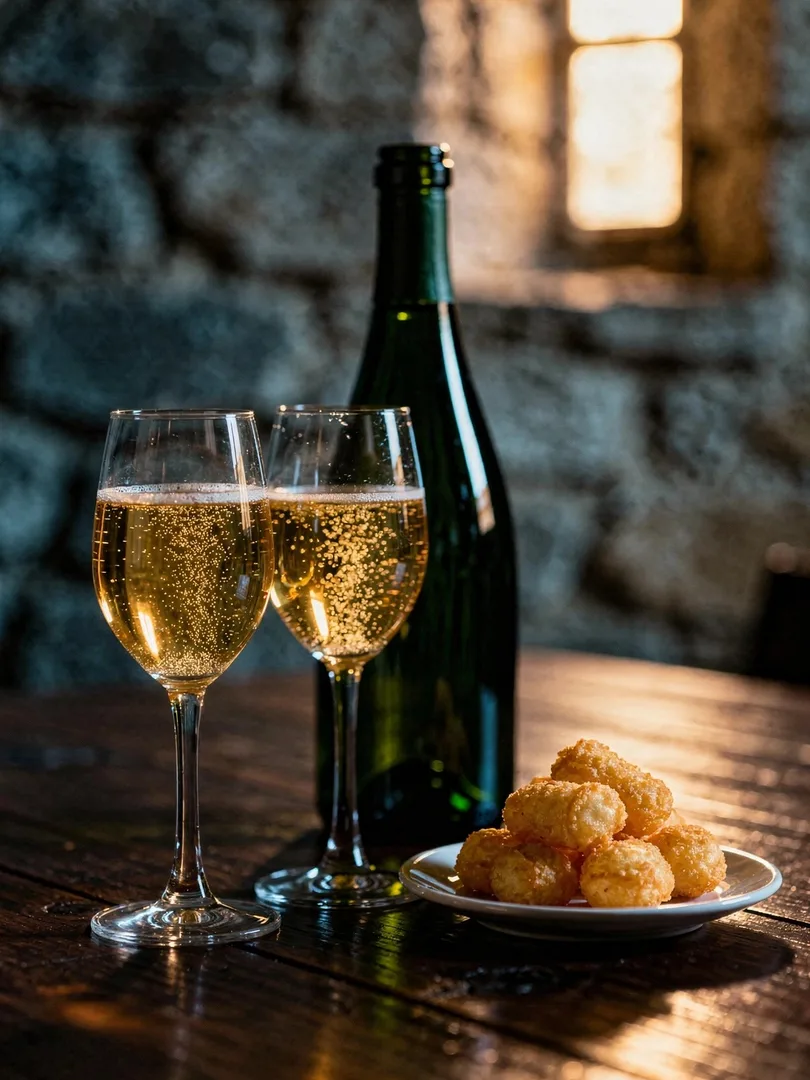
A tulip glass or a slender white wine glass suits Crémant better than a flat coupe, as it keeps the aroma and bubbles together. Fill the glass no more than two-thirds full to leave room for the bouquet. Well chilled, Crémant tastes best at six to eight degrees; too cold, and it shuts down its aromas.
When opening, hold the cork firmly, loosen the wire, and then turn the bottle, not the cork. This lets the pressure escape with a quiet hiss instead of a bang, and nothing foams over. It's best to tilt the bottle gently against the glass as you pour.