The short answer
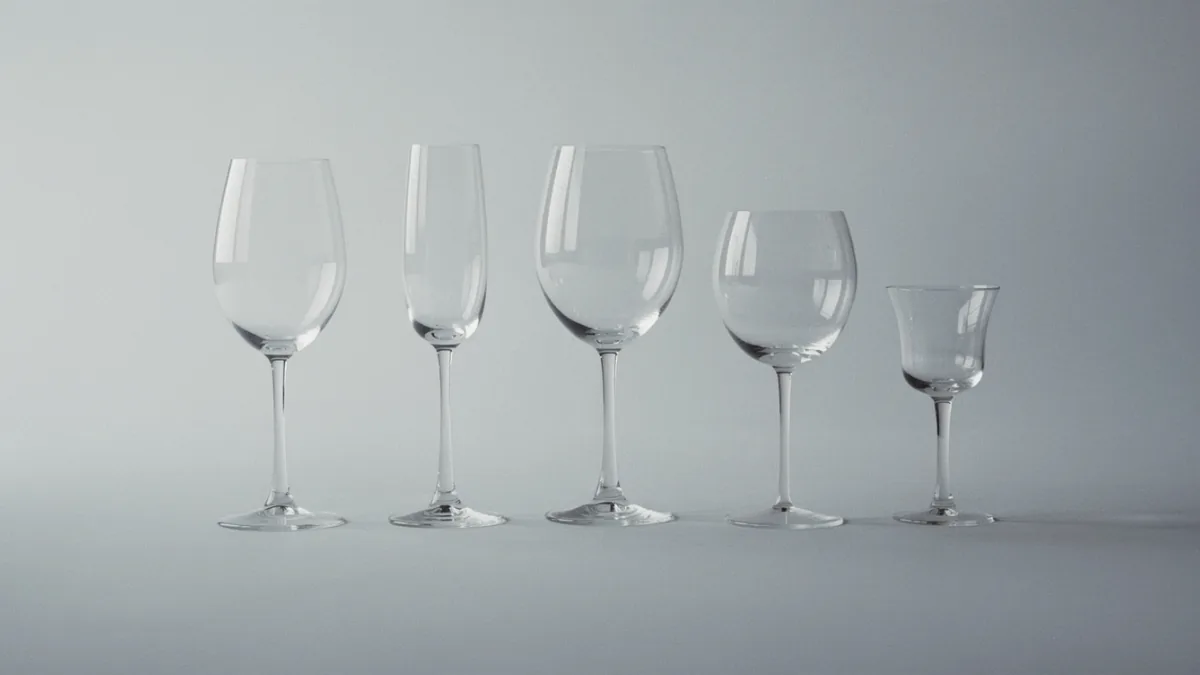
For starters, a single glass will do: clean, clear, slightly narrower at the top, and comfortable in your hand. The narrowing keeps the aroma concentrated above the wine. You don't need a different glass for every grape variety.
A Clear Glass Is Enough to Start
A clear glass lets you see the wine exactly as it is. A slightly narrowed opening and enough space in the bowl help with smelling and gentle swirling. So don't fill the glass to the brim — it should make tasting comfortable, not difficult.
When comparing two wines, use the same glasses if you can. Otherwise you're changing a second variable along with the wine. For a normal evening, your glassware doesn't need to be expensive or extensive.
The narrowed opening has a simple purpose. The aroma collects above the liquid instead of dispersing immediately into the room. For that, you need air space in the bowl. If you only fill the lower part, there's enough room left above. A glass filled to the brim takes away exactly that space, making swirling nearly impossible.
Comparability sounds like something from a lab, but it's easy to set up at home. Two identical glasses side by side, roughly the same pour, similar temperature. That way, differences between two wines stand out clearly. If one goes into a small glass and the other into a large one, you won't know afterward where the difference actually came from.
Clean Also Means Odor-Free
Give a freshly washed glass a quick sniff before pouring the wine. A smell from the cupboard or the dish towel will throw off your perception. Hold the glass by the stem so your hand changes the wine's temperature as little as possible.
Everyday questions matter when buying glasses too. Does it fit in your dishwasher? Does it stand steady? Is the rim comfortable? A very large glass that can only be handled between two fingers isn't the best choice for every household. Guests appreciate easy handling far more than an explanation of the glass design.
Glasses pick up odors more easily than you'd think. A closed cupboard, a dish towel that's been in use for a few days, or a bit of leftover detergent all settle into the bowl. After that, it mixes into everything poured in. If the glass smells like anything, rinse it with warm water and let it drain upside down.
Holding the glass by the stem has a second benefit. The bowl stays free of fingerprints, so you can see the wine more clearly. If you'd rather hold the glass by the bowl, that's not wrong — a chilled wine will just warm up faster that way. If a wine feels too cold to you, warming it with your hand does exactly the opposite.
What an Expensive Glass Won't Do for You
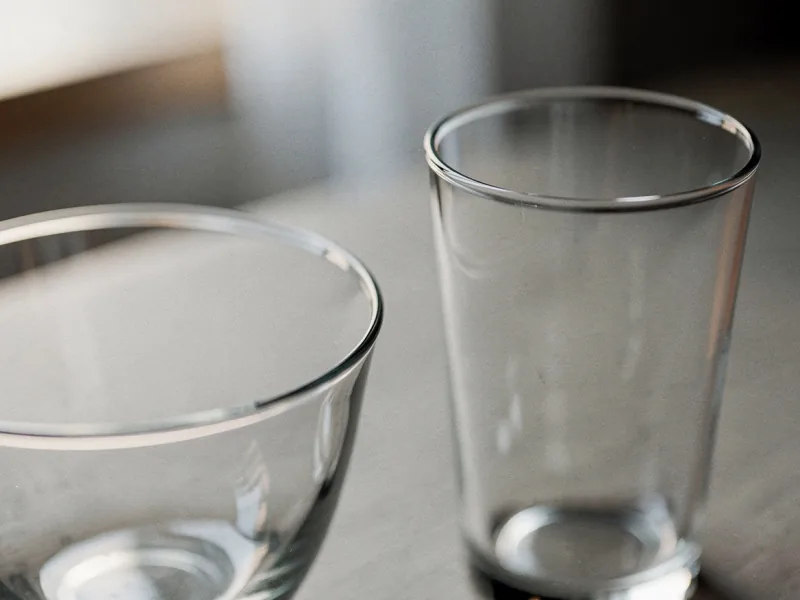
The most widespread assumption is that every grape variety needs its own glass. Special shapes can highlight certain differences. They're not necessary for understanding a wine, though. When starting out, a second matching glass will help you more than a second different model — only then can you actually make comparisons.
Swirling is also overrated. It's not a ritual, but a tool: movement releases more aroma into the air above the liquid. Two gentle circles in the bowl are enough. And a very large glass isn't automatically the better choice. If it's unwieldy or won't fit in the dishwasher, you'll rarely use it.
Drinking the Same Wine From Two Glasses
Take two identical glasses and pour roughly the same amount into each. Smell first without moving the glass at all. Then swirl briefly and smell again. This comparison alone shows you what the air in the bowl actually does.
Next, do the same thing with a glass filled to the brim. The difference in aroma is usually striking. From then on, you'll keep an eye on your pour size without even thinking about it.