The short answer
Chill the bottle thoroughly. When opening it, keep a firm grip on the cork the entire time and point the neck away from everyone. A clean glass with room for the aroma will serve you better than a spraying fountain.
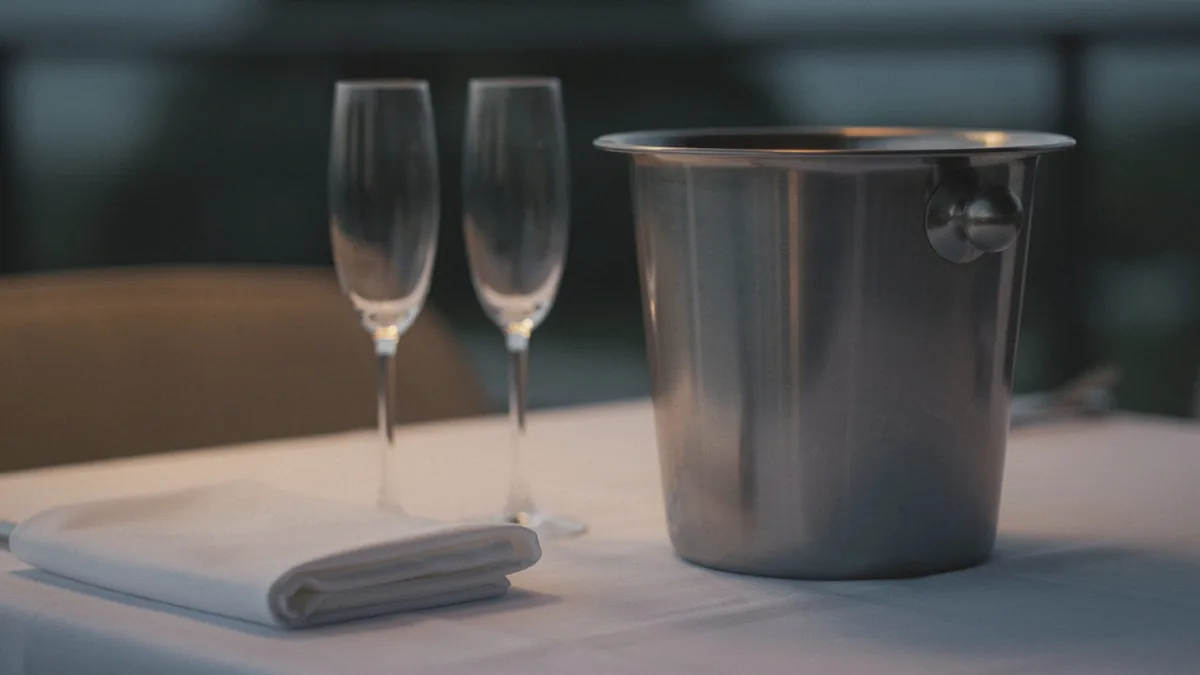
Chilling and Opening With Control
For Prosecco, the consortium recommends around 6 to 8 degrees Celsius as a serving temperature. Other styles may show better at a slightly different temperature. The producer's recommendation is a good starting point. Open the bottle calmly and keep a firm grip on the cork, even while you loosen the wire cage.
Chilling isn't just about taste. It makes opening the bottle calmer. Cold sparkling wine releases its carbon dioxide more slowly, so the pressure works less against the cork. A bottle that's spent the afternoon in a warm car needs time in the fridge afterward. Plan for this generously. Improvising just before the toast rarely works out well.
A fixed sequence helps when opening. First remove the foil. Then place one hand over the cork and only now untwist the wire cage. From this moment on, keep your thumb on top. Hold the bottle at a slight angle, pointing away from yourself and everyone else in the room. Now twist the bottle against the cork you're holding steady. A quiet hiss tells you you've kept control.
Don't Fill the Glass to the Brim
A tulip-shaped glass is a solid starting choice. The Prosecco consortium also recommends a sufficiently large tulip. Leave some room in the glass so you can smell it carefully. A strongly scented dish soap can throw off any comparison.
Seal leftovers with a proper sparkling wine stopper and keep them chilled. There's no blanket guarantee for how long an opened bottle will last. If you usually only need small amounts, a smaller bottle is a practical choice for next time. When trying an unfamiliar bottle, it's best to taste it neat first before it disappears into a cocktail.
The tulip shape works in your favor. The bulging part gives the aroma room to develop. Higher up, the glass narrows and directs the aroma toward your nose. That's why you only fill it about halfway. Pour in two stages, tilting the glass slightly as you do. This lets the foam settle faster, and you can see how much wine is really in the glass.
When it comes to washing up: residues of scented detergent cling to the glass and mix into the aroma. Usually, clear water for rinsing and a lint-free cloth are enough. If you want to compare two bottles, use the same glass shape for both. Otherwise, you end up comparing the glasses instead.
With an opened bottle, your nose is the judge. Put it back, sealed and chilled. Taste a small sip the next day before refilling everyone's glass. If the aroma and bubbles still please you, all is well. If not, you've learned for next time that a smaller bottle suits you better.
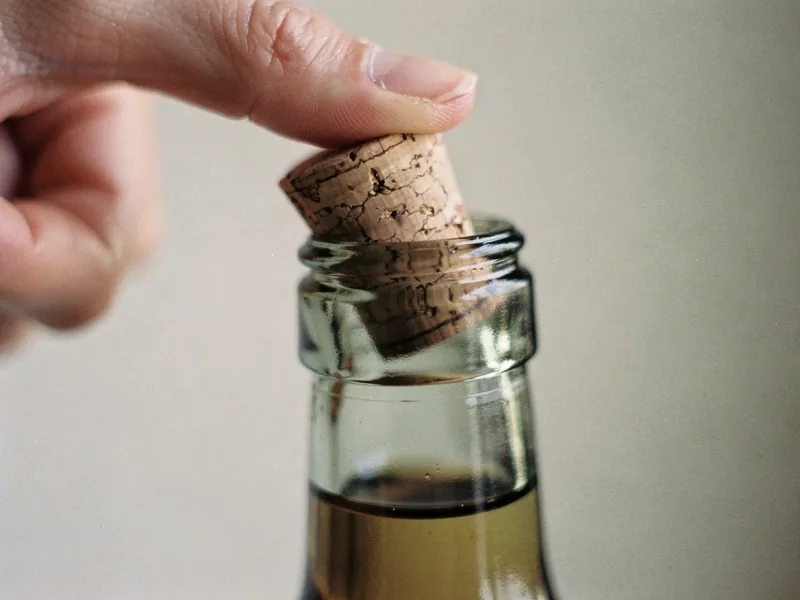
The Pop Isn't Part of It
The loud pop is seen by many as a sign of celebration. Mostly, it just shows that the pressure escaped very quickly. Often, some of the contents end up on the floor afterward. What's left in the bottle is what you can smell and taste in the glass. A bottle opened calmly seems unspectacular and is the better choice for the evening.
A glass filled to the brim is also often seen as generous. In reality, you're taking away the space where the aroma can collect. On top of that, you have to be careful not to spill anything when lifting it. Better to refill twice.
And chilled doesn't mean as cold as possible. The producer's recommendation is a starting point. From there, feel free to experiment in both directions. Whether a particular bottle tastes better to you slightly cooler or slightly warmer is something you'll only notice through direct comparison.
Tasting the Same Bottle Chilled and Lukewarm
Take a bottle you already know and pour two glasses. One comes straight from the fridge. Let the second sit in the room for a few minutes. Smell both before drinking. Usually, you'll quickly notice which glass tells you more. That's how you find your own ideal temperature for this style.
The second experiment concerns the glass. Pour the same sparkling wine into a tulip glass and into one with a wide opening. Compare how long the aroma lingers in each. And if you've bought an unfamiliar bottle for a cocktail, taste a small glass of it neat first. Then you'll know what the mixologist is doing to it.