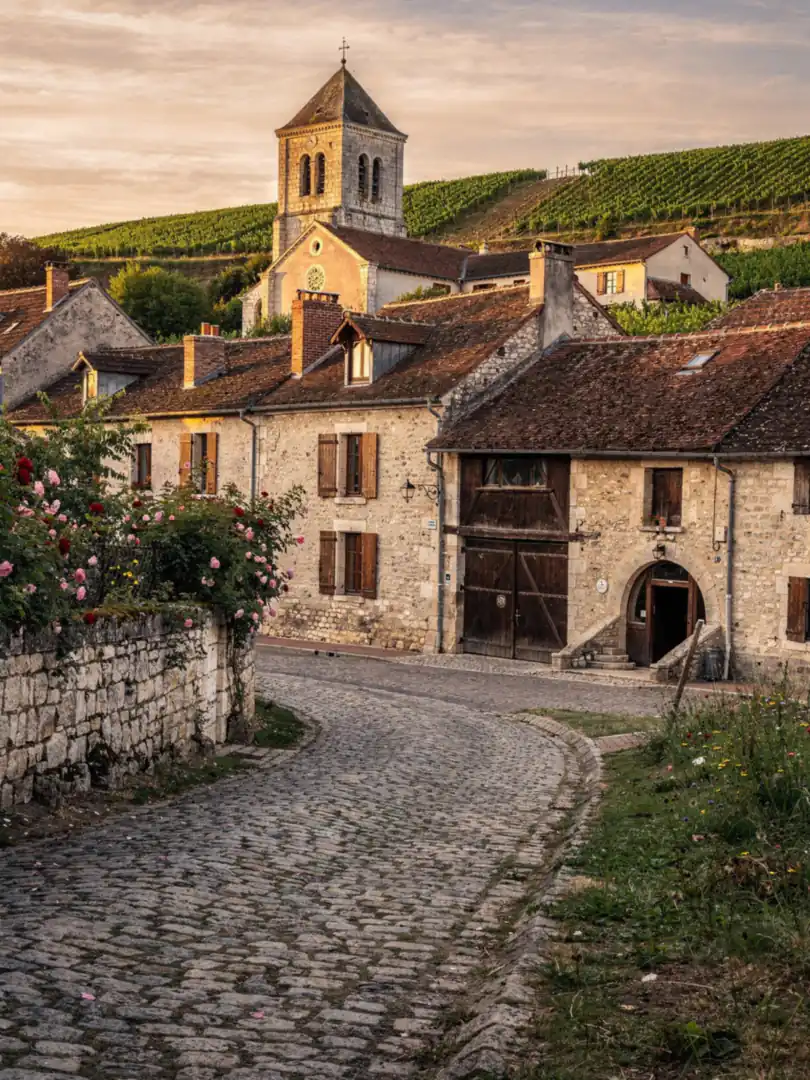
The distant south
Region & History
The Côte des Bar lies in the Aube department, right at the southern edge of Champagne, more than a hundred kilometers from Reims and Épernay. Its two centers are Bar-sur-Seine and Bar-sur-Aube. From here, Chablis and Burgundy are actually closer than the famous chalk cellars to the north.
The area splits into two parts. The Barséquanais around Bar-sur-Seine encompasses 33 villages, the Bar-sur-Aubois 31. Together, 2,535 estates farm 7,897 hectares of vines, just under a quarter of the entire appellation. Still, not a single village here carries Grand Cru or Premier Cru status—both lists contain only villages from the Marne.
How the Aube became part of Champagne is a story that belongs to the wine journey itself: the unrest of 1911 and the incorporation of 1927 are part of that history. Legally, the area has belonged to the appellation since 1927, and today its winemakers follow the same rulebook as those in the Marne.
Old names exist here too. The house of Drappier in Urville cites 1808 as its founding year. Its cellar dates back to Cistercian monks from the Abbey of Clairvaux, who, according to the house, dug it out in 1152.
The cooperative Union Auboise was founded in 1957 in Bar-sur-Seine. In 1987 it took over the Veuve A. Devaux brand, which Jules and Auguste Devaux had founded in Épernay in 1846, after the last Devaux heir died without successors. Today it unites, by its own account, around 800 growers across 1,400 hectares.
Alongside these are families who turn their own grapes into champagne rather than selling them off: Fleury in Courteron, founded in 1895, or Cédric Bouchard in Celles-sur-Ource since the year 2000. Living so far from the grand houses gives you one more reason to sell your own wine.