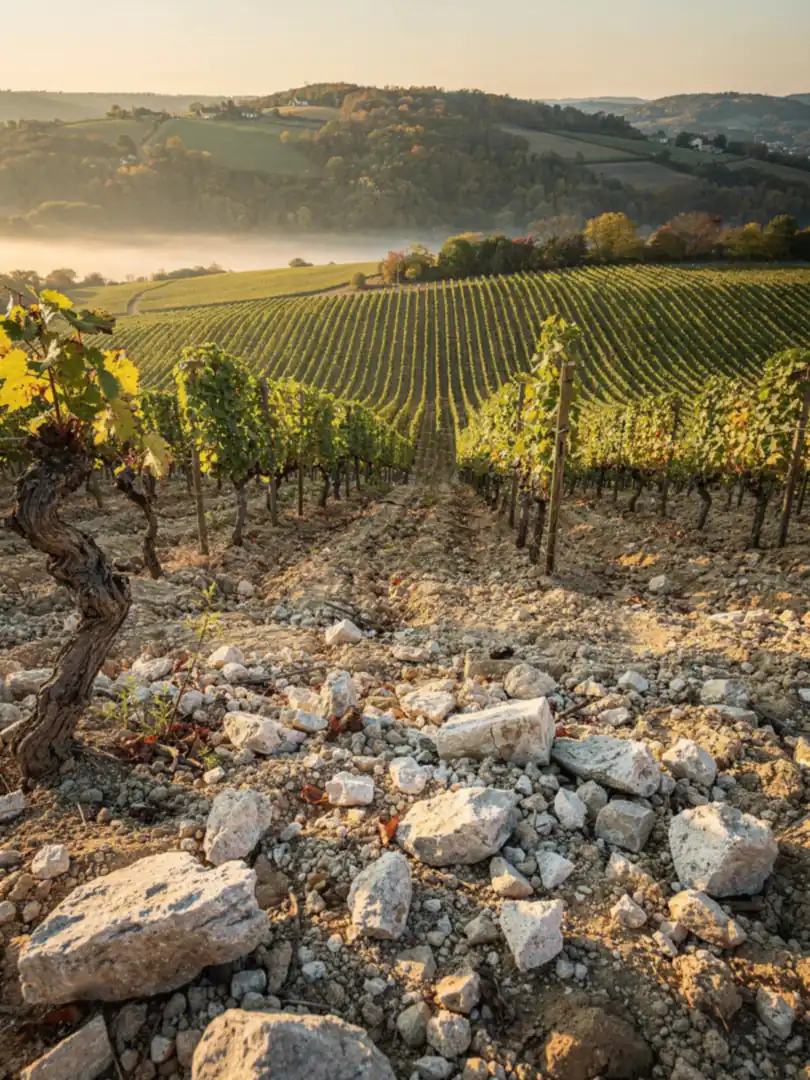
Chalk and clay
Soil & Climate
Drive south from Reims and eventually the chalk disappears. The slopes of the Côte des Bar sit on Kimmeridgian limestone from the Jurassic, topped with clay. It's the same rock type found beneath Chablis, and wine literature frequently draws comparisons between the two.
From this soil, Pinot Noir brings a lightness that's often described as typical of the region. Winemakers at the leading houses are said to be eager buyers of these grapes, as they help make their cuvées tighter and fresher.
Champagne sits at the cool edge of viable viticulture, and the Aube gets its share of that chill. Pinot Noir buds early and suffers from late frosts, which is why slope, aspect, and wind matter more than any label. Early harvesting preserves the acidity that sparkling wine needs later on.
Legally, it's the village that counts, not the individual plot. Still, winemakers like Cédric Bouchard in Celles-sur-Ource bottle their parcels separately anyway. His Côte de Val Vilaine vineyard is a south-facing slope planted with Pinot Noir in 1974, while the Creux d'Enfer is a west-facing slope in the same village.
The cellars look different too. At Drappier in Urville, the large-format bottles in particular age in vaults built by monks from the Abbey of Clairvaux in the 12th century. Here, vaulted stone surrounds the lees instead of chalk tunnels.
Heading west, near Troyes, the soil shifts again. Around Montgueux grows Chardonnay, which Devaux buys in for its Cuvée D. So the Aube wears two faces: Pinot Noir on limestone in the south, Chardonnay around Troyes.