Time on the Lees
Lees Aging & Dosage
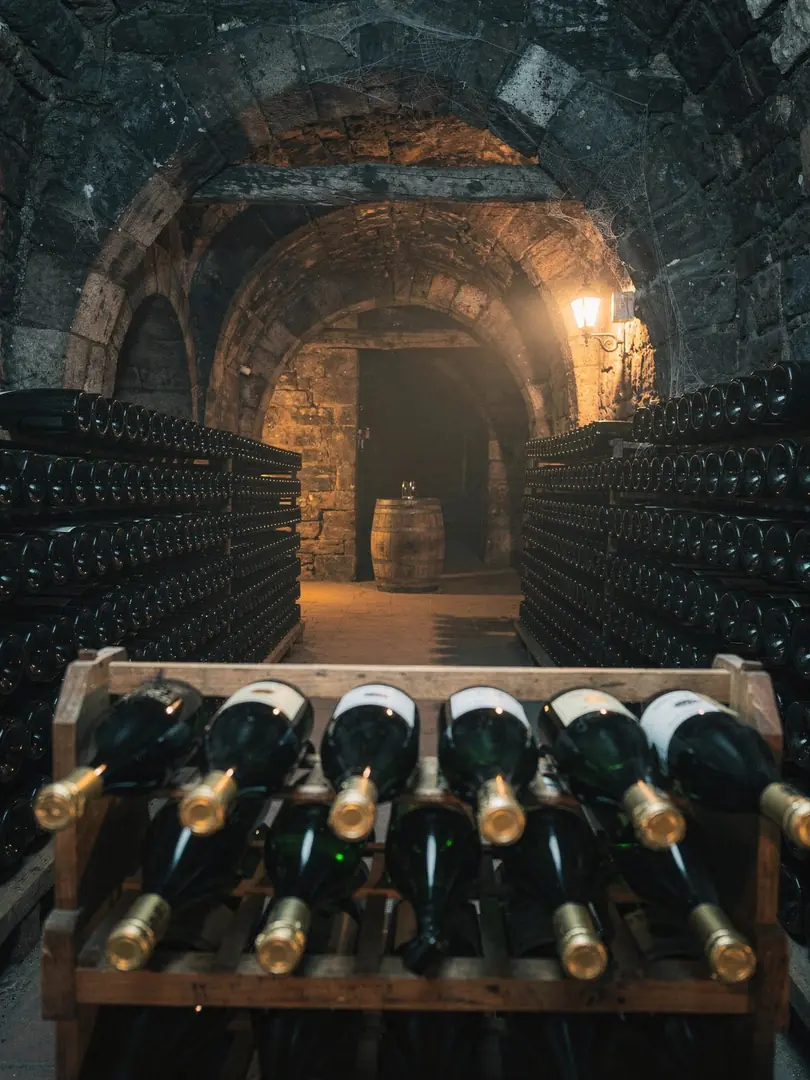
The yeast then stays in the bottle. EU regulations require Crémant to rest on the lees for at least nine uninterrupted months at the same producer. Some houses leave their rosé resting even longer: Dopff au Moulin states 24 months for its Crémant Rosé. More time means more brioche, nuttiness, and creaminess.
This is thanks to yeast autolysis. Dead yeast cells slowly break down, releasing proteins and other compounds into the wine. Apple turns into apple pastry, lemon into lemon zest with shortbread notes. The Pinot varieties respond especially well to this, since they bring low acidity and plenty of roundness of their own.
Eventually the yeast has to come out. First the bottle is riddled, either on a rack or by machine, gradually turning upside down over the course of weeks. The yeast collects in the neck. During disgorgement, the neck of the bottle is briefly frozen, then the pressure shoots the frozen plug of yeast out of the bottle, and the cork goes on quickly afterward.
When the bottle is topped up, the dosage goes in—a mixture of wine and sugar. For Crémant it stays under 50 grams per liter; the wine isn't allowed to be any sweeter than that, so there's no "doux" style. Brut has under 12 grams, Extra Brut between 0 and 6 grams, and most Alsatian Crémants land at Brut.
The soft Pinot varieties, which need little sugar to balance them, explain why Brut is the dominant style. Those who prefer something milder can find Demi-sec bottlings, offered by cooperatives like Wolfberger. They taste fruitier and pair well with pastries and dessert.