In the Neck of the Bottle
The Second Fermentation
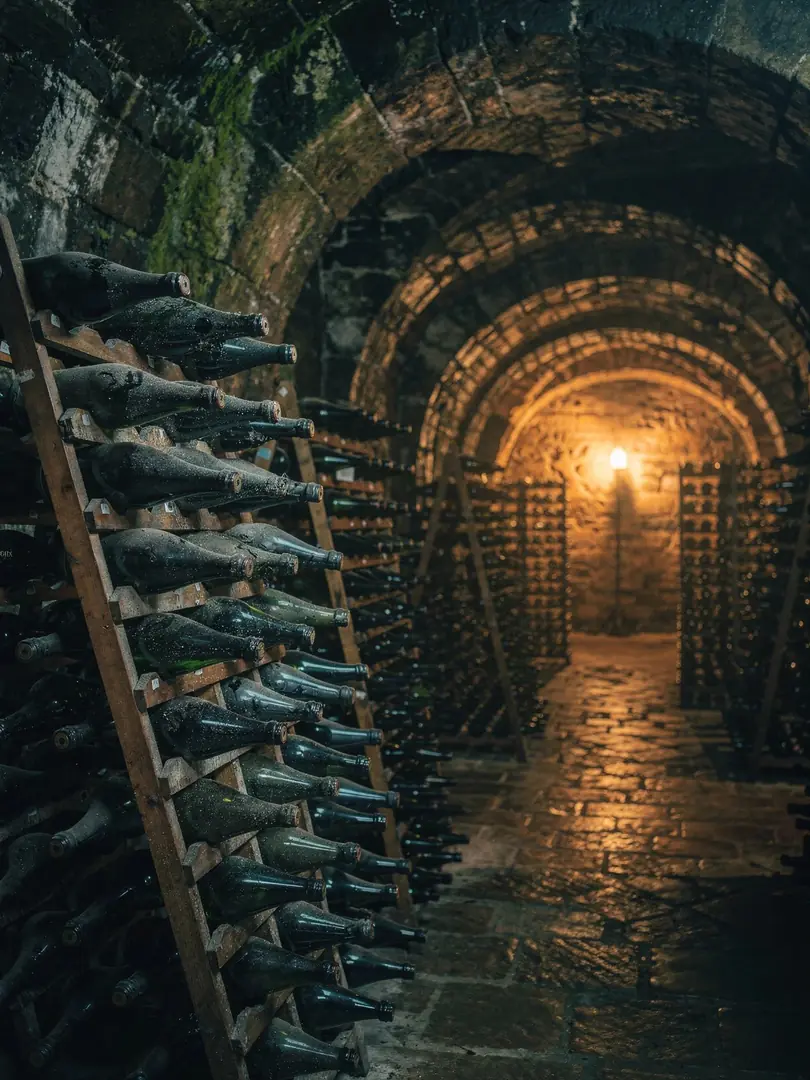
Still wine becomes sparkling wine the moment sugar and yeast are added to the bottle. This mixture is called the liqueur de tirage. The bottle is sealed with a crown cap and then rests in the cellar, where the second fermentation begins. The yeast converts the sugar into alcohol and carbon dioxide, which stays trapped in the bottle.
For Crémant, this method of fermentation is mandatory. Tank fermentation or transfer methods are off the table, since the name requires traditional bottle fermentation—aging and disgorgement in the very same bottle. Anyone who has tried tank-fermented Sekt or Prosecco will notice the difference from the very first sip: the bubbles are finer and last longer.
Pressure inside the bottle must reach at least 3.5 bar, about the same as a slightly overinflated car tire. Champagne typically reaches around 6 bar. That explains why Crémant often has a softer mousse and tickles the tongue less sharply than many a Champagne.
The liqueur de tirage may raise the alcohol content of the blend by no more than 1.5 percent. That's not much, yet it's enough, since roughly 4 grams of sugar per liter generates about one bar of pressure. Whether a riddling rack or a machine gradually tilts the bottles upright after fermentation is left to each producer.
One distinctive feature of Alsace is the diversity of its producers. The family house Dopff au Moulin in Riquewihr and the Wolfberger cooperative in Eguisheim work under the very same rules, even though their scale differs enormously. The sparkling wines that result are therefore more alike than the label might suggest.
Crémant d'Alsace BrutBottle fermentation · Pinot blanc, Auxerrois, Riesling, Pinot gris
- Time on lees
- 9–18 Months
- Sugar
- 5–10 g/l
- Alcohol
- 12 % vol
Apple, citrus, and brioche; round fruit, mild acidity, fine bubbles.