Waiting in the Rock
Lees Aging & Dosage
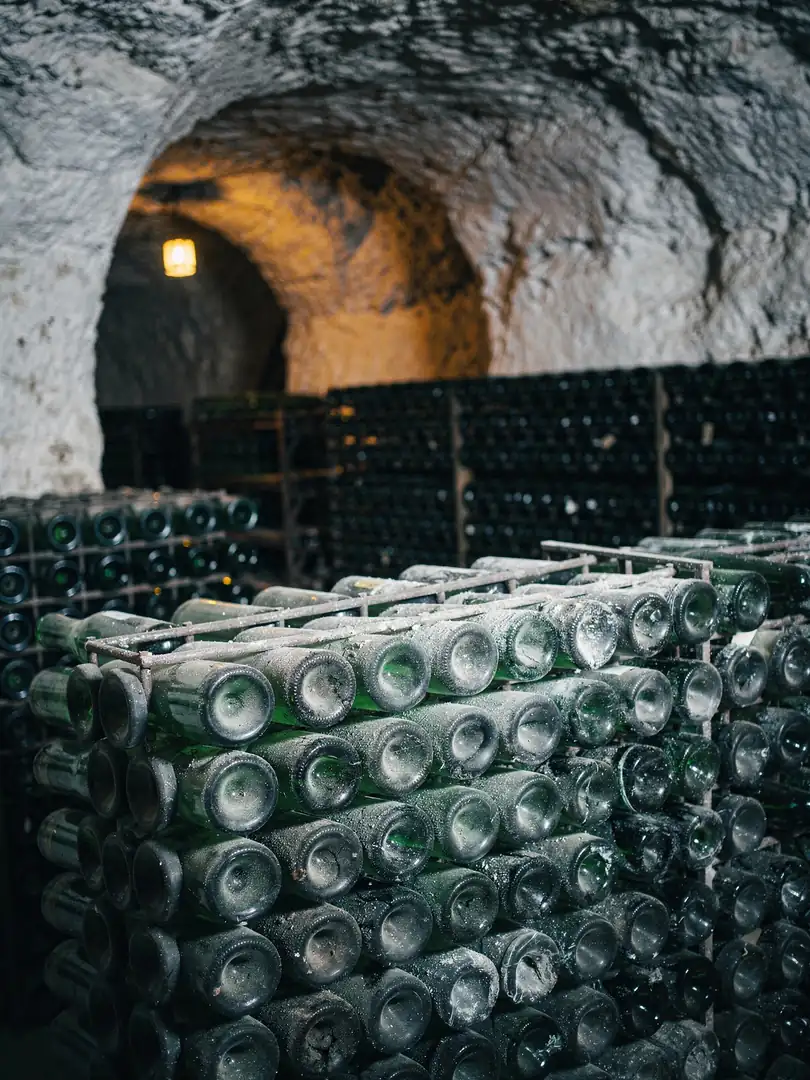
After fermentation comes the waiting. A non-vintage Champagne may not be sold any earlier than 15 months after bottling, with at least 12 of those months spent uninterrupted on the lees. A vintage Champagne requires 36 months. Many houses let their wines rest even longer by choice; Pol Roger states that its Brut Réserve spends a minimum of three years in the house's own cellars.
On the lees, autolysis takes place: the dead yeast cells break down and release compounds into the wine. This makes it creamier and brings aromas of brioche, nuts, and pastry. The longer the aging, the more pronounced these notes become.
Dom Pérignon shows just how much time matters. According to specialist literature, up until the 1943 vintage, the wine was actually regular vintage Moët Champagne that, after long aging, was transferred into the special bottle. Only from the 1947 vintage onward has it been produced separately from the very start.
After this, the yeast has to be removed. During riddling, or remuage, the bottles are turned and gradually tilted steeper over the course of weeks, today mostly using machines called gyropalettes. For disgorgement, the neck is dipped into a brine at around minus 20 degrees Celsius, and when the bottle is opened, the plug of frozen yeast shoots out.
Now comes the dosage. The house tops up the bottle with the liqueur d'expédition, sugar dissolved in wine, which determines the sweetness level. Brut Nature has under 3 grams per liter, Extra Brut up to 6, Brut under 12. Sweeter than Brut is Extra Dry with 12 to 17 grams, and sweeter still is Sec with 17 to 32 grams. The dosage may raise the alcohol content by no more than 0.5% ABV.