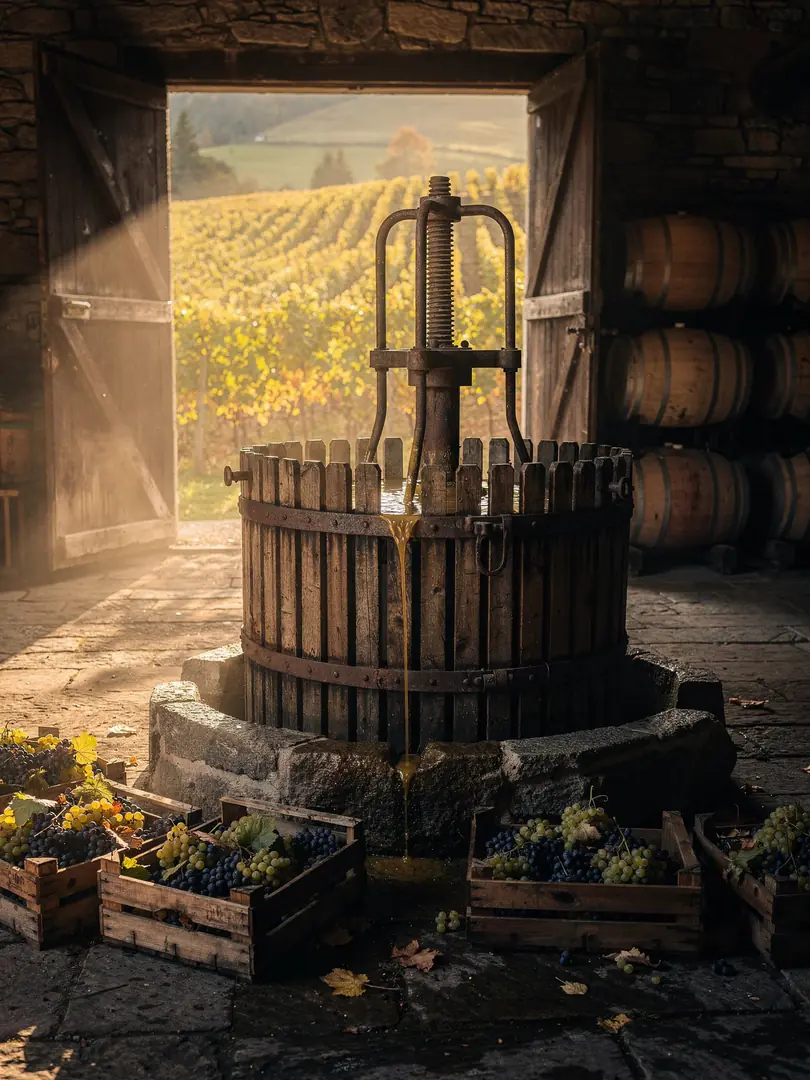
Whole bunches, gently
Base Wine & Cuvée
Hand harvesting is mandatory, as the crémant standard requires. In the Jura, the grapes arrive at the press in ventilated crates and are pressed as whole bunches. No more than 100 liters of must may run from 150 kilograms of grapes, roughly two thirds of the weight. The specification sets the yield at 74 hectoliters per hectare, with a hard ceiling at 80. The skins barely color the juice in the process; even from dark grapes it stays pale.
Picking is early, while acidity is still high and sugar low. If the natural sugar is not enough, growers may enrich the must, that is, add sugar. Before disgorgement, the wine may then have no more than 13% ABV of total alcohol.
Then comes the cuvée, the blend of several base wines. The cellar master tastes each tank individually and assembles the blend to match how the house should taste. For Jura white wine, Chardonnay, Pinot noir and Trousseau must make up at least 70 percent. Whether a house bottles a single vintage or blends wines from several harvests is its own decision.
The specification also sets limits on cellar technique. Wood pieces, which some producers use for extra flavor, are banned. For rosé, activated charcoal is prohibited, as it would otherwise strip color from the wine. After disgorgement, the wine may contain no more than 150 milligrams of sulfur dioxide per liter.
In Savoy, the cuvée begins with light, fresh, high-acid Jacquère, which is blended with the more powerful Altesse. The harvest is laborious on the steep slopes, and autumn weather in the mountains can turn quickly. That is why the weather forecast often decides when picking takes place.