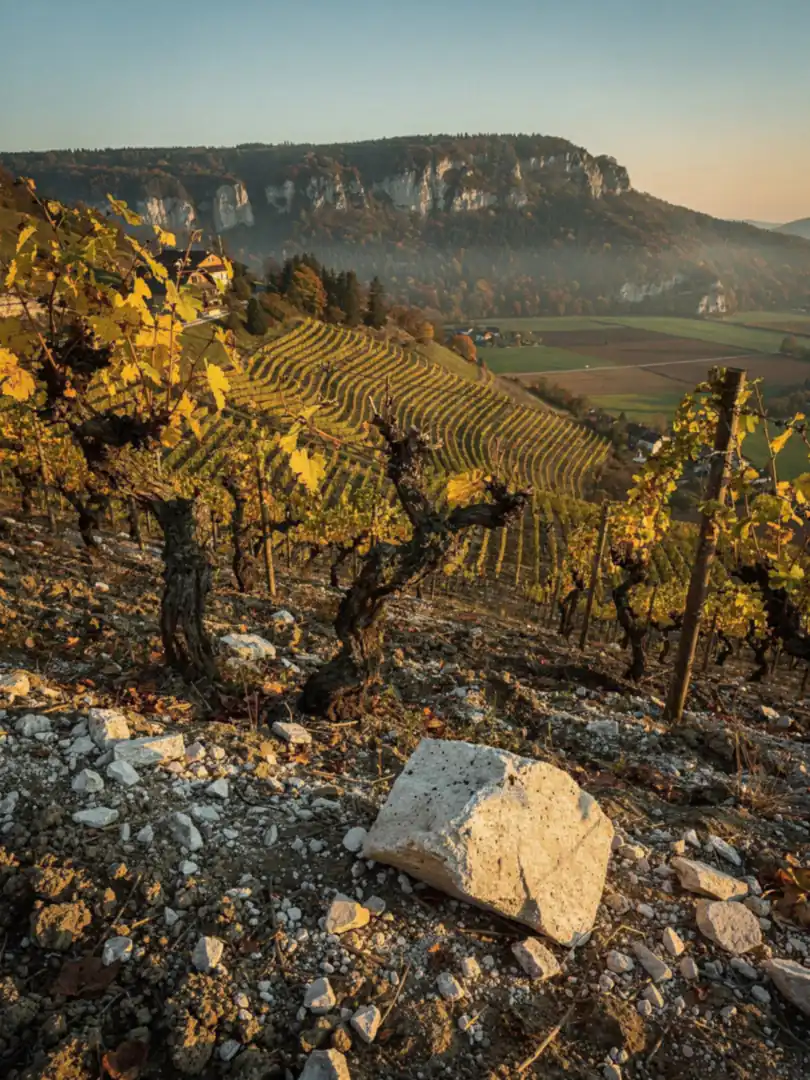
Marl and limestone
Soil & Climate
The vines of Crémant du Jura grow in the Revermont, the western edge of the Jura mountains. According to the specification, a hard limestone from the Middle Jurassic forms the rim of the first plateau there, which averages around 550 meters in elevation. Below it lies a layer of marl, a mixture of clay and limestone, that was originally more than 200 meters thick.
Because this marl is soft, erosion has carved the landscape into pronounced hills. Today the vineyard slopes consist of marl, clay and limestone scree. The scree warms the soil and lets water drain away, while the marl retains moisture. The specification even requires limited row lengths so that rain does not wash the slopes away.
This is good soil for sparkling wine, because the base wine should be fresh and taut, not broad and heavy. The limestone gives it tension. The climate is semi-continental, with cold winters, warm summers and rain all year round. Grapes picked early therefore reach the press with high acidity.
In Savoy, the vines sit on moraines, limestone scree and slope debris at the foot of high mountains, often within sight of the Lac du Bourget. The best known are the Abymes near Chambéry. According to tradition, part of Mont Granier collapsed there in 1248 and buried the slope under rubble. The name recalls the chasms (abysses) that formed.
Seyssel lies a little farther north, at a narrow point of the Rhône, with vineyards spread across both banks. The nights stay cool, which preserves the acidity in the juice. The bottles later mature on laths in the cellars of the growers and cooperatives.