Time on the Lees
Lees Aging & Dosage
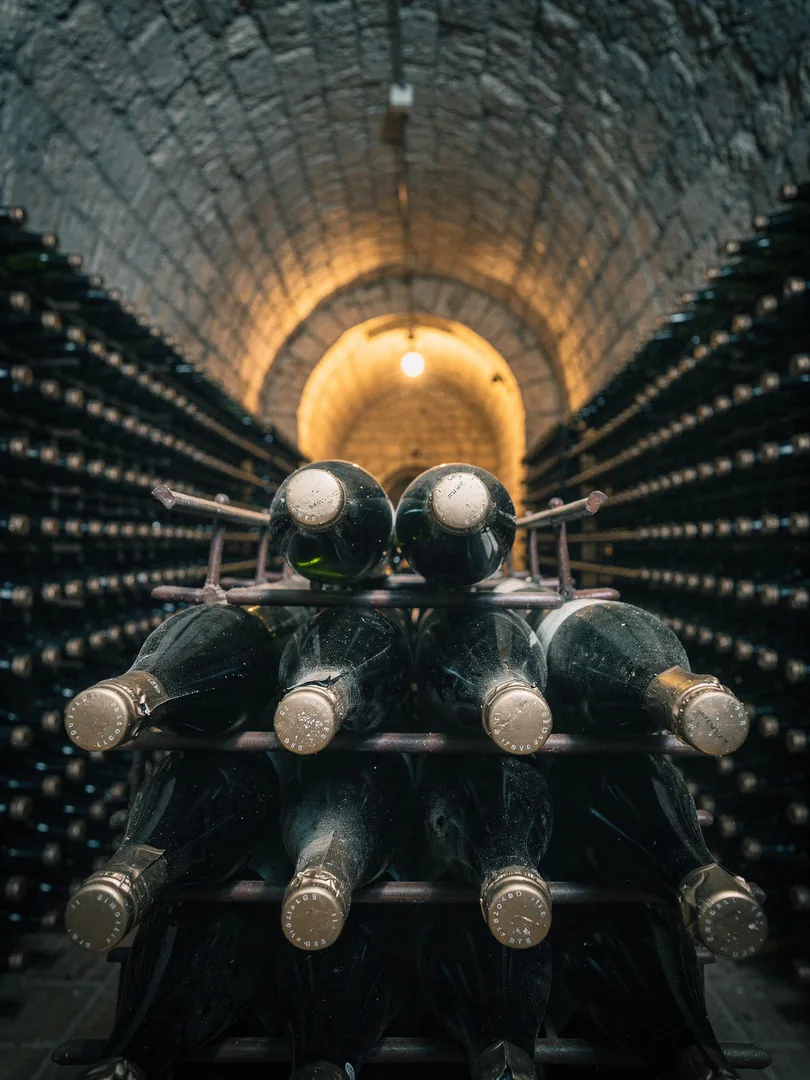
How long must Crémant de Limoux rest on the lees? At least nine months, as required by EU law for any sparkling wine labeled traditional bottle fermentation. During this time, the bottles lie horizontally in the cellar, and the dead yeast cells slowly break down.
This breakdown is called autolysis. Proteins and sugars are released from the yeast, giving the wine a softer mouthfeel and aromas of brioche, nuts, and toast. The longer the contact lasts, the more pronounced these notes become, while the fresh apple character recedes a little.
After that, the yeast has to come out. The bottles are gradually turned upside down, once by hand on riddling racks, now often in riddling machines, until the sediment collects in the neck of the bottle. During disgorgement, the bottle is briefly opened upside down, and the pressure pushes the plug of yeast sediment out. A little wine is lost in the process and topped up afterward.
This is the point where the decision about sweetness is made. The cellar master tops up the bottle with the dosage, a mixture of wine and sugar. The levels range from Brut nature, with under 3 grams per liter, through Brut, with less than 12 grams, to Extra dry, with 12 to 17 grams. In sparkling wine, 'dry' (trocken) means 17 to 32 grams, making it sweeter than Brut. For Crémant, sugar always stays below 50 grams per liter.
Blanquette méthode ancestrale has no dosage. Its sweetness comes from the sugar that the yeast in the bottle never fully fermented out. According to the rules, it rests on the lees for at least two months. Depending on the house, the yeast is either removed or left as a fine haze in the wine, giving it a slightly cloudy appearance.