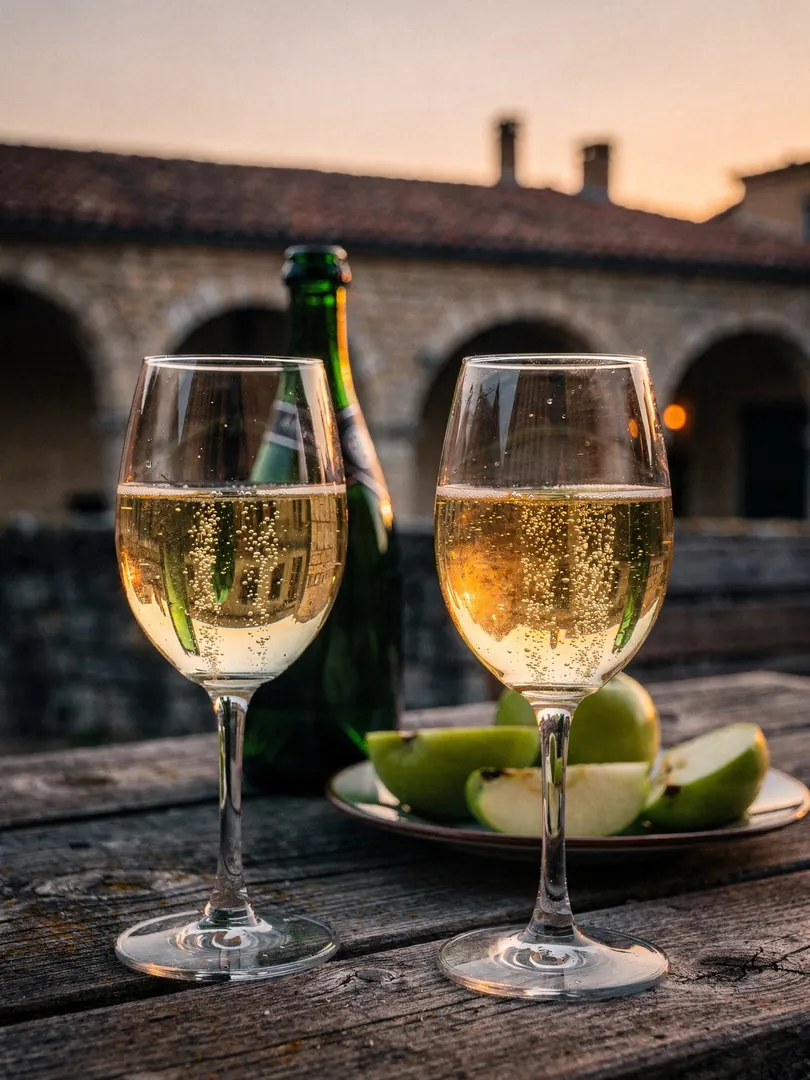
Apple, Blossom, Bubbles
Tasting
In the glass, Blanquette de Limoux shows a pale straw-yellow color with fine bubbles. On the nose, apple comes first, followed by white blossom and a touch of citrus, with brioche appearing after longer lees aging. On the palate it feels fresh and slender, never heavy. This character makes the wine easy to approach, even for beginners.
A few houses showcase the range. The cooperative Sieur d'Arques bottles Blanquette and Crémant in large volumes and is, for many visitors, the first stop in the appellation. The house of Antech also makes both Blanquette and Crémant. Domaine Delmas offers a Crémant de Limoux Brut Nature in its lineup, made entirely without dosage, giving it a more austere, taut character.
The right glass is a tulip shape, not a flat coupe. It concentrates the aromas in the center, lets the bubbles rise gently, and brings the nose close to the wine. Serving temperature is six to eight degrees Celsius. The ancestrale can be served a touch colder, so its sweetness doesn't feel heavy. Bottles with residual yeast sediment should stand undisturbed for a while before pouring, so the sediment settles at the bottom.
To open the bottle, hold it at an angle, turn the bottle slowly rather than the cork alone, and let the cork slide out quietly. It should come free with a soft hiss, not a loud pop. This preserves the carbon dioxide and keeps foam from spilling over the rim. Finally, wipe the neck of the bottle briefly.
When tasting, pay attention to two things: the apple note that's never entirely absent in Mauzac, and the sweetness on the finish. In the ancestrale it's intentional, lingering as mild fruit sweetness in the background; in Crémant it should barely register, with acidity carrying the wine through to the end.