Hills of the Villages
Region & History
The Montagne de Reims is not a mountain but a wooded ridge between Reims and the Marne valley, stretching about thirty kilometers. On its slopes lie winegrowing villages whose names appear on Champagne labels: Verzenay, Mailly, Bouzy, Ambonnay.
Which Champagne grows here is determined above all by the commune. Of the 319 crus in the appellation, only 17 carry the Grand Cru classification, and nine of them lie on the Montagne: Verzenay, Verzy, Mailly-Champagne, Bouzy, Ambonnay, Sillery, Puisieulx, Beaumont-sur-Vesle, and Louvois. The remaining eight are spread across the Marne valley and the Côte des Blancs.
In Champagne, Grand Cru thus means "best village," not "best vineyard site" as in Burgundy. Behind this once stood a pricing scale, the Échelle des crus: grapes from Grand Cru villages received the full benchmark price, while Premier Cru villages like Ludes, Chigny-lès-Roses, or Rilly-la-Montagne got 90 to 99 percent of it. The old scale was abandoned in the late 2000s, but the terms Grand Cru and Premier Cru remained on the label.
Mailly shows how a village can help itself. In 1929, in the midst of the economic crisis, 25 winegrowing families founded a cooperative that processes only grapes from their own Grand Cru. Members dug their chalk cellars themselves, work that continued until 1965.
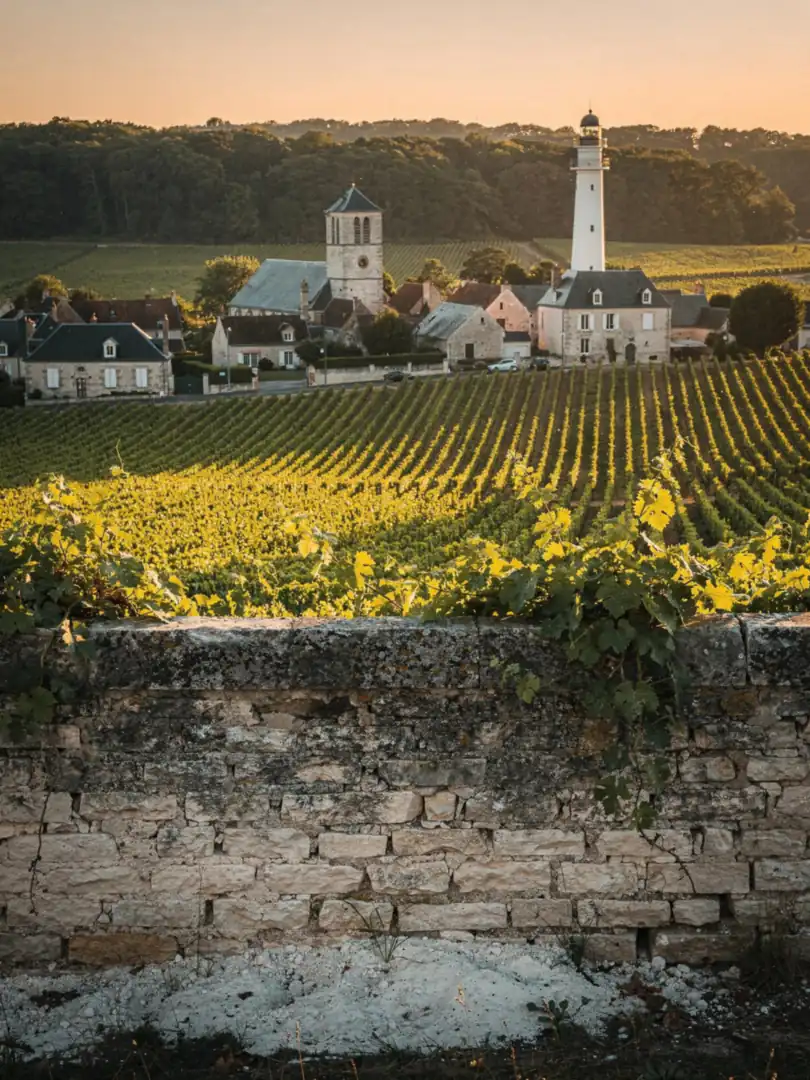
Since 1909, a lighthouse that guides no ship has stood above the vines of Verzenay. A wine merchant had it built to advertise his Champagne brand; later, festivals, dancing, and open-air theater took place at its foot. Since 1999, the Phare de Verzenay has housed the Musée de la Vigne.
A great house from Reims also relies on these slopes. Krug, founded in 1843 by Johann-Joseph Krug from Mainz, has bottled Clos d'Ambonnay since the 1995 vintage. After nearly ten years of trials, the house only presented it to the public in October 2007.