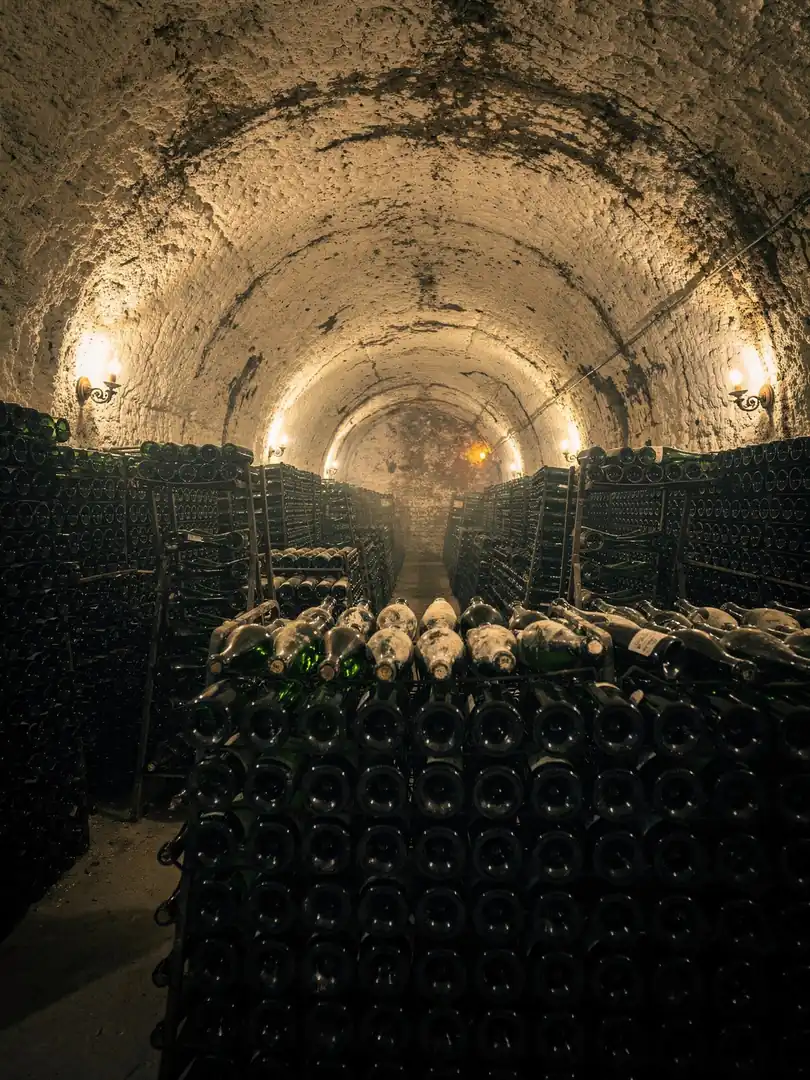
Patience in the Chalk Cellar
Lees Aging & Dosage
Then comes the waiting. A non-vintage Champagne must age for at least 15 months after the tirage, with at least 12 of those on the lees. A vintage Champagne needs 36 months. Many houses voluntarily age their bottles even longer.
On the lees, autolysis takes place. The spent yeast cells slowly break down, giving the wine notes of brioche and toasted nuts along with a creamier texture.
Then riddling begins. On riddling racks, where bottles stand at an angle, they're regularly turned and tilted steeper until the yeast settles in the neck. Disgorgement follows: the crown cap is removed, the pressure pushes out the yeast sediment, and the wine is topped up with its dosage and recorked.
The dosage, the addition of sugar to the wine, sets the sweetness level. Brut has under 12 grams of sugar per liter, Extra Brut between 0 and 6 grams, Brut Nature under 3 grams with no added sugar after the second fermentation. Even sweeter than Brut is Extra Dry, at 12 to 17 grams.
How much sweetness a Blanc de Noirs receives is decided by the house, based on the wine itself. A taut wine from the north-facing slopes can get by with little dosage; according to merchant sources, Hugues Godmé from Verzenay offers his entirely without any. A rounder wine from Ambonnay or Bouzy often gets a touch more. After disgorgement, some houses let the bottle rest a while longer so the wine and dosage can integrate.