Red Fruit, Chalk
Tasting
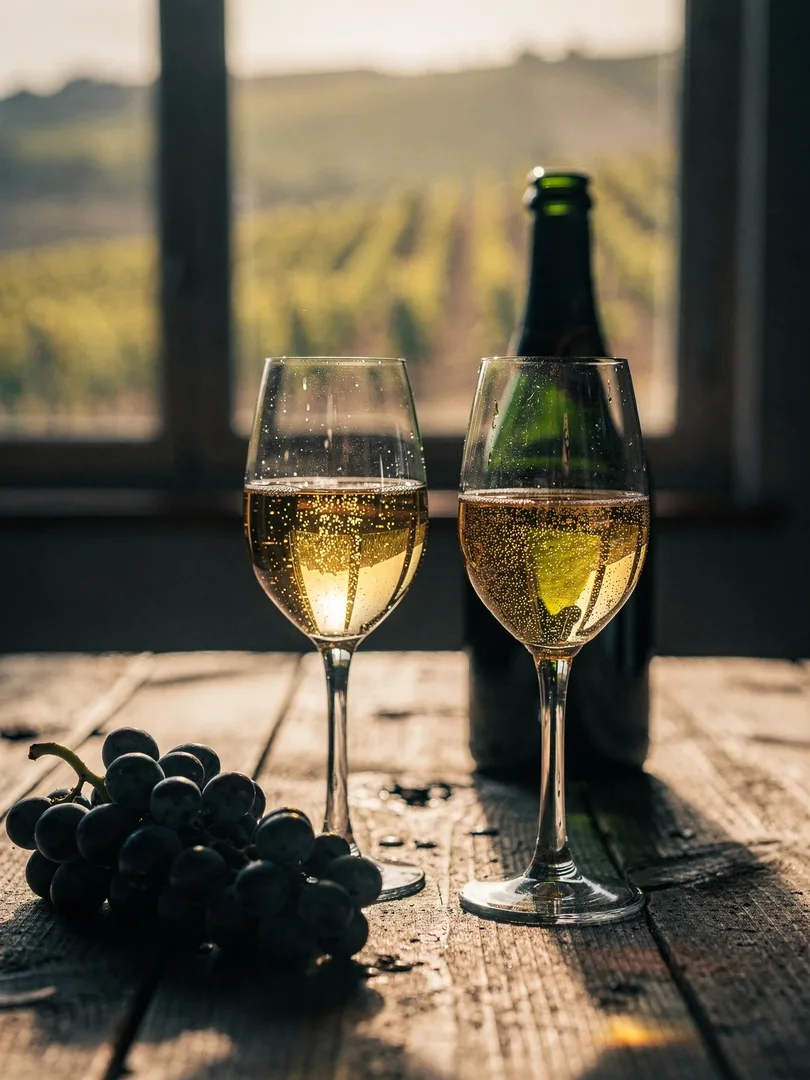
A Blanc de Noirs from the Montagne smells of cherry, redcurrant, and brioche, with a body on the palate rarely found in white grapes. Behind that stand acidity and a chalky austerity. Depending on the slope, the impression shifts: rounder and fruitier from Bouzy and Ambonnay, leaner and tauter from Verzenay and Verzy. In the glass, a Blanc de Noirs often appears deeper gold than a Chardonnay-based Champagne, sometimes with a hint of copper shimmering through. A Rosé de saignée ranges from salmon to deep pink. In the end, the finish is what counts: good Pinot Champagnes hold the fruit on the palate for a long time and close with a cool, chalky note.
Those looking to compare will find examples. The cooperative's Mailly Grand Cru comes from a single commune. Egly-Ouriet bottles a Grand Cru Brut from Pinot Noir in Ambonnay. Krug's Clos d'Ambonnay is the exception in every respect, a Blanc de Noirs from a single walled parcel. Laurent-Perrier's Cuvée Rosé is considered a well-known example of Rosé de saignée.
A tulip glass or a narrow white wine glass suits this style best. In these, the fruit and brioche notes unfold, while the wide Champagne coupe lets carbonation and aroma escape too quickly.
Such a wine tastes best at around 8 to 10 degrees Celsius (46–50°F). Too cold, and the red fruit stays closed; too warm, and the wine feels heavy.
The cork stays firmly in hand—only the bottle is turned, even with a powerful Blanc de Noirs from the Montagne. The goal is a quiet sigh rather than a pop, so the foam stays calm and no bubbles are lost.