Glass and taste
Tasting
What does a Champagne from Reims taste like? Typical traits are fine bubbles, citrus and apple up front, brioche and toasted nuts in the finish, along with a chalky freshness. The styles of the various houses differ noticeably, and that's exactly what makes comparing them so rewarding. Two houses in the same region, using the same three grape varieties, can show two completely different signatures that are easy to tell apart in the glass.
Ruinart stands for Chardonnay. Since the 1959 vintage, the house has released a Blanc de Blancs under the name Dom Ruinart. Louis Roederer bottled a wine in 1876 for Tsar Alexander II, which became known as Cristal, the first prestige cuvée of Champagne, and has been available for general sale since 1945.
Veuve Clicquot is recognizable by its yellow label, which has looked this way since 1876/77; the house has belonged to LVMH since 1986/87. Krug has produced a wine from the tiny 0.68-hectare Clos d'Ambonnay since the 1995 vintage. These are examples for comparison, not recommendations.
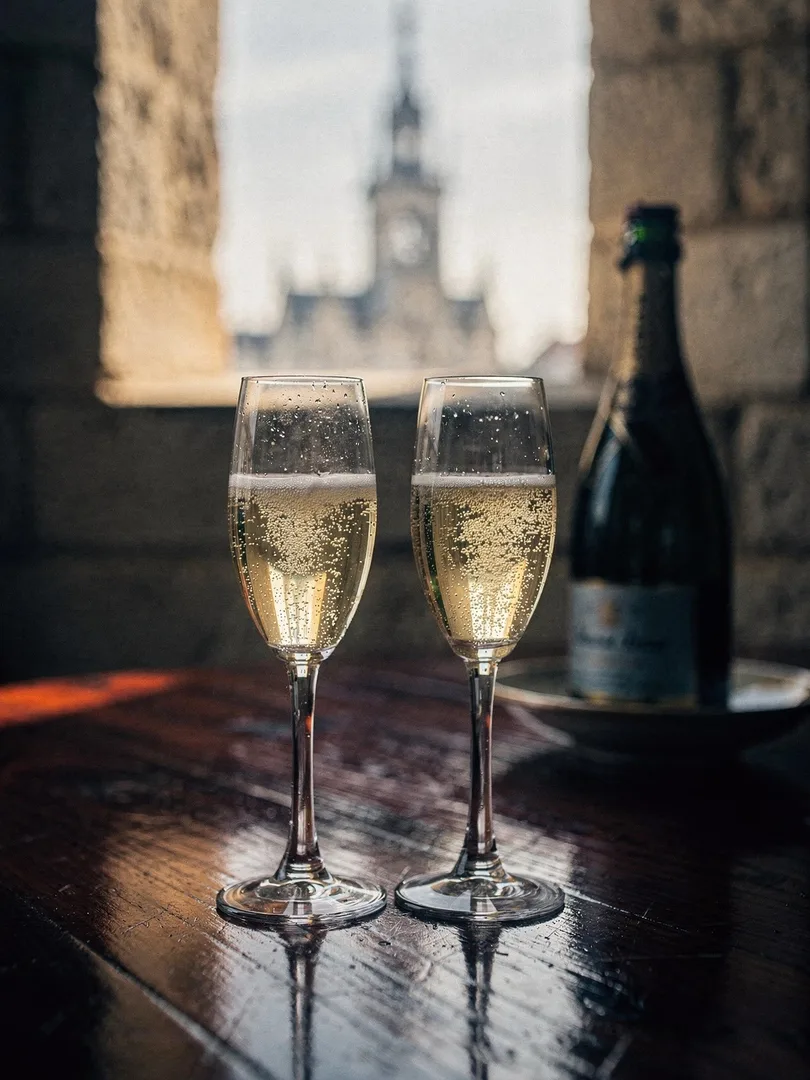
The glass: a flat coupe lets both bubbles and aromas escape quickly. A tulip-shaped glass with a slightly tapered rim holds onto both better and allows the bubbles to rise for longer. A glass that's too cold dulls the flavor; around 8 to 10 degrees is better.
When opening, the bottle rests at a slight angle. Hold the cork firmly, turn the bottle—not the cork—and let it slide out of the neck with a quiet sigh. Six bar of pressure is no small matter, so the neck of the bottle should never point toward anyone's face.